




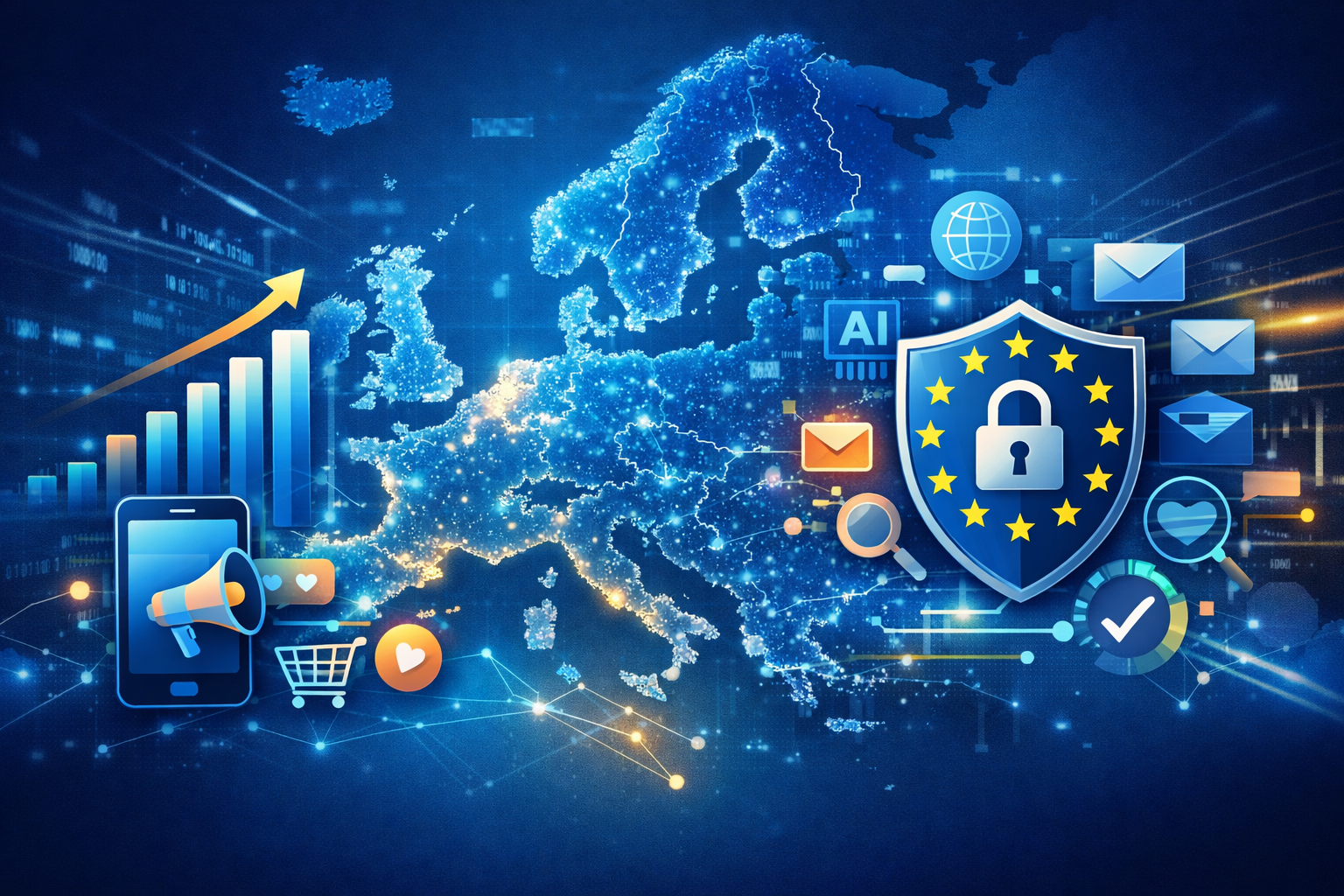
Europe is undergoing a digital renaissance. According to a February 2026 report from MarketDataForecast, the European digital media market was valued at USD 319.23 billion in 2025, is estimated to reach USD 359.38 billion in 2026, and is projected to top USD 926.84 billion by 2034—a compound annual growth rate of 12.84 %. This surge is driven by widespread high‑speed broadband, ubiquitous smartphones and a boom in on‑demand content.
Mobile-first consumption and video dominance
The smartphone segment led Europe’s digital media market with 58.2 % share in 2024. Consumers across the continent spend hours each day streaming video, scrolling social feeds and shopping via mobile. Video dominates: the report notes that the video segment held 54.3 % of regional market share in 2024. This makes mobile‑optimised video advertising indispensable for brands.
Interactive and immersive formats
Interactive media is Europe’s fastest‑growing content category, projected to grow 15.2 % annually. Shoppable videos, gamified experiences and mixed‑reality campaigns are capturing consumer attention. Meanwhile, immersive formats like live shopping and augmented reality, once niche, are moving into the mainstream, offering marketers new ways to engage audiences.
Privacy, regulation and localisation
Europe’s growth comes with strict regulatory frameworks. The Digital Services Act, GDPR and forthcoming AI Act emphasise transparency, consent and the promotion of European‑origin content. Marketers must adopt privacy‑first strategies—limiting tracking, obtaining explicit consent and investing in contextual targeting. Localisation is also critical: demand for local‑language productions is rising, and investment in original European content is increasing.
Regional nuances
The report highlights regional diversity within Europe. The United Kingdom led the market with 19.3 % share in 2024, reflecting its advanced advertising technology sector. Germany followed with 17.3 % share, supported by strong public broadcasting digitisation and strict data privacy governance. France is investing heavily in domestic content, while Italy benefits from mobile‑first consumption trends. Marketers should tailor campaigns to cultural and regulatory differences across countries.
Strategies for success in 2026
-
Invest in mobile‑optimised video. With smartphones accounting for the majority of consumption and video representing over half of digital media share, allocate resources to short‑form, vertical and interactive video formats.
-
Embrace interactive media. Experiment with shoppable livestreams, gamified ads and augmented reality experiences to capitalise on the fast‑growing interactive segment.
-
Prioritise privacy. Comply with GDPR and the Digital Services Act by using first‑party data, contextual targeting and clear consent mechanisms. Transparency builds trust.
-
Localise content. Produce ads and content in local languages and reflect cultural nuances. Invest in regional collaborations to meet growing demand for European‑origin content.
-
Leverage AI ethically. Use AI for personalisation, but ensure algorithms align with forthcoming AI regulations, focusing on fairness and accountability.
Looking ahead
Europe’s digital media market is set to more than double over the next decade. The combination of technological innovation, strict regulation and regional diversity will create both challenges and opportunities for marketers. By adopting mobile‑first, privacy‑compliant and localised strategies, businesses can thrive in this dynamic environment. For additional insights and tools to navigate Europe’s complex digital landscape, consider exploring the resources at Marketing Commission.