


The Ticking Doomsday Clock: Humanity’s Precarious Position
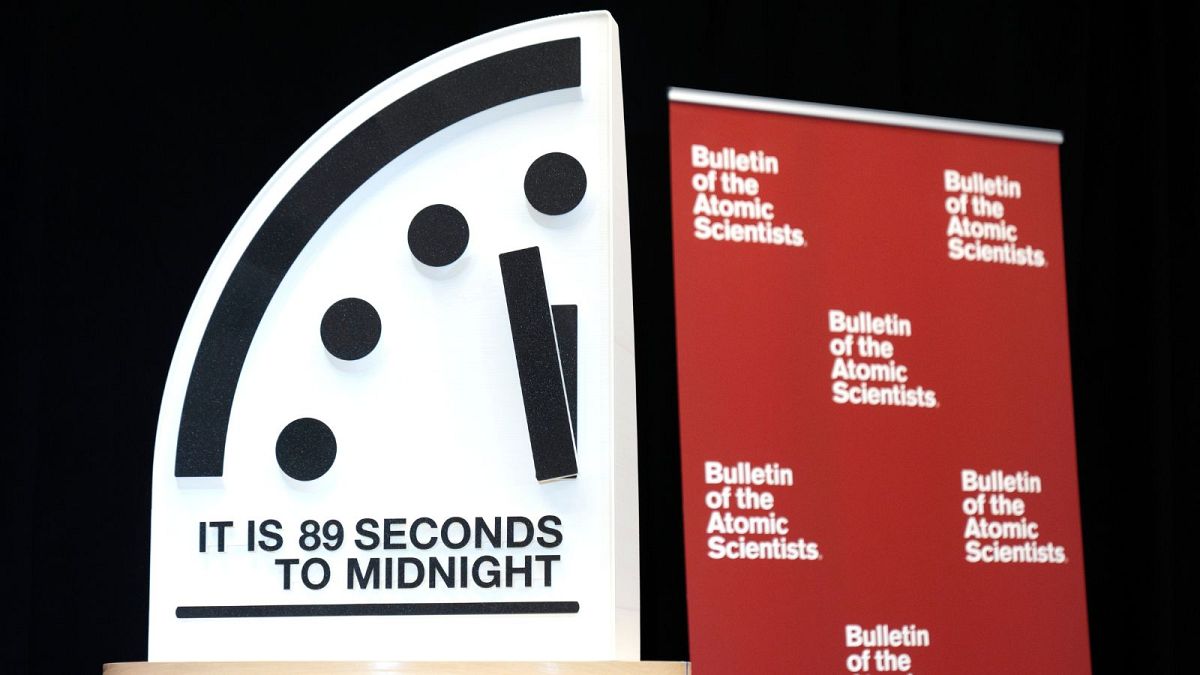
The Bulletin of the Atomic Scientists, a prestigious organization co-founded by J. Robert Oppenheimer, recently set the Doomsday Clock to a chilling 89 seconds to midnight, the closest it’s ever been to symbolizing global annihilation. This symbolic clock, conceived in 1947 as a stark reminder of humanity’s self-destructive potential, reflects the escalating threats facing our world. The current setting underscores the heightened dangers of nuclear war, exacerbated by the ongoing conflict in Ukraine and the proliferation of nuclear weapons, the ever-present menace of climate change, the disruptive potential of emerging technologies like artificial intelligence in warfare, the destabilizing impact of misinformation, and the looming threat of pandemics. The Bulletin warns that the world stands at a precipice, and even a single second closer to midnight signifies an amplified risk of global catastrophe. The organization implores world leaders, particularly those of the US, China, and Russia, to recognize the gravity of the situation and take immediate action to reverse this perilous trajectory.
The Genesis and Evolution of the Doomsday Clock
Born in the aftermath of World War II and the devastating atomic bombings of Hiroshima and Nagasaki, the Doomsday Clock was the brainchild of scientists deeply concerned about the implications of nuclear weapons. These scientists, including Albert Einstein and J. Robert Oppenheimer, established the Bulletin of the Atomic Scientists to raise public awareness and exert pressure on political leaders to prevent nuclear war. The clock, initially designed for a magazine cover by artist Martyl Langsdorf, serves as a visual representation of humanity’s proximity to self-inflicted disaster. Starting at seven minutes to midnight in 1947, the clock’s minute hand has been adjusted 25 times, reflecting the fluctuating global landscape of threats. The Bulletin’s Science and Security Board, comprised of leading scientists and experts, convenes twice a year to assess global events and trends, ultimately determining the clock’s annual setting. This process is not about predicting the future but rather providing a stark diagnosis of the current state of global affairs, a call to action, not a prophecy of doom.
A Timeline of Ticking Towards Midnight: Key Moments in the Doomsday Clock’s History
The Doomsday Clock’s journey has been a reflection of humanity’s flirtation with self-destruction. The first significant shift towards midnight occurred in 1949 following the Soviet Union’s first nuclear test, marking the beginning of the Cold War arms race. A dramatic move came in 1953 after the US tested its first thermonuclear device, bringing the clock to a then-record two minutes to midnight. This chilling proximity to annihilation was matched again in 2018. In 2020, the clock entered the realm of seconds, reaching 100 seconds to midnight due to the escalating nuclear threat, climate change negligence, and the erosion of international agreements. The clock further advanced to 90 seconds in 2023, largely attributed to the war in Ukraine, North Korea’s nuclear ambitions, and the continuing climate crisis. While remaining at 90 seconds in 2024, this was not a sign of stability, but rather a reflection of sustained global tensions.
Moments of Respite: Periods of Reduced Global Threat
Amidst the prevailing trend towards midnight, periods of relative calm and international cooperation have offered glimpses of a more secure world. The 1990s marked a significant retreat from the brink, with the clock reaching 17 minutes to midnight in 1991 following the end of the Cold War, the fall of the Berlin Wall, and the signing of the Strategic Arms Reduction Treaty. This period represented the furthest the clock has ever been from midnight, offering a stark contrast to the perilous present. Even 1995, at 14 minutes to midnight, highlights a time of considerably less global tension compared to the current precarious situation. These historical moments underscore the possibility of reversing course and working towards a safer future.
The Doomsday Clock’s Cultural Impact: A Symbol of Existential Threat
The Doomsday Clock’s powerful symbolism has permeated popular culture, serving as a recurring motif in music, literature, film, and television. From Iron Maiden’s "2 Minutes to Midnight" to Linkin Park’s album "Minutes To Midnight," the clock has found its way into musical expression. In literature, Stephen King’s "The Tommyknockers" and Alan Moore’s "Watchmen" incorporate the clock as a potent symbol of impending doom. Stanley Kubrick’s satirical film "Dr. Strangelove" explores the concept of doomsday devices, while the television series "Doctor Who" has featured episodes referencing the clock and its implications. These cultural references underscore the clock’s enduring presence in the collective consciousness, serving as a constant reminder of humanity’s vulnerability.
A Call to Action: The Urgent Need for Global Cooperation
The Doomsday Clock is not a passive observer but a clarion call for action. Its current setting at 89 seconds to midnight emphasizes the urgency of addressing the existential threats facing our world. The Bulletin of the Atomic Scientists implores world leaders to prioritize international cooperation, nuclear disarmament, and climate change mitigation. The clock is not a prediction of inevitable doom but a stark reminder that humanity’s fate rests in its own hands. The time to act is now, before the clock strikes midnight.