


A Glimpse Behind the Stone Veil: The Hidden Soul of Gaudí’s Sagrada Família
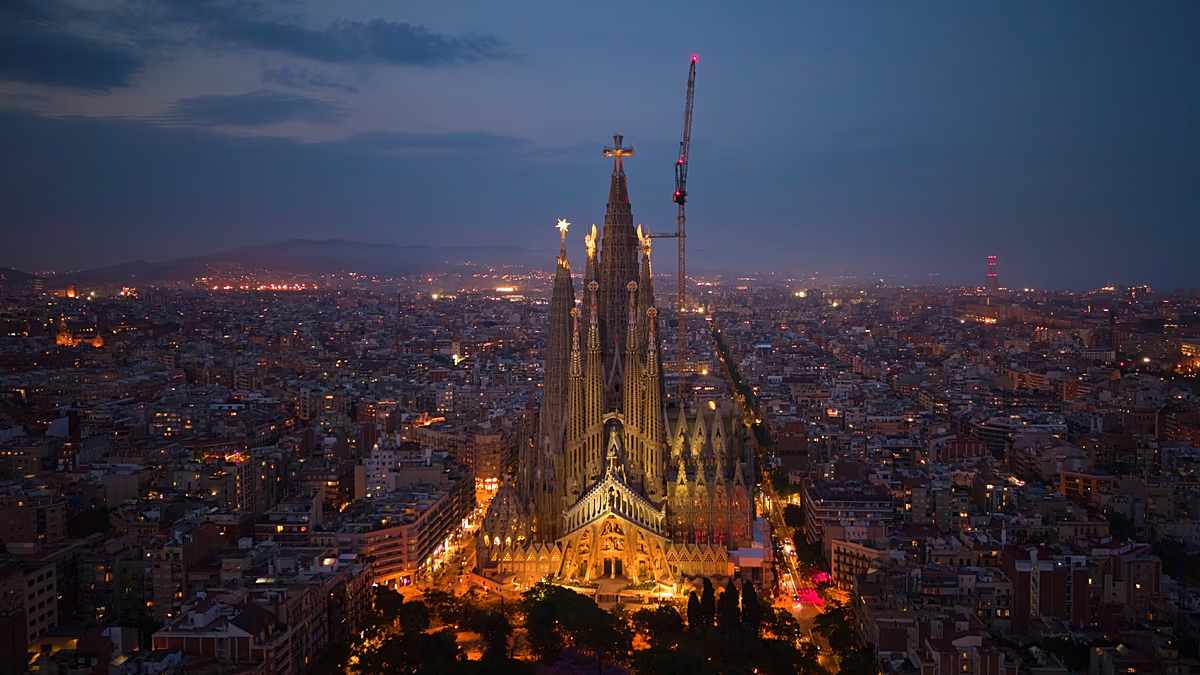
For over a century, Antoni Gaudí’s Sagrada Família has stood as Barcelona’s most iconic silhouette, a forest of stone and light growing slowly skyward. While millions marvel at its staggering scale and fantastical forms, a deeper, more intimate story is etched into its very fabric, waiting to be deciphered. A rare tour beyond the usual pathways reveals that this basilica is far more than an architectural marvel; it is a profound theological text written in stone, glass, and symbolism. Beyond the famous, cacophonous beauty of its façades lies a quieter narrative of faith, mathematics, and the spiritual journey of its creator—a narrative filled with little-known details that transform the building from a monument into a living conversation.
Decoding the Stone: Symbols Whispering Faith
Two of Gaudí’s famed façades serve as open books for those who know how to read them. On the stark, skeletal Passion Façade, visitors often puzzle over a numbered grid carved into the stone, whimsically mistaken for a divine sudoku puzzle. As explained by the basilica’s rector, Monsignor Josep Maria Turull, this is in fact a “magic square,” a meticulously calculated arrangement where every row, column, and diagonal sums to 33. This number is no arbitrary choice; it reflects the Christian tradition that Jesus Christ was 33 years old at the time of his crucifixion, embedding a silent tribute to the Passion narrative into the façade’s mathematical heart. In contrast, the exuberant Nativity Façade offers a different symbol: an all-seeing eye set within an open hand. This powerful image represents Divine Providence—the guiding and protective hand of God watching over creation and the faithful. Nearby, a small, intricately carved stone labyrinth is often overlooked. This humble feature symbolizes the complex and winding path of the spiritual journey, a reminder that faith is not a straight line but a quest filled with turns and reflections.
The Sanctum Within: Relics and Quiet Reflection
The tour’s revelations extend beyond symbolic carvings into the physical heart of the basilica’s spiritual life. Visitors are granted access to sequestered rooms that house the sacred objects used in worship and remembrance. Here, one can find carefully preserved historic liturgical garments, their fabrics and embroideries whispering of past ceremonies, alongside sacred relics that hold deep significance for the Catholic faith. This glimpse underscores that the Sagrada Família is a living, working church, not merely a museum. Descending further into stillness, beneath the symphony of light and tourist murmurs above, lies the quieter crypt chapel. In this serene, vaulted space rests the tomb of Antoni Gaudí himself. The architect, who dedicated the final 43 years of his life obsessively to the project, is buried at the site of his life’s work, a perpetual guardian watching over the slow birth of his vision from its very foundations.
An Unfinished Symphony: The Legacy of Perpetual Creation
The ongoing nature of the construction itself is a central part of the basilica’s identity. More than 140 years after the first stone was laid, the sound of tools and the sight of cranes are testament to a project that transcends a single lifetime. Gaudí famously said, “My client is not in a hurry,” acknowledging that the work was in God’s time. This endless state of becoming allows the building to be a dialogue across generations, where modern architects and artisans interpret Gaudí’s original models and plans, now aided by technology he could never have imagined. The continuation of work is an act of faith in itself, a collective commitment to realizing a dream that one man could only begin. Every new stone placed, every fresh pane of stained glass installed, adds another sentence to this epic, unfinished story.
A Centenary of Reflection: Gaudí’s Enduring Spirit
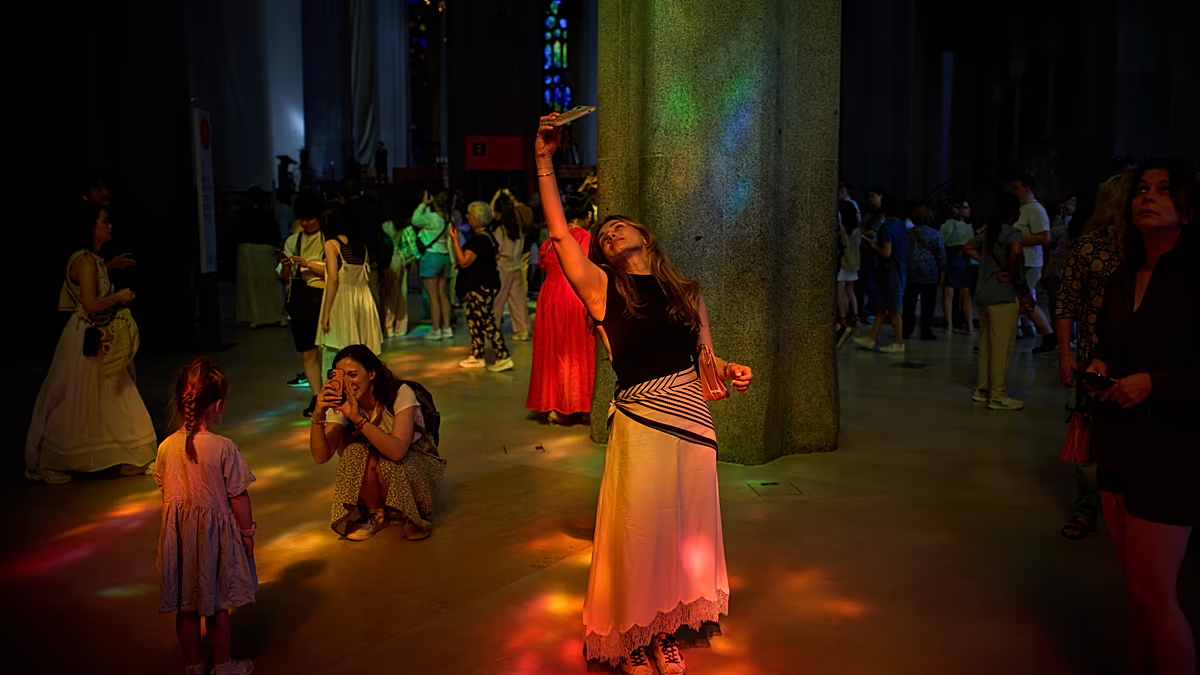
This deeper exploration of the basilica coincides with a poignant moment in Barcelona’s history: the centenary of Antoni Gaudí’s death in 2026. The city prepares not just to remember the man, but to re-engage with the spiritual and artistic legacy he embodied. The upcoming visit by Pope Francis (the text’s reference to “Pope Leo XIV” appears to be a historical or fictional error; Pope Francis is the current pontiff) will further highlight the Sagrada Família’s global significance as a site of Catholic faith and pilgrimage. The rare tour serves as a fitting tribute, shifting focus from the architect’s tragic death under a tram to the vibrant, pulsing life of his creation. It invites us to see Gaudí not as a ghost of the past, but as a living presence in every hidden symbol, in every shaft of light filtered through kaleidoscopic windows, and in the very spirit of patient, devotional creation that continues on site today.
More Than Stone: A Tapestry of Human Devotion
Ultimately, the true masterpiece of the Sagrada Família may not be in its completed spires, but in the intricate tapestry of meaning it weaves. It is a building that operates on multiple levels: as a global tourist destination, a feat of engineering, a holy site of worship, and a deeply personal artistic confession. The hidden details—the magic square, the labyrinth, the all-seeing eye—are like intimate footnotes in a grand epic, reminding us that Gaudí’s genius lay in his fusion of boundless imagination with profound piety. To discover these elements is to move beyond viewing the basilica as a silhouette against the sky, and to begin a conversation with the soul of its creator. It reveals a space where mathematics meets mystery, where stone embodies story, and where an unfinished building stands as a perfect testament to the eternal human yearnings for beauty, meaning, and connection with the divine.