


Paragraph 1: A Dire Warning from Europe’s Energy Chief
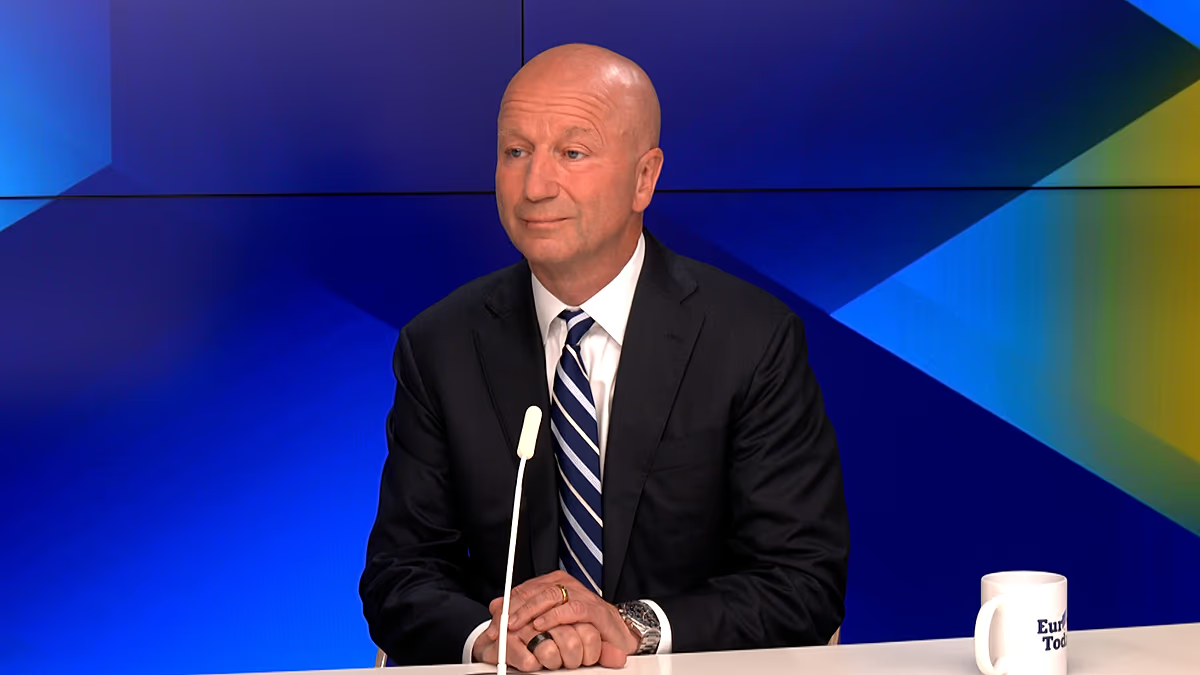
On a Wednesday in late April 2026, the European Union’s Energy Commissioner, Dan Jørgensen, delivered a sobering assessment to the public, framing an unfolding energy crisis not as a temporary blip but as a protracted ordeal with deep roots. The catalyst, he explained, was a severe conflict initiated by the United States and Israel against Iran, which had critically disrupted global energy flows. The most immediate and shocking consequence was the effective loss of a fifth of the world’s oil and natural gas exports, which traditionally move through the strategic Strait of Hormuz. This sudden constriction in supply sent shockwaves through global markets, unleashing significant volatility and uncertainty that Europe, as a major energy importer, would inevitably absorb. Jørgensen’s core message was clear: the continent must brace for impact, as the repercussions of this geopolitical rupture would be measured not in weeks, but in “very difficult months, or possibly even years.”
Paragraph 2: The Staggering Daily Cost and Lasting Infrastructure Damage
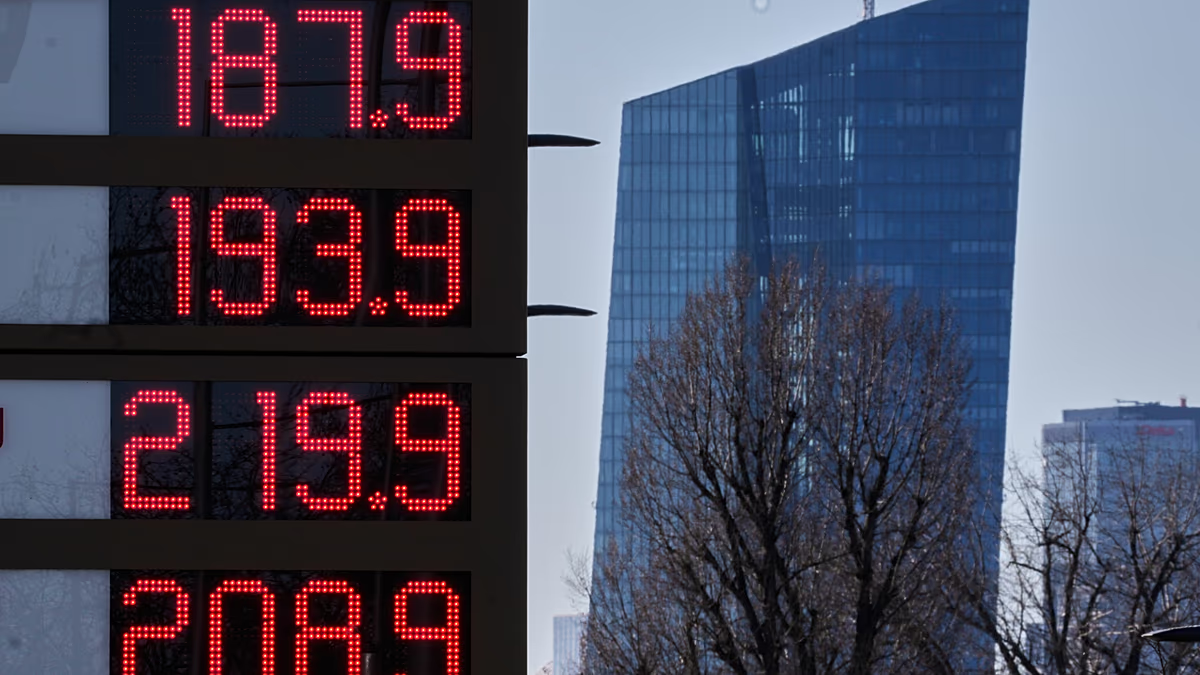
The commissioner quantified the crisis in terms that resonate with every citizen and policymaker: a staggering daily cost of €500 million (approximately $600 million) to Europe. This figure painted a picture of an ongoing financial hemorrhage draining resources that could be used elsewhere. Beyond the immediate price spikes, Jørgensen highlighted a more insidious, long-term problem—the physical destruction of energy infrastructure across the Middle East. He starkly noted that “even in a best-case scenario, it’s still bad,” emphasizing that pipelines, refineries, and export facilities damaged in the conflict would require extensive time and investment to repair. Restoring production to pre-conflict levels is a years-long endeavor, meaning the structural underpinnings of the global energy market have been weakened, guaranteeing sustained pressure on supplies and prices for the foreseeable future.
Paragraph 3: The Looming Threat to Air Travel and Summer Tourism
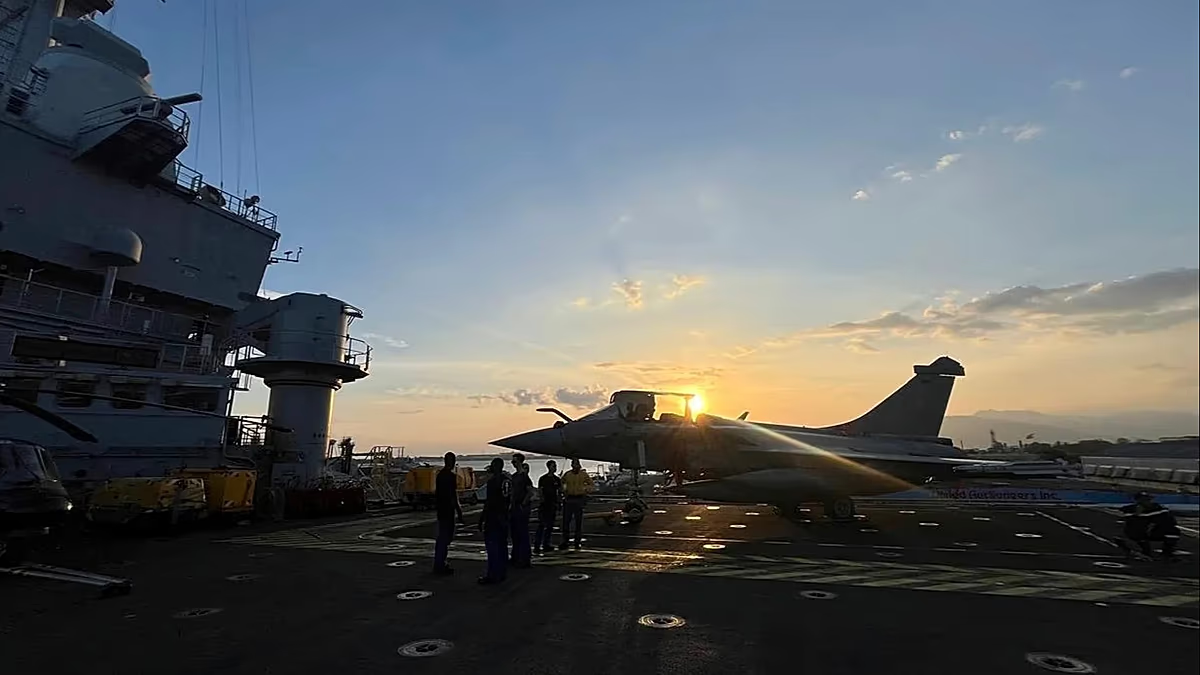
Amid this broad energy crunch, a specific and urgent concern has emerged for European governments: the threat of jet fuel shortages. With the busy summer tourism season on the horizon, the prospect of grounded flights presents both an economic and logistical nightmare. Jørgensen confirmed that EU leaders remain “very worried” about this scenario. This anxiety is compounded by warnings from the International Energy Agency and several major European airlines, who have publicly stated that scarce jet fuel supplies could force flight cancellations. The image of disrupted holiday plans and choked economic activity adds a tangible, human dimension to the crisis, moving it from abstract market reports to a direct threat to everyday life and continental mobility.
Paragraph 4: Contradictory Signals and a Push for Coordinated Action
The response to this looming aviation crisis, however, has revealed tensions and contradictory narratives within the EU’s own institutions. While transport ministers were actively scrambling to secure alternative jet fuel supplies from the United States, other Commission officials sought to downplay the severity. The European Commission publicly argued that any potential flight cancellations “have nothing to do” with fuel shortages, instead attributing them to airlines’ own profitability decisions. To navigate this confusing landscape and prevent a disorganized, every-country-for-itself response, the Commission announced the creation of a new ‘fuel observatory.’ This body is tasked with monitoring jet fuel stocks across the bloc to prevent harmful hoarding by individual member states, which could exacerbate shortages in neighboring countries.
Paragraph 5: Navigating Uncertainty with Fragile Confidence
The overall posture of EU officials is one of fragile confidence masking deep-seated concern. While publicly maintaining that energy supply security is “currently safe,” there is an implicit acknowledgment that the situation is precarious and uneven. The potential for shortages, as Jørgensen indicated, could be felt very differently across member states, depending on their storage capacities, alternative supply contracts, and domestic resources. This patchwork reality threatens the EU’s principle of solidarity, making the coordinated approach of the new observatory not just helpful but essential. The crisis tests Europe’s ability to present a unified front and manage shared resources fairly under intense pressure.
Paragraph 6: A Long Road Ahead for Citizens and Economies
In essence, Commissioner Jørgensen’s remarks serve as a clarion call for resilience and realism. The energy crisis precipitated by the conflict with Iran is not a short-term market correction but a fundamental shift with lasting consequences. European consumers and businesses must prepare for an extended period of higher energy costs, which will ripple through the economy, affecting everything from manufacturing to household budgets. The specific anxiety over air travel underscores how interconnected and vulnerable modern life is to energy disruptions. As the EU implements monitoring tools and seeks external supplies, the path forward is marked by uncertainty. The coming months will reveal the continent’s capacity for unity and adaptation in the face of a challenge that promises to reshape the energy landscape for years to come.