


The European Union’s ambition to deepen its ties with the Western Balkans is a cornerstone of its foreign policy and enlargement strategy. Central to this vision is the physical integration of the region into the EU’s transport networks, a goal the bloc has backed with significant financial commitment. Through its Western Balkans Investment Framework (WBIF), the EU has allocated over half a billion euros specifically for regional transport infrastructure, aiming to weave roads, railways, and waterways in countries like Bosnia and Herzegovina, Kosovo, North Macedonia, and Serbia into the fabric of the European continent. This investment is not merely about concrete and steel; it is a strategic endeavor designed to foster economic growth, political stability, and smoother eventual accession for these candidate countries. However, a new audit from the European Court of Auditors (ECA) casts a stark light on the daunting gap between these ambitions and the reality on the ground, warning that the core network is unlikely to be completed by the 2030 target date.
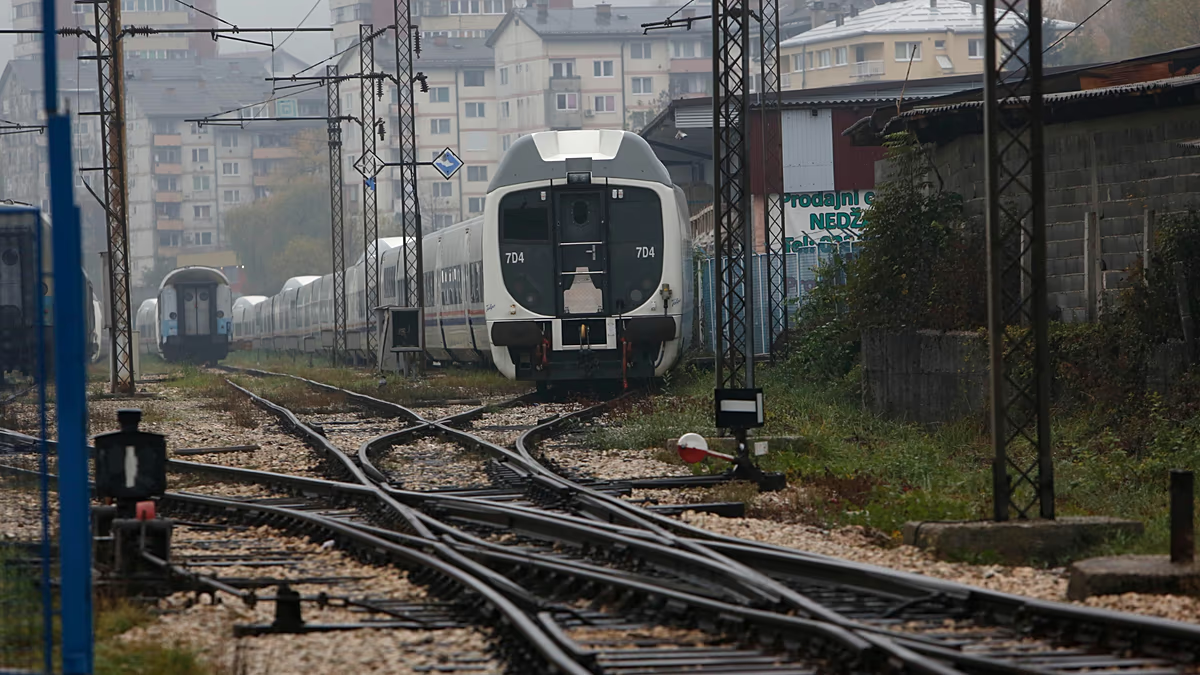
The audit, examining the period from 2015 to mid-2025, reveals a system fraught with oversight challenges and delayed progress. Of the 43 transport investment grants approved in the four audited countries, a mere six projects had been completed by the time of the review. Every single one of the twelve projects scrutinized in detail was behind schedule, with some delays stretching over two years. These holdups were compounded by logistical and administrative problems, including designs that required revision after construction had begun and persistent bottlenecks in permitting. The slow pace of delivery threatens to undermine the very connectivity the EU seeks to achieve, leaving critical corridors incomplete and raising questions about the timely integration of the region.
A critical flaw identified by the auditors lies in the European Commission’s management and oversight of these funds. In a concerning practice, the Commission has frequently disbursed large, lump-sum grants that were not proportionate to the actual progress achieved on the projects. This approach weakens Brussels’ primary lever for ensuring compliance and keeping construction on track: the ability to tie funding to concrete milestones. Furthermore, the Commission has heavily outsourced the day-to-day supervision of these complex projects to international financial institutions. While these institutions provide essential expertise, the audit found that the Commission’s own oversight of their work is often limited, creating a disconnect between the source of the funding and the reality of its implementation.
This reliance on intermediaries has, according to the report, led to significant gaps in transparency and accountability. Project information held by the Commission was frequently outdated, delays were inadequately reported, and monitoring systems failed to provide a real-time, accurate picture of progress. The audit recommends that the Commission must demand more robust evidence from its financial partners, specifically regarding how they assess and mitigate risks like insufficient local capacity, conflicts of interest, or a lack of genuine ownership from national beneficiaries. The current model, where Brussels provides the bulk of the funding but depends on others for ground-level insight, is failing to ensure that European taxpayers’ money is being used effectively and efficiently.
ECA member Laima Andrikienė summarized the stakes clearly: “Well-developed infrastructure is a step towards meeting the bloc’s accession criteria. The Western Balkans’ transport projects are progressing too slowly to connect the region to the EU this decade.” The consequences of these delays are tangible. Several major rail projects remain unfinished, and there is a risk that even completed infrastructure segments will remain underused if connecting sections, which may be funded by other donors, are not built simultaneously. The audit acknowledges that EU funding has supported valuable projects that strengthen regional links, but it questions whether the Commission has the tools to translate these investments into tangible, timely results that citizens and businesses can experience.
Ultimately, the report from the European Court of Auditors serves as a crucial wake-up call. It shifts the focus from the challenge of simply allocating funds to the more complex task of ensuring robust management, vigilant oversight, and sustainable results after the money is committed. The EU’s credibility and strategic goals in the Western Balkans are on the line. To bridge the gap between ambition and reality, the Commission must urgently improve project selection, strengthen its monitoring mechanisms, and reclaim a more direct and accountable role in supervising the implementation of its flagship connectivity initiative. The path to integration is being paved, but it needs firmer ground and clearer direction to reach its destination.