

Paragraph 1
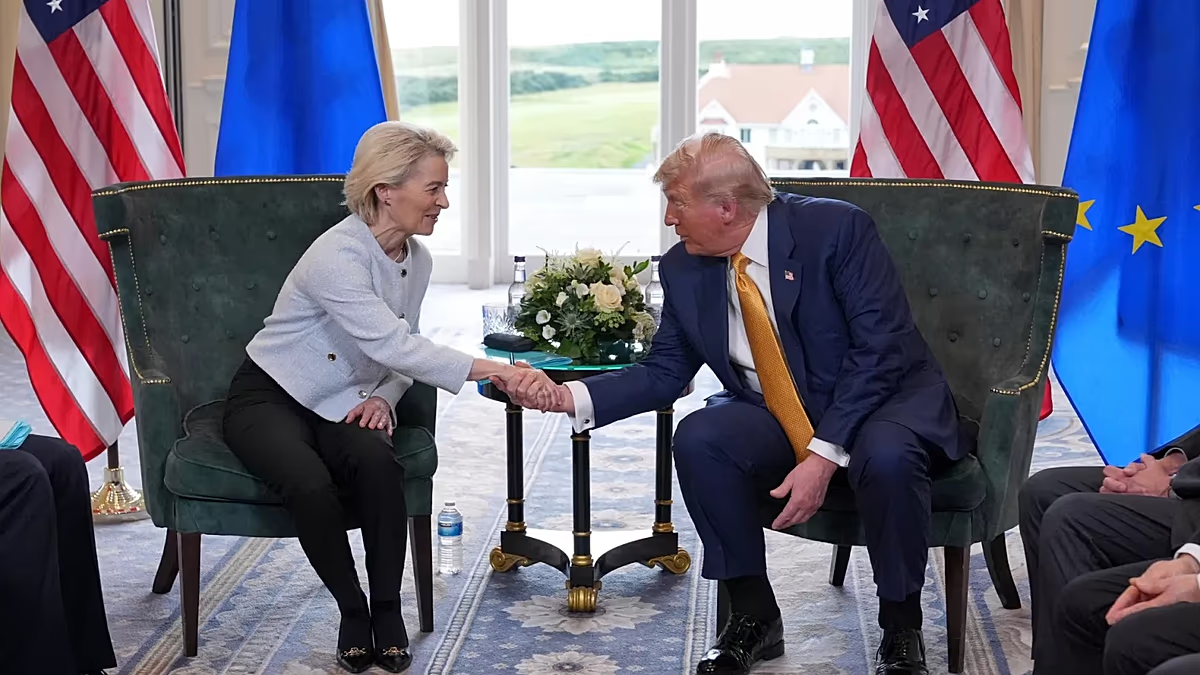
In a significant stride toward resolving transatlantic trade friction, the European Union has moved decisively to formalize a pivotal agreement with the United States. Following a provisional political accord reached just one week prior, ambassadors from all EU member states granted their crucial approval on a Wednesday in late May 2026. This endorsement clears a major procedural hurdle, setting the stage for the deal’s final adoption by the EU Council. The urgency behind this step is palpable, driven largely by intense pressure from Washington. The agreement itself was originally brokered the previous summer between European Commission President Ursula von der Leyen and U.S. President Donald Trump, aiming to calm a resurgence of trade tensions. However, the looming threat of punitive U.S. tariffs on European automobiles—specifically, a potential 25% levy if the EU fails to implement the pact by July 4th—has injected a pressing deadline into the diplomatic process.
Paragraph 2
While the EU’s executive and member states have signalled their readiness to proceed, the journey is not yet complete. The agreement must still secure the formal consent of the directly elected European Parliament. A tentative vote is scheduled for the Parliament’s plenary session in mid-June, where Members of the European Parliament (MEPs) will have their definitive say. Representing the collective voice of EU citizens, MEPs have approached the deal with notable caution and scrutiny. A spokesperson for the Cypriot Presidency, which negotiated the final text with Parliament on behalf of member states, framed the recent compromise as “an important step in delivering on the EU’s commitments.” The spokesperson emphasized that the negotiated version includes “robust safeguards” designed to protect the interests of European industries and businesses, a clear nod to the Parliament’s demands for a stronger defensive stance.
Paragraph 3
The inherent asymmetry of the deal’s core terms explains much of the European Parliament’s hesitancy. At its heart, the agreement requires the EU to eliminate its tariffs on the vast majority of U.S. industrial goods. In return, the United States is to maintain its existing import duties at a ceiling of 15%, not eliminate them. This lopsided structure has led many MEPs and analysts to view the pact as a concession made under duress, more about damage limitation than mutual economic benefit. The primary European objective has been less about gaining new market access and more about averting the catastrophic economic impact of Trump’s threatened tariffs on the vital European automotive sector. Thus, the negotiation within Europe has focused less on altering this fundamental imbalance and more on building in mechanisms to control the risks it presents.
Paragraph 4
In response to these perceived vulnerabilities, EU lawmakers fought for and secured critical conditional clauses. Chief among these is a built-in “sunset” provision. This mechanism means the entire trade agreement will automatically terminate on December 31, 2029, unless both sides consciously agree to renew it. This gives the EU a clear, pre-defined exit ramp and prevents the arrangement from becoming a permanent fixture if it proves detrimental. Furthermore, MEPs were deeply concerned by President Trump’s repeated threats to impose new tariffs, actions that would blatantly violate the spirit and letter of the deal. The sunset clause acts as a crucial check, ensuring the agreement is subject to regular reassessment based on its actual performance and U.S. compliance.
Paragraph 5
Beyond the sunset clause, European negotiators embedded another powerful safeguard: a suspension mechanism. This provision directly addresses a longstanding point of contention—U.S. tariffs on European steel and aluminium imports, which were imposed under the guise of national security and have been a thorn in the side of EU-US relations for years. Under the final terms, if the United States fails to lift these specific tariffs by the end of 2026, the European Commission can suspend the entire newly-minted trade deal. This suspension could be triggered at the direct request of either the European Parliament or any single EU member state, decentralizing the power to retaliate and ensuring swift political action is possible. This tool provides the EU with tangible leverage to hold the U.S. accountable on this sensitive issue.
Paragraph 6
The path forward now hinges on the European Parliament’s imminent vote. MEPs find themselves balancing complex considerations: the immediate, severe risk of auto tariffs that could devastate industries and jobs across the continent, against the longer-term unease of locking the EU into an asymmetrical deal with an unpredictable partner. The safeguards they have negotiated—the sunset clause and the suspension mechanism—represent a hard-won political compromise, an attempt to navigate this dilemma by creating opportunities for review and recourse. The coming weeks will determine whether this package, born of pressure and crafted with defensive ingenuity, will be deemed sufficient to secure democratic consent and become the new, albeit temporary, foundation for EU-US trade relations.