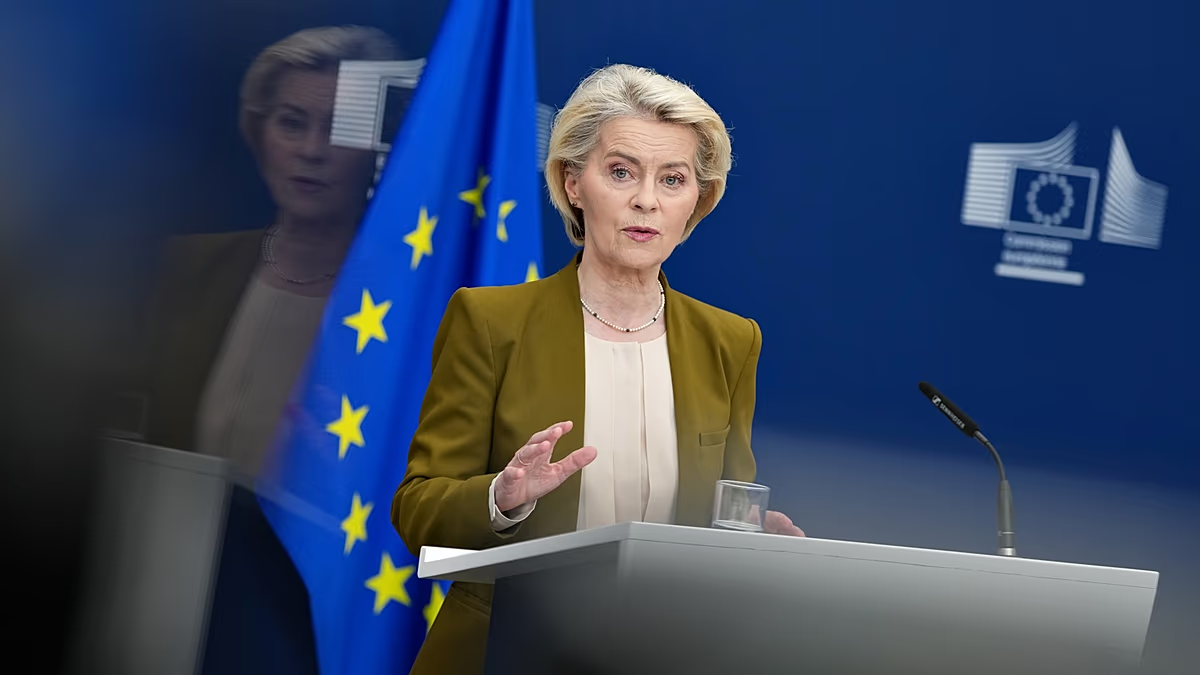



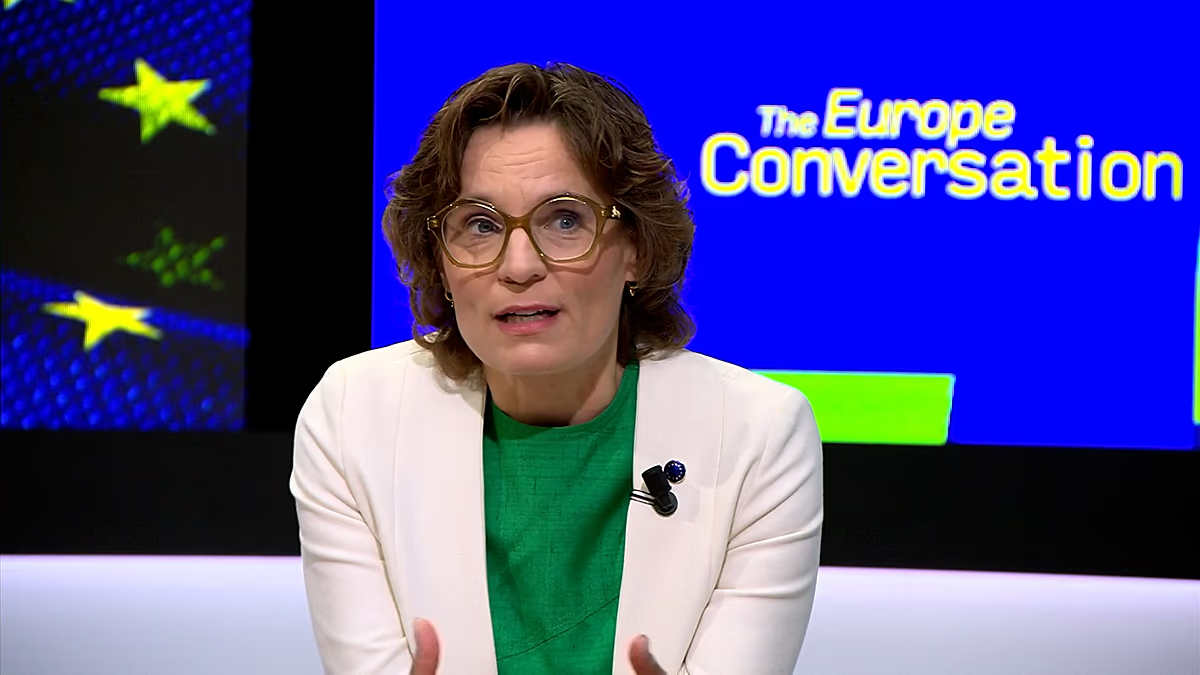
In the contemporary landscape of European security, the line between environmental stewardship and national defence is rapidly blurring. European Commissioner Jessika Roswall has articulated a compelling vision where the EU’s environmental policy must now be considered a cornerstone of its defence strategy. This paradigm shift stems from a sobering recognition that the impacts of climate change—including biodiversity loss, water scarcity, crop failure, floods, and droughts—pose an existential risk not only to Europe’s ecosystems but to its fundamental security and stability. These environmental crises are no longer distant, abstract concerns; they are immediate threats that can destabilise societies, cripple economies, and ignite conflicts, thereby demanding a response integrated into the very core of strategic defence planning.
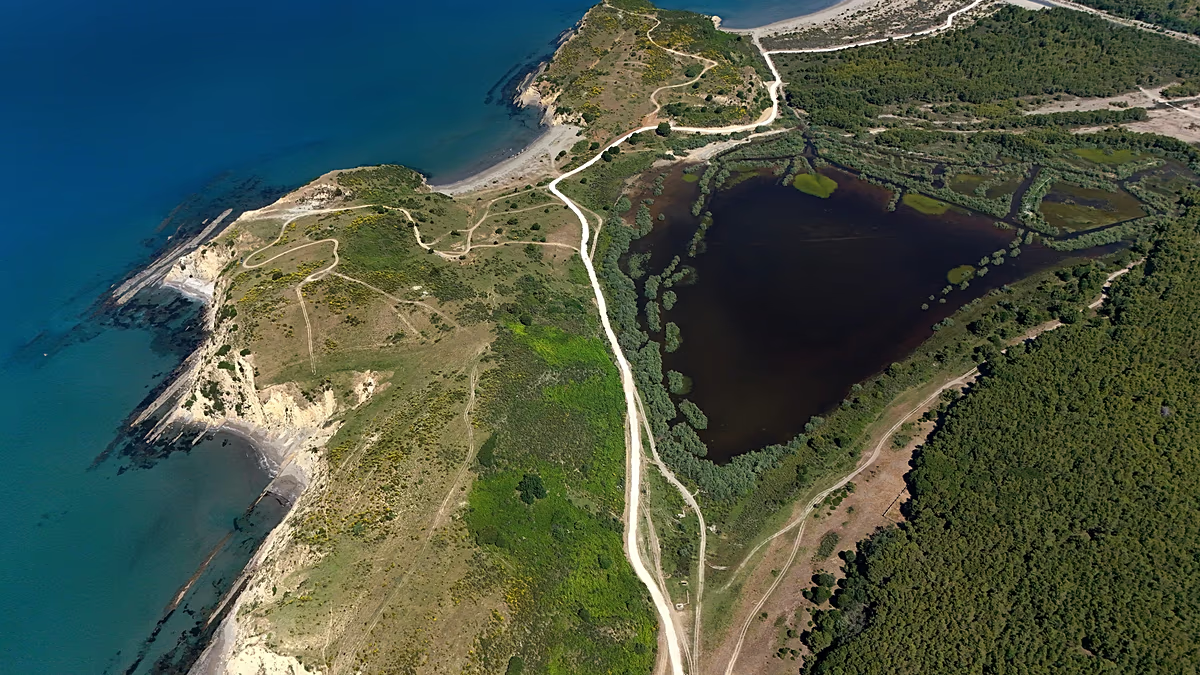
The tangible link between environment and security is vividly illustrated by the issue of water. Commissioner Roswall emphasises that water is not merely a resource for daily life; it is indispensable for energy and food production. When water becomes scarce, societal trouble ensues, escalating into a direct security threat. On a global scale, water scarcity is already a known driver of conflicts. Conversely, natural resources can be proactively harnessed as strategic tools for defence. For instance, Poland, Finland, and Lithuania are exploring the restoration and re-flooding of drained peatlands along their eastern borders. This initiative serves a dual purpose: combating climate change by restoring vital wetlands and enhancing national defence by creating boggy terrain that physically impedes the advance of heavy military equipment like tanks. This innovative approach, where ministries of environment and defence collaborate, exemplifies how ecological restoration can literally reshape borders into passive defensive barriers.
This interconnected threat is substantiated by high-level security assessments. A recent report from the UK’s Department for Environment, Food and Rural Affairs, understood to involve intelligence agencies MI5 and MI6, identified natural degeneration as the primary threat to the UK’s national security. The report warned that, without major intervention, biodiversity loss risks creating geopolitical instability, economic insecurity, conflict, migration, and intensified competition for scarce resources. Commissioner Roswall notes that these effects are equally applicable to many other nations, underscoring a pervasive transnational risk. The conclusion is stark: failing to invest in nature conservation carries not only an economic cost but a profound security cost. In this light, investment in environmental resilience is not an optional policy choice but a mandatory imperative for safeguarding the future.
The security implications extend deeply into economic dependencies and supply chain vulnerabilities. The UK report highlighted concerns over reliance on global markets for food and fertilisers. For the EU, similar dependencies have been painfully exposed by geopolitical events, such as the Iranian blockade of the Strait of Hormuz—a key waterway for agricultural supplies—which dramatically increased fertiliser prices for European farmers. Commissioner Roswall stresses that “dependency comes with a cost.” Europe’s reliance on non-EU countries for energy and critical raw materials exposes it to geopolitical manipulation and market volatility. In this context, she argues that the Circular Economy Act, which she spearheads, will be instrumental in achieving Brussels’ strategic autonomy. As global competition for critical raw materials intensifies, Europe must enhance its self-sufficiency. The continent, she notes, is a “goldmine” of raw materials already present within its borders, but these are not utilised efficiently. Circularity is the key to unlocking this internal wealth.
The forthcoming Circular Economy Act, scheduled for proposal in late 2026, is designed to operationalise this shift. Its core aims are to increase the proportion of materials recovered from waste for reuse and to reduce the share of imported virgin materials—pristine resources extracted from nature—used in products like new electronic equipment. To achieve this, the bloc intends to create a single market for secondary raw materials (recycled materials recovered from waste). The challenge, as Roswall explains, is making the business case for these secondary materials. Currently, virgin materials are often cheaper, but they are scarce and increasingly “weaponised” in geopolitical struggles. Breaking dependency requires making recycled materials economically competitive. This endeavour is not merely a technical or regulatory project; it necessitates a fundamental change in mindset among consumers, policymakers, and businesses to value and prioritise circularity over linear consumption.
Ultimately, Commissioner Roswall’s message synthesises environmental and security agendas into a single, urgent call for action. The threats posed by environmental degradation are multifaceted security threats, while the solutions—like wetland restoration for border defence or circular economies for resource autonomy—are multifaceted security strategies. This integrated approach reframes environmental policy as proactive defence work. It recognises that security in the 21st century is not solely guaranteed by troops and tanks, but equally by resilient ecosystems, sustainable water supplies, stable food systems, and sovereign, circular resource loops. The task ahead is to systematically implement this vision, transforming Europe’s environmental stewardship into a robust pillar of its strategic defence and ensuring its long-term stability in an increasingly volatile world.