


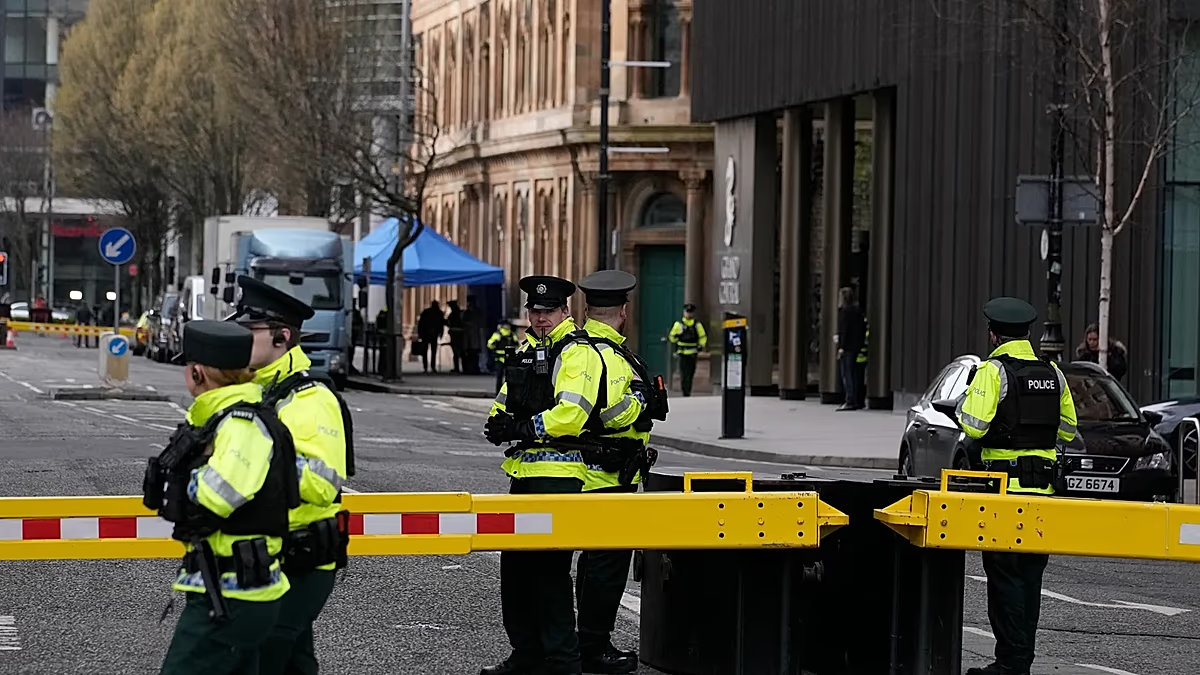
A deeply concerning violent assault occurred on the streets of Belfast on Monday evening, sending shockwaves through the local community and reverberating across the United Kingdom. According to the Police Service of Northern Ireland (PSNI), a stabbing incident took place shortly after 10:30 PM in the New Lodge area of the city. The police swiftly arrested a man in his 30s, believed to be Somalian, on suspicion of attempted murder. The victim, a man in his 40s, sustained serious and life-altering injuries to his face, neck, and back and was rushed to the hospital for urgent treatment. The PSNI declared the event a “critical incident,” with Assistant Chief Constable Ryan Henderson condemning the “brutal attack” and vowing that the investigation was proceeding with the utmost seriousness to establish a motive.
The gravity of the incident was amplified by the rapid and widespread circulation of a graphic video on social media. The footage, which authorities are now analyzing, depicts a scene of extreme violence, showing a man being stabbed multiple times in the head with a knife in what appears to be an attempted beheading. This visual evidence transformed the report from a local crime story into a nationally traumatic event, forcing the horrific reality of the attack into the public consciousness. In response, the PSNI has made a public appeal for witnesses, dash-cam footage, or any CCTV recordings from the area to aid their investigation, while also confirming they recovered a knife from the scene.
Political leaders from across the spectrum moved quickly to condemn the violence and express solidarity with the victim. UK Prime Minister Keir Starmer took to social media platform X to call the attack “horrific” and “sickening,” stating he had “absolutely no tolerance for abhorrent scenes of violence like this on our streets.” His sentiments were echoed by Northern Ireland’s First Minister, Michelle O’Neill, who described the incident as “harrowing.” Both leaders emphasized the importance of allowing the police the necessary space to conduct a full investigation to ensure justice is served, while also thanking the first responders and members of the public who intervened.
However, the tragedy was swiftly exploited by far-right elements within the UK, who seized upon the graphic footage and the nationality of the suspect to fuel pre-existing narratives and tensions. Prominent anti-immigration activist Stephen Yaxley-Lennon, widely known as Tommy Robinson, shared the violent video and used it as a rallying cry to demand immediate public protests. This reaction placed the Belfast stabbing within a broader and highly volatile national context, coming just days after violent skirmishes in Southampton that were linked to the police handling of a previous murder case. These actors sought to frame the isolated Belfast attack as symptomatic of broader societal failures, dangerously inflaming communal tensions.
The PSNI now faces the complex dual challenge of conducting a meticulous criminal investigation while also managing the significant community impact and heightened societal tensions resulting from the attack and its politicization. Assistant Chief Constable Henderson explicitly acknowledged this, stating the assault would have “sent shockwaves through the community causing real concern.” The force’s primary focus remains on supporting the victim, pursuing justice through the legal system, and providing reassurance to a frightened public. Their work is set against a backdrop of a national conversation about violence, policing, and social cohesion that has become increasingly polarized.
Ultimately, this incident in Belfast is a stark reminder of the human cost of sudden violence and the fragile state of public discourse. A man lies seriously injured, a community is left shaken, and a nation is confronted with disturbing imagery that tests its collective conscience. While the judicial process will determine the legal accountability of the arrested individual, the social aftermath presents a different test. It challenges society to condemn violence unequivocally, support victims and investigators, and resist the forces that seek to exploit such tragedies to deepen divisions and incite further unrest. The path forward requires a commitment to justice, compassion, and a steadfast rejection of hatred in all its forms.