

The recent election results in Ireland have revealed an intriguing political scenario, with the two dominant center-right parties, Fine Gael and Fianna Fáil, poised to form the next government. This development marks a departure from the global trend where incumbents are often ousted by disaffected voters following a prolonged period of pandemic management, international upheaval, and escalating cost-of-living issues. Despite the pressures that characterized the electoral landscape, both parties managed to secure a parliamentary foothold, albeit with reduced vote shares that will necessitate intricate coalition negotiations to establish the new administration.
As the final election results trickle in, it becomes clear that a majority in the 174-seat Dáil Éireann, the lower house of parliament, has been filled. Current projections indicate Fianna Fáil winning around 40 seats and Fine Gael around 33, while the left-leaning Sinn Féin captured 34 seats. Sinn Féin’s performance, while commendable, poses a challenge as it attempts to cultivate potential coalition partners. Historically, both Fine Gael and Fianna Fáil have resisted forming alliances with the party, primarily due to its leftist policies and historical connections with the Irish Republican Army (IRA). Therefore, although Sinn Féin’s leader, Mary Lou McDonald, acknowledges the call for change from voters, the path to a coalition remains fraught with obstacles.
The likelihood is that no single party will command enough seats to govern autonomously. Instead, the most probable outcome will see Fine Gael and Fianna Fáil, under the outgoing Prime Minister Simon Harris, collaborate once again. Discussions about leadership roles are already taking shape: both Harris and Fianna Fáil’s leader Micheál Martin may consider a job-sharing arrangement to share the responsibilities of the Taoiseach, Ireland’s head of government. Harris expressed a sense of cautious optimism about the upcoming political landscape, emphasizing that his party remained poised to play a significant role in governance in the ensuing years.
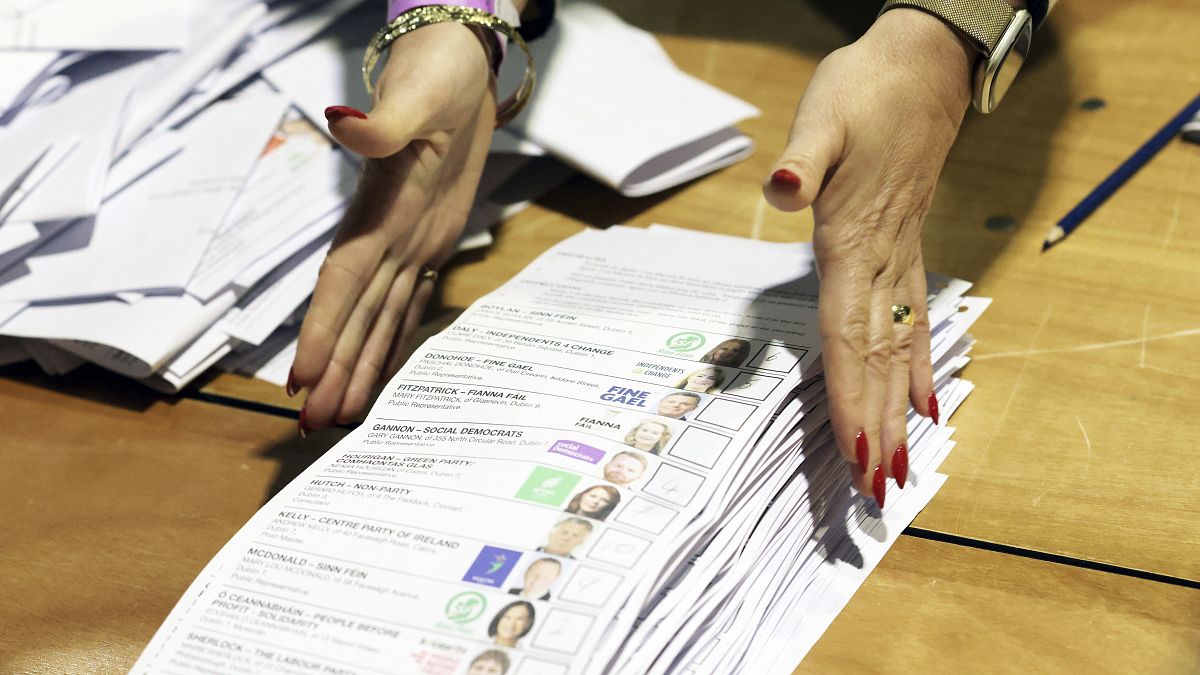
The electoral system employed in Ireland is noteworthy, as it utilizes proportional representation whereby voters rank candidates in order of preference within each of the country’s 43 constituencies. This complexity means that the results are not immediately clear and can take days or weeks to become fully apparent. Key issues shaping the electoral discourse included the soaring cost of living, the acute housing crisis, and immigration challenges, all of which formed the backdrop to the three-week election campaign. These topics resonate strongly among a populace grappling with the implications of rapid socio-economic transitions.
Despite the tumultuous global environment and the difficulties voters have faced in recent years, Ireland’s election results suggest a certain level of voter loyalty towards the incumbent coalition. The endurance of Fine Gael and Fianna Fáil, two parties that have dominated Irish politics for the better part of a century, indicates that Irish voters are perhaps more inclined to support well-established political entities rather than resorting to radical change. Yet, the performance of the Green Party signals a shift, as they suffered severe losses this time around, potentially indicating a changing political climate in Ireland.
Moving forward, it appears that Fine Gael and Fianna Fáil may need to expand their coalition efforts, looking towards the left-leaning Labour Party or Social Democrats for potential partnerships, especially given the fractious nature of the election results. As the political landscape of Ireland evolves, the dynamics between these parties, alongside emerging independent lawmakers, will be vital in shaping policy directions, particularly concerning pressing issues like housing, immigration, and economic stability. The weeks ahead promise to be critical as coalition talks unfold and a new government framework emerges, reflecting how Ireland navigates its complex political terrain amid lingering global challenges.