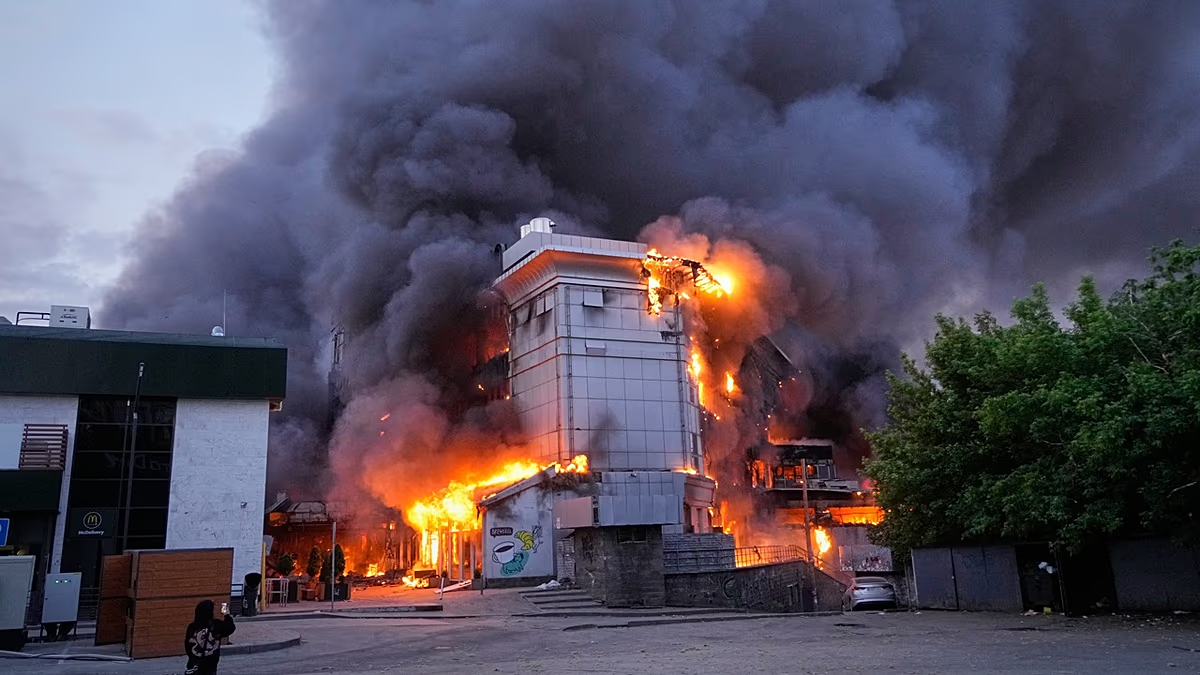
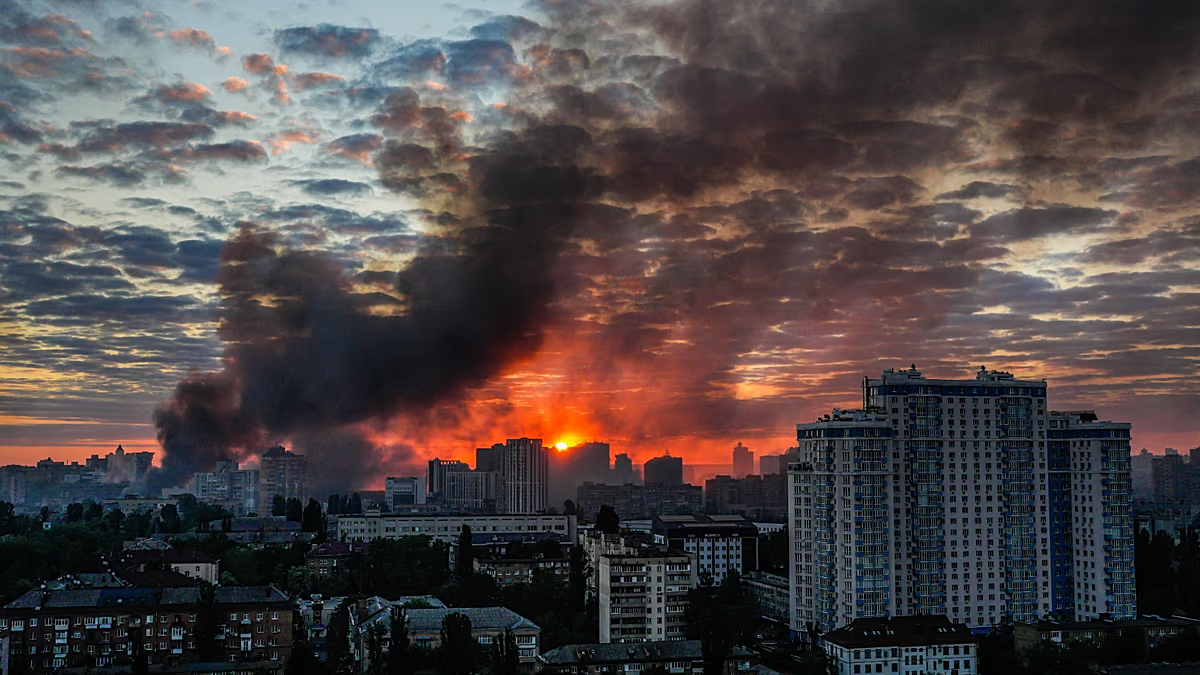



In a significant and alarming escalation of the ongoing war, Ukraine faced a massive aerial assault overnight into Sunday, an attack distinguished by the confirmed Russian use of a powerful and politically volatile weapon system. Ukrainian President Volodymyr Zelenskyy reported that an “Oreshnik” intermediate-range ballistic missile was deployed against the Kyiv region. The Russian Defence Ministry later acknowledged the launch, framing it as a retaliatory strike for what it claimed were Ukrainian attacks on “civilian targets”—allegations which Kyiv has firmly denied. This specific use of the “Oreshnik” immediately transformed a large-scale military attack into a major international incident, drawing swift and severe condemnation from Western leaders who saw it as a dangerous crossing of a new threshold.
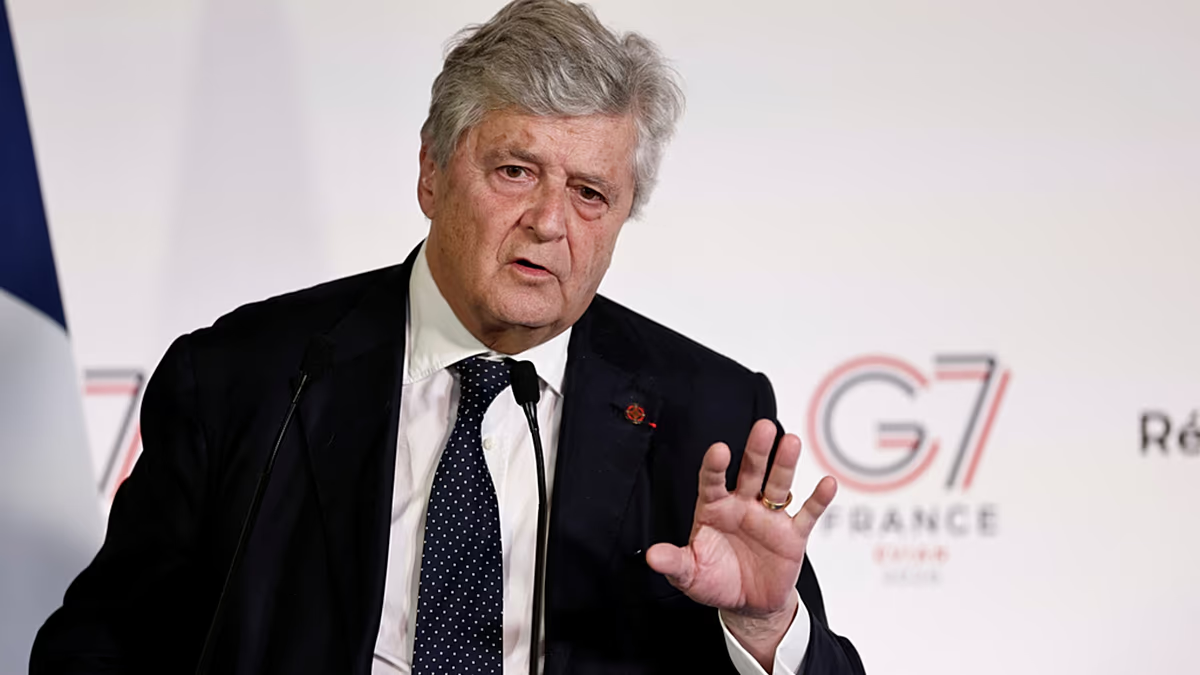
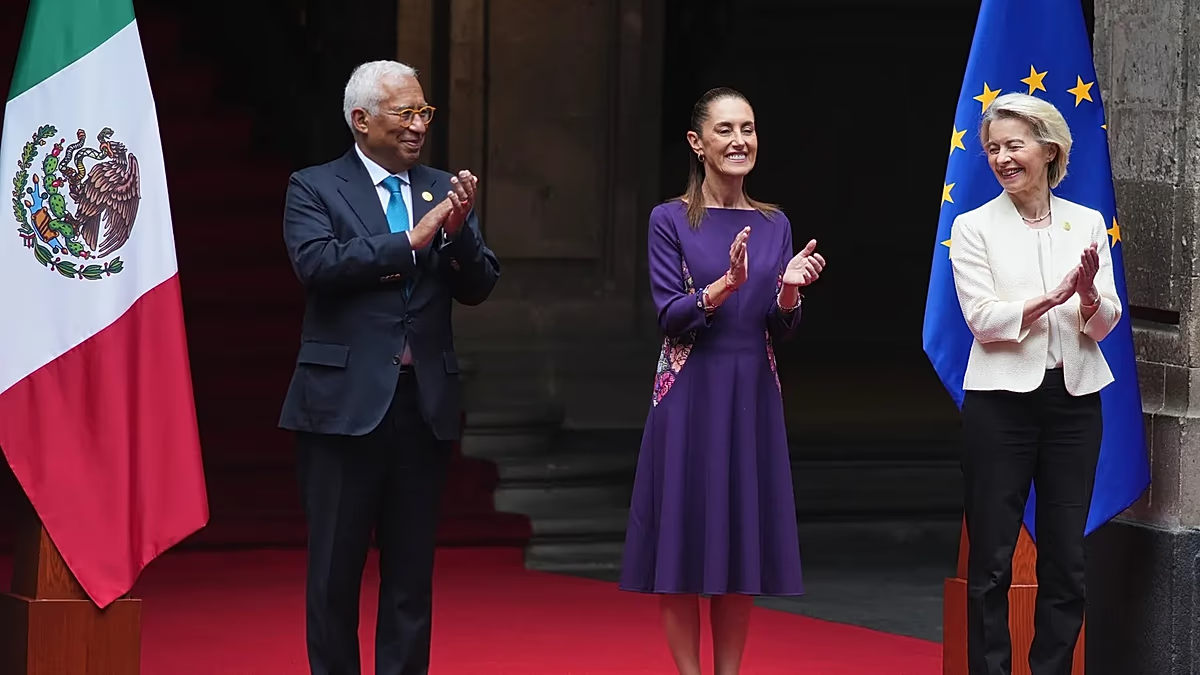
The international reaction was both unified and stark in its criticism. German Chancellor Friedrich Merz condemned the attack as a “reckless escalation” and reaffirmed Germany’s steadfast support for Ukraine. French President Emmanuel Macron, also condemning the strikes, interpreted the deployment of the nuclear-capable “Oreshnik” as a telling sign of a deadlocked Russian war effort and a perilous escalation. He vowed continued French support for Ukraine and the pursuit of a just peace. From the heart of the European Union, Commission President Ursula von der Leyen described the assault as a demonstration of “the Kremlin’s brutality and disregard for both human life and peace negotiations,” arguing that such terror against civilians signals desperation, not strength. She pledged ongoing EU support, with a specific focus on bolstering Ukrainian air defenses.
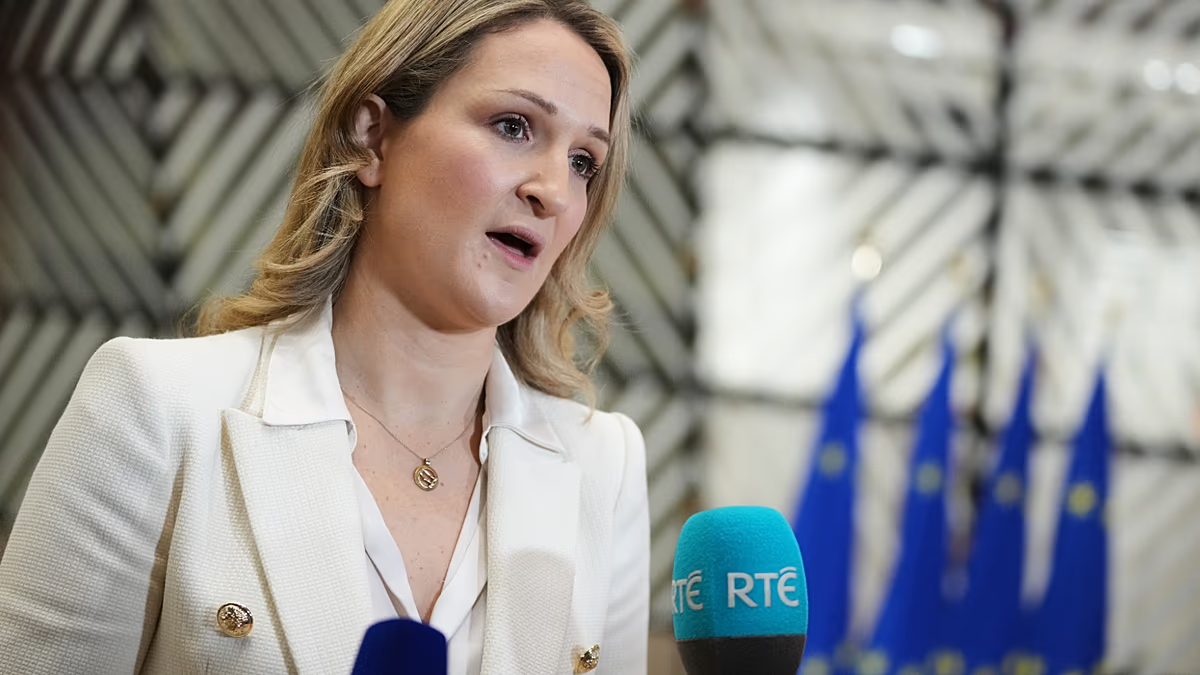
Echoing this sentiment, EU foreign policy chief Kaja Kallas labeled the attacks “abhorrent acts of terror” deliberately aimed at city centers, a tactic she attributed to Russia’s military stagnation. She singled out the “Oreshnik” missile as particularly alarming, calling its use “reckless nuclear brinkmanship,” and indicated that EU foreign ministers would discuss ramping up pressure on Moscow. This concentrated wave of diplomatic fury underscores how the “Oreshnik” is viewed not just as another weapon, but as a symbol of heightened threat. Its capabilities, as touted by Moscow, are a central part of that menace. Russian President Vladimir Putin has hailed it as a “state-of-the-art” intermediate-range ballistic missile, reportedly with a striking range of 3,000 to 5,500 kilometers—a distance that theoretically places vast swathes of European territory within its reach.
The “Oreshnik” is not an entirely new entry on the battlefield; its first known use was recorded in 2024 during an attack on Dnipro. However, it has since evolved into one of the Kremlin’s most closely monitored strategic projects. Its reappearance in this latest barrage was part of an overwhelmingly large offensive. According to the Ukrainian Air Force, Russia launched approximately 90 missiles and cruise missiles alongside 600 drones. While Ukrainian defenses succeeded in intercepting many of the incoming threats, dozens still struck their targets, causing widespread damage and underscoring the relentless intensity of the assault.
Among the civilian infrastructure struck was the centrally located Kyiv studio of German public broadcaster ARD. The building was heavily damaged and partially destroyed, likely by a massive blast wave from a nearby impact. The force shattered windows and devastated interior spaces. Fortunately, the studio was empty at the time of the strike, and no employees were injured—a small mercy in an otherwise destructive event. This attack on a major Western media outlet’s facility further highlighted the indiscriminate and terrorizing nature of the bombardment, which appeared to pay little heed to distinguishing between purely military and civilian or symbolic sites.
In sum, this weekend’s events represent a concerning confluence of scale, symbolism, and strategic messaging. The deployment of the long-range, nuclear-capable “Oreshnik” missile, embedded within a vast swarm of drones and other projectiles, signals Russia’s continued willingness to escalate and test international resolve. The unified and forceful condemnation from European leaders reaffirms their view of these tactics as acts of desperation and terror, strengthening their commitment to military and diplomatic support for Ukraine. As the war grinds on, the use of such strategically significant weapons transforms individual battles into broader geopolitical confrontations, raising the stakes and deepening the crisis with each new escalation.