



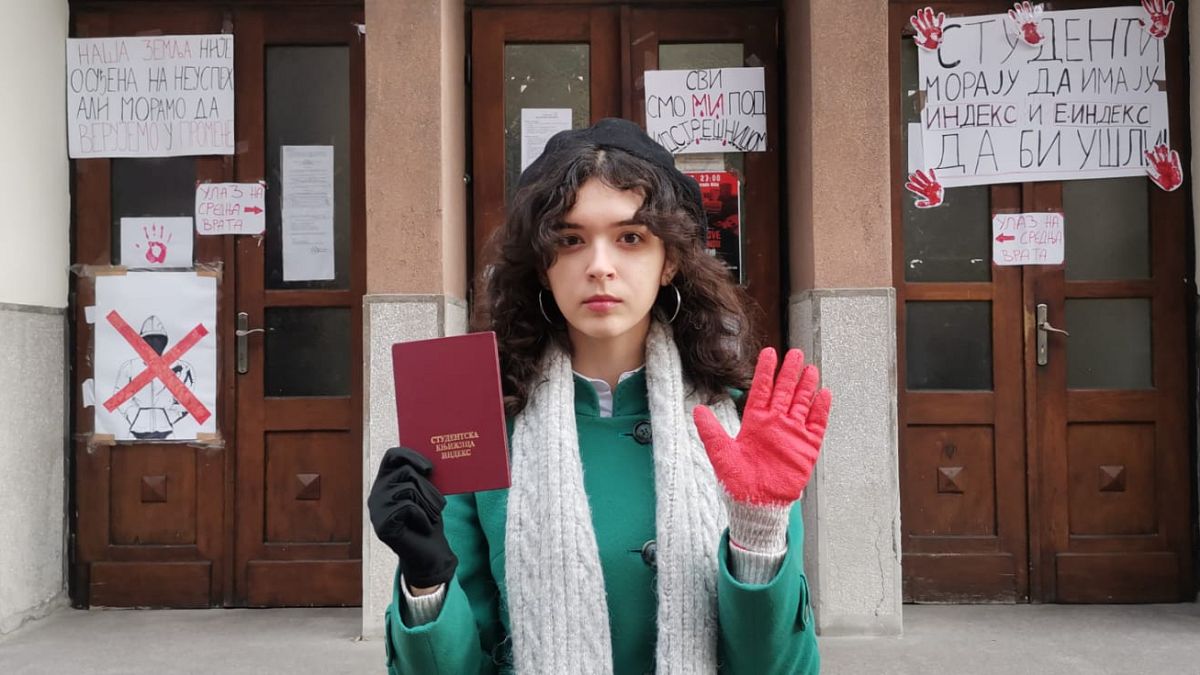
The collapse of a train station awning in Novi Sad, Serbia, tragically claimed 15 lives and injured two, sparking a widespread protest movement driven by students demanding justice and accountability. The incident, occurring on November 1st, resonated deeply with young people across the country, many of whom frequented the station. The students believe that corruption and substandard renovation work, part of a larger infrastructure deal with Chinese state companies, contributed to the disaster. The protests, initially peaceful, were met with police violence, including tear gas and arrests. Students recount being detained on dubious charges, later dropped due to lack of evidence, highlighting the perceived government suppression of dissent. The protests evolved, incorporating symbolic acts like red handprints on buildings and city-wide moments of silence to honor the victims and underscore the government’s alleged culpability.
The student movement gained momentum when a peaceful observance of silence at the Faculty of Dramatic Arts (FDU) in Belgrade was disrupted by individuals identified as ruling party officials and activists. This attack catalyzed the formation of student plenums and blockades at FDU and other universities, broadening the demands to include the prosecution of the attackers and the release of all documents related to the awning’s reconstruction. The students emphasized their commitment to democratic processes within the movement, ensuring every voice is heard and every decision is voted upon. This democratic ethos stands in stark contrast to the perceived erosion of democratic principles in Serbia, a key motivator for the student activism. The collaboration between different faculties, such as architecture and law students analyzing released government documents, highlights the interdisciplinary nature of their approach.
The students’ demands center on transparency and accountability. They seek irrefutable proof, not just assurances, that the reconstruction was conducted properly and legally. Their insistence on full disclosure of documents reflects their distrust of official narratives and their determination to uncover the truth behind the tragedy. The collaboration across faculties demonstrates a strategic approach, leveraging specialized expertise to scrutinize government claims. This collective effort underscores the students’ commitment to uncovering the truth and holding those responsible accountable. They see their movement as a defense of democracy itself, aiming to demonstrate its effectiveness against a system they perceive as increasingly authoritarian.
As the protests gained national attention, the students faced accusations of being “paid by the West,” a common trope used to discredit dissent by linking it to foreign influence. They vehemently deny these claims, asserting their independence from any political party and emphasizing their motivation as citizens fighting for their fundamental rights. Their focus remains on the core issues: ending corruption, ensuring the rule of law, and achieving basic safety and security in their own country. The accusations of foreign funding serve to highlight the challenges faced by activists in Serbia and the government’s attempts to delegitimize their movement. The students’ rejection of these claims reaffirms their commitment to a grassroots movement driven by genuine concerns for their country’s future.
The students acknowledge a “rational fear” stemming from reports of government surveillance utilizing spyware and forensic tools to target activists and journalists. Despite this intimidation, they remain resolute, prioritizing the greater good of their country over personal safety. Their courage in the face of potential repercussions underscores the depth of their commitment to change. The fear of surveillance, however, is a tangible concern, highlighting the risks associated with dissent in Serbia. This context adds another layer of complexity to the students’ struggle, underscoring their bravery and resilience.
The arrest of 13 individuals, including a former government minister, in connection with the awning collapse, while a significant development, hasn’t satisfied the students’ demands. They intend to continue their blockade and protests, demanding deeper systemic change beyond individual prosecutions. Their persistence highlights the broader scope of their goals, which extend beyond achieving justice for the Novi Sad victims to addressing the underlying issues of corruption and lack of accountability that they believe plague Serbia. The students’ continued action underscores their commitment to long-term change and their refusal to be pacified by isolated arrests. Their focus remains on creating a safer and more democratic Serbia for future generations.