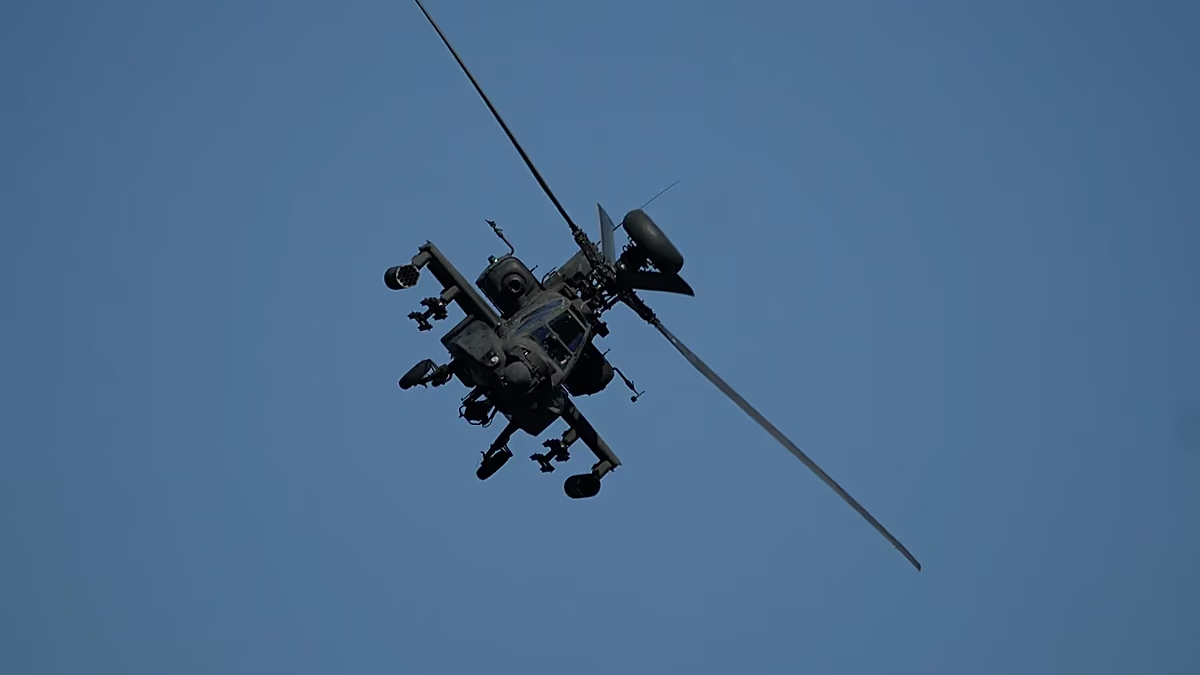



The recent decision by Ukrainian President Volodymyr Zelenskyy to name an elite military unit after “UPA Heroes” has ignited a profound and painful diplomatic crisis with Poland, a nation that has been among Ukraine’s most stalwart defenders. This move, intended to honor the unit’s modern battlefield prowess, struck a raw historical nerve in Poland, prompting President Karol Nawrocki to announce the unprecedented step of revoking Zelenskyy’s Order of the White Eagle, Poland’s highest state distinction. At its core, this conflict is not about current politics or military aid, but about the inescapable weight of history and two starkly divergent memories of the same organization. The crisis reveals how the symbols of the past can erupt into the present, threatening to unravel the hard-won solidarity of the present day.
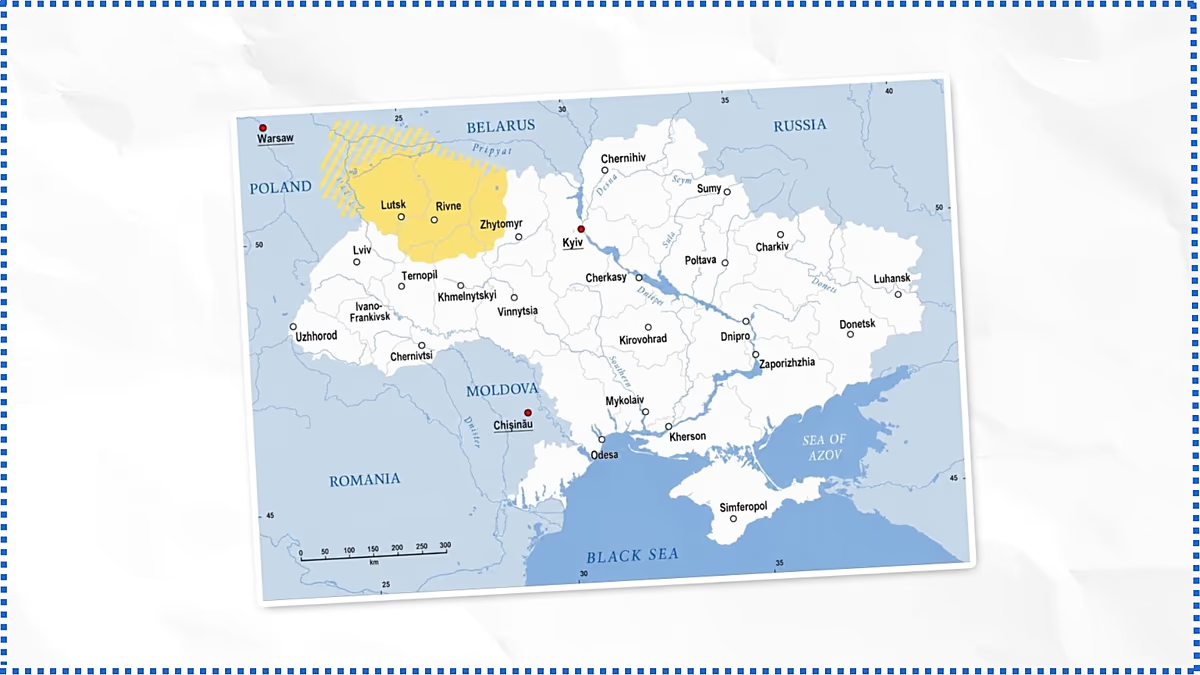
For Poland, the Ukrainian Insurgent Army (UPA) is synonymous with one of the darkest chapters in its national history. During the 1940s, amidst the chaos of World War II, UPA forces engaged in a campaign of ethnic cleansing against Polish civilians in the historic region of Volhynia (Wołyń). The atrocities, which peaked in 1943, resulted in the estimated deaths of 100,000 Polish men, women, and children, often in acts of horrifying brutality. This violence also targeted Jewish survivors who had escaped the Nazis, adding another layer of tragedy. In the Polish collective memory, Volhynia is a wound that has never fully healed, a symbol of profound loss and betrayal. Therefore, seeing a modern Ukrainian military unit adorned with the UPA’s name is not seen as a tribute to anti-Soviet resistance, but as a shocking glorification of perpetrators of genocide against the Polish nation.
In Ukraine, however, the historical narrative surrounding the UPA is fundamentally different. Viewed through the lens of the long struggle for national self-determination, the UPA is remembered primarily as a force of anti-Soviet and anti-Nazi resistance, fighting for an independent Ukrainian state. This legacy of defiance has taken on renewed potency since Russia’s full-scale invasion in 2022. For many Ukrainians, the UPA symbolizes the enduring spirit of resistance against an imperial aggressor from the east, a spirit they see mirrored in their own soldiers’ bravery today. Ukrainian officials have stressed that the unit’s new name originated as a request from the soldiers themselves, a grassroots gesture meant to invoke a tradition of resilience, with no intent to offend Poland. This stark dichotomy of memory—where one nation’s heroes are another’s murderers—lies at the heart of the current impasse.
The strategic fallout from this historical clash is dangerously real. The crisis has escalated beyond symbolic reprimands, with some voices in Warsaw now calling for Poland to block Ukraine’s accession to the European Union. This threat strikes at the very heart of Ukraine’s post-war aspirations and European identity. Furthermore, the dispute risks poisoning the well of public solidarity. For over two years, Polish society has opened its homes and hearts to millions of Ukrainian refugees, and the Polish government has been a leading advocate for military and financial support. This shared struggle forged a powerful bond, but that bond is now under severe strain. If citizens in both countries begin to see the other as disrespectful of their deepest historical pains, the foundational people-to-people alliance could begin to fracture.
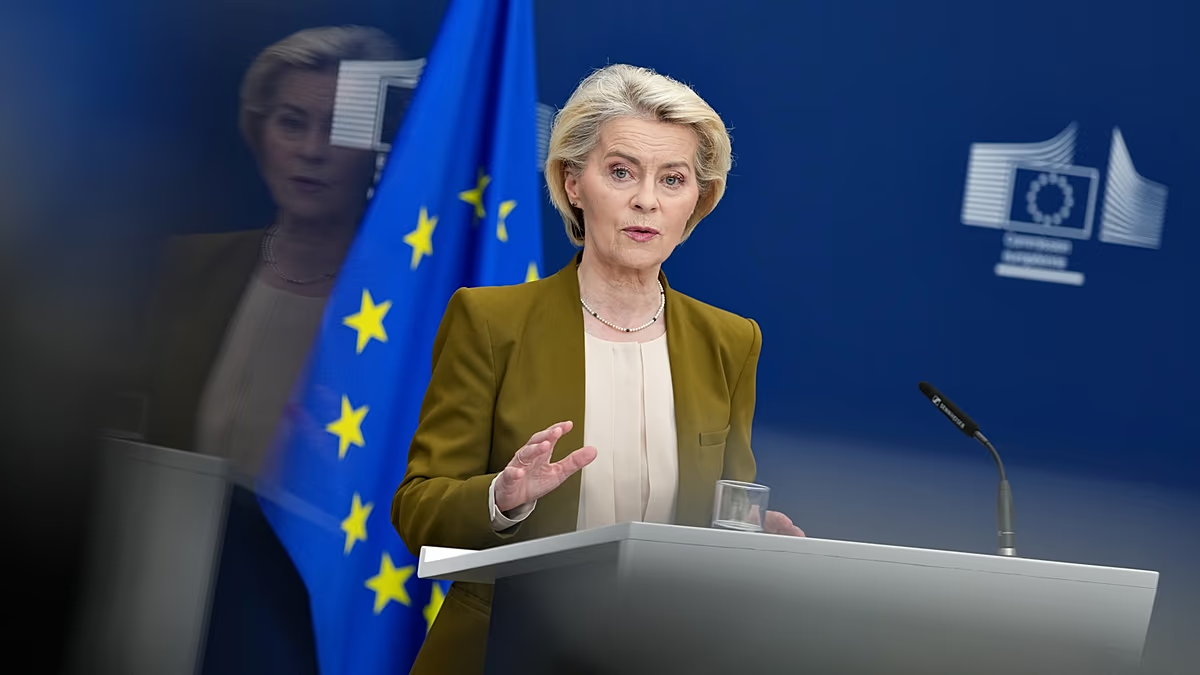
Recognizing this grave danger, Polish Prime Minister Donald Tusk has issued a sober and crucial warning. He acknowledged the legitimacy of Polish hurt and anger but emphasized that both nations “must prevent historical emotions from destroying our solidarity.” His central point was geopolitical and existential: a prolonged conflict between Warsaw and Kyiv serves only the strategic interests of Moscow. Russia has long sought to divide Eastern Europe and break the unity of Ukraine’s support network. Allowing historical wounds from the 1940s to sabotage the alliance against a present-day aggressor would be a catastrophic, self-inflicted defeat. Tusk’s statement is a call for mature statecraft in the face of profound emotional pain.
There is, however, a powerful precedent that offers a path forward: the decades-long journey of Polish-German reconciliation. After World War II, Poland and Germany were divided by memories of unparalleled destruction and suffering. Yet through a deliberate, sustained process of dialogue, facing difficult truths, youth exchanges, and a shared commitment to a European future, they transformed a relationship of enmity into one of partnership. This did not require either side to forget their history or abandon their narrative, but it did require them to manage that history jointly and prioritize a common future. Similarly, the UPA will forever remain a divisive symbol. The challenge for Poland and Ukraine is not to find a single, agreed-upon history, but to build mechanisms of understanding and respect that prevent history from holding their shared destiny hostage. Their mutual security and success in the face of Russian aggression depend not on erasing the past, but on courageously ensuring it does not dictate the future.