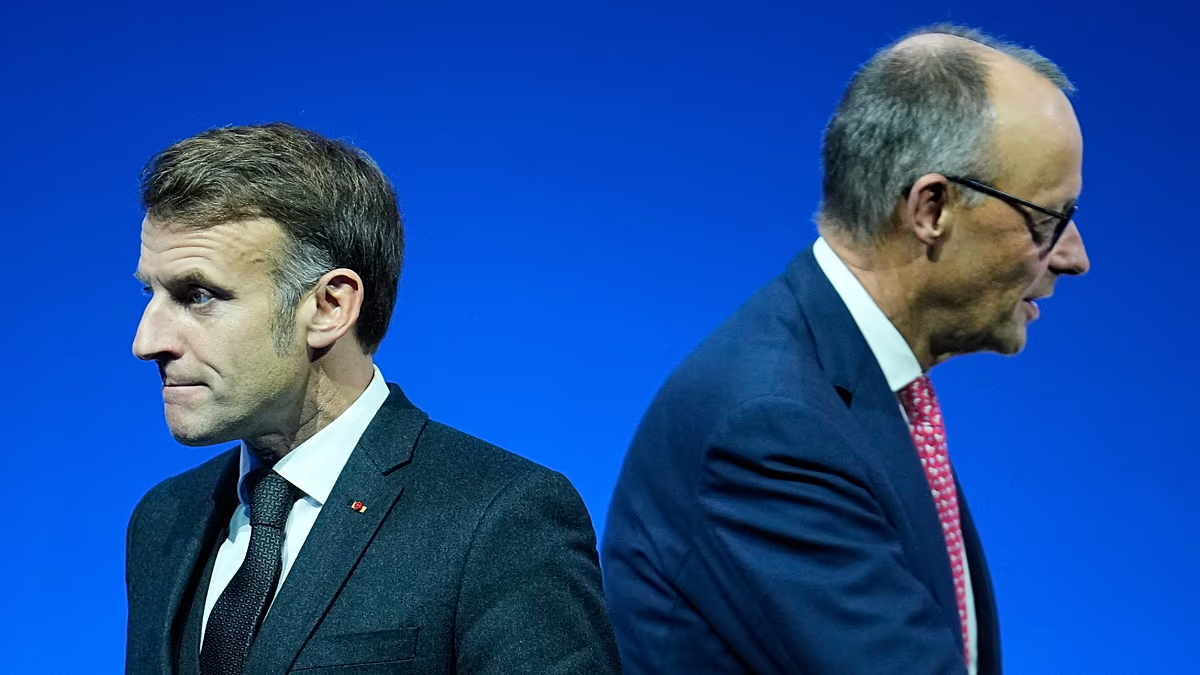




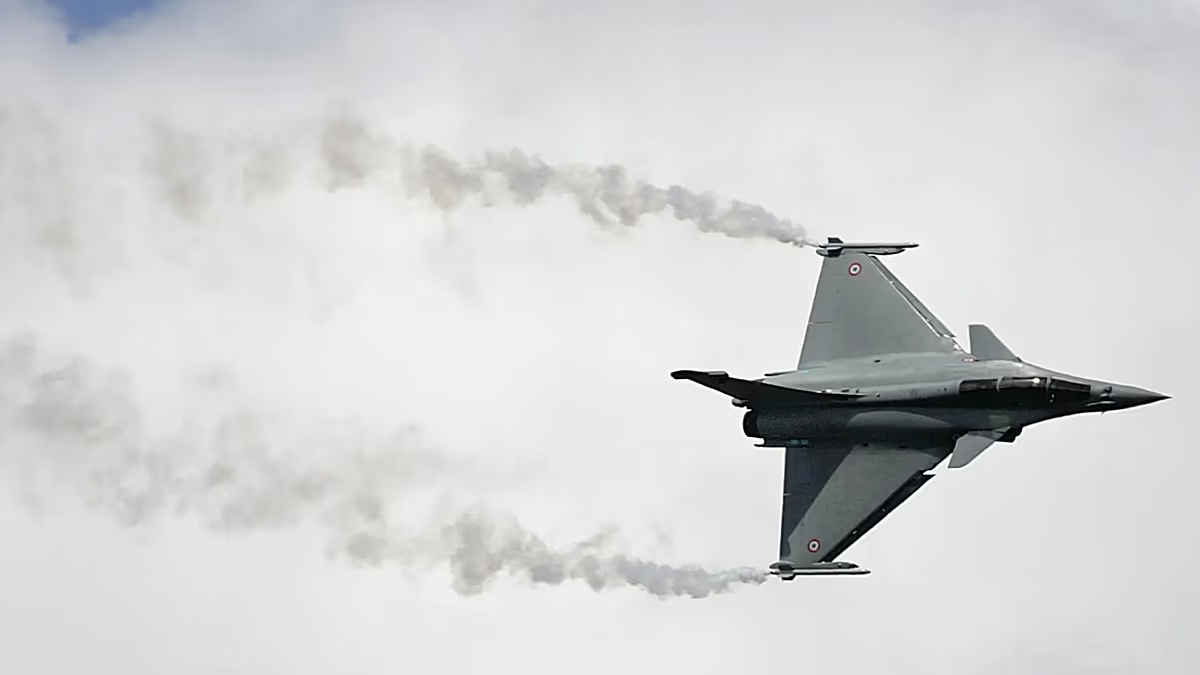
After months of tense negotiations and against a backdrop of repeated political interventions, Germany and France formally announced on Monday the termination of their joint development of the Future Combat Air System (FCAS). This decision brings a definitive and sobering close to what was once heralded as the most ambitious defense project in European history. Originally launched with great fanfare in Paris in 2017 by French President Emmanuel Macron and then-German Chancellor Angela Merkel, FCAS was envisioned as the cornerstone of European airpower for the latter half of the 21st century. The program’s staggering estimated cost, between €80bn and €100bn, reflected its grand scope: a “system of systems” centered on a sixth-generation stealth fighter jet, designated the Next Generation Weapon System (NGWS). This aircraft was designed to operate in a networked “combat cloud” alongside a suite of unmanned drones and advanced sensors, aiming to create a seamless, AI-enhanced battlespace architecture far beyond the capabilities of current fighters like the Eurofighter Typhoon or Dassault Rafale.
The primary and fatal fracture point was an increasingly acrimonious corporate rivalry between the program’s two industrial pillars: France’s Dassault Aviation and the Franco-German consortium Airbus. The original division of labor seemed logical; Dassault, with its storied heritage in building combat aircraft like the Mirage and Rafale, would lead development of the fighter jet itself. Airbus, with its expertise in complex systems integration, would take charge of the accompanying drone fleet and the digital combat cloud. However, this partnership quickly devolved into a protracted struggle over control, sensitive technology, and the future profits of the program. Dassault’s CEO, Éric Trappier, was reportedly deeply reluctant to share proprietary data and intellectual property with Airbus, guarding the “crown jewels” of French aerospace sovereignty. Airbus, for its part, resisted what it perceived as a subordinate role, arguing that a project of this magnitude demanded a truly balanced partnership between equals, not a prime contractor-subcontractor relationship.
Compounding these industrial tensions were fundamental divergences in military requirements between the two nations. France, as a nuclear power with global expeditionary ambitions and an aircraft carrier to equip, demanded a jet capable of carrying nuclear weapons and operating from naval platforms. Germany, with a more continental defense focus, saw little need for these complex and expensive capabilities. These were not minor technical adjustments but represented core, identity-driven differences in national defense strategy. An attempt by Airbus CEO Guillaume Faury in early 2026 to propose developing two distinct aircraft variants to satisfy both sets of needs only served to highlight the profound disconnect, further poisoning the well of cooperation. By March, the rift had become public and irreparable, with Trappier bluntly stating to Le Monde, “Airbus no longer wants to work with Dassault.”
While the visionary sixth-generation fighter jet is now dead, a significant element of the broader FCAS concept is expected to survive. Work will continue on the “combat cloud,” the advanced digital network intended to connect various assets on the battlefield. This component, less tied to national sovereign pride than a complete fighter aircraft, remains a area where technical collaboration may still be feasible. Beyond this fragment, the collapse will send shockwaves through the European defense landscape, forcing a major strategic realignment. Airbus is now likely to seek alternative partnerships, with industry observers pointing to Sweden’s Saab—a partner in the Gripen program—or the separate British-Japanese-Italian Global Combat Air Programme (GCAP) as potential avenues. Dassault, meanwhile, is widely expected to pursue a national successor to the Rafale, fortifying France’s independent defense industrial base.
The failure of FCAS serves as a stark, costly lesson in the immense difficulties of aligning national interests, industrial policies, and military doctrines within a multinational framework. Despite years of unwavering high-level political support from both Berlin and Paris, the project ultimately foundered on the rocks of corporate sovereignty and strategic divergence. It underscores that political will, while necessary, is insufficient to overcome deeply entrenched industrial and operational differences. The demise of this flagship initiative raises urgent questions about the European Union’s strategic autonomy and its ability to pool resources for next-generation capabilities in an increasingly volatile world.
In the aftermath, attention will now necessarily shift to more modest, achievable goals. At the upcoming Franco-German ministerial council in July, the two governments are expected to draft a new, pragmatic joint work plan, focusing on discrete defense projects where interests align more clearly. The dream of a unified European sky defended by a common stealth fighter has been deferred, perhaps indefinitely. The path forward now appears to be one of incremental cooperation on enabling technologies, like the combat cloud, alongside the continued pursuit of national or smaller coalition-based solutions for the most sensitive, sovereignty-bearing capabilities like a next-generation fighter jet. The end of FCAS is not the end of European defense cooperation, but it is a powerful reminder of its limits and complexities.