


Paragraph 1: A Terrifying Echo on the Pitch
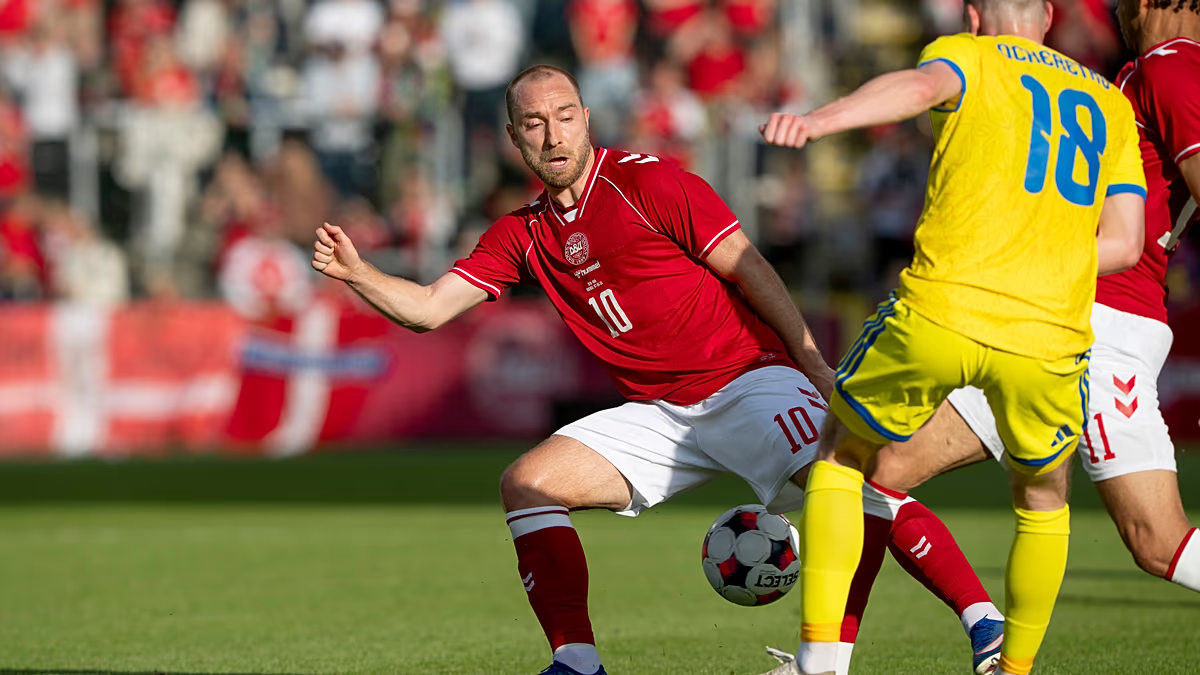
The world of football was struck by a chilling sense of déjà vu on Sunday when Danish midfielder Christian Eriksen collapsed during a match. For fans and fellow athletes, the scene was a heart-stopping echo of a traumatic event from just three years prior. In 2021, during the European Championship, Eriksen suffered a sudden cardiac arrest on the field, a life-threatening event that required emergency resuscitation. That episode led to him being fitted with a specialized medical device designed to protect his heart. His collapse this weekend, therefore, sent a renewed wave of concern and solidarity across the global sports community, raising urgent questions about athlete health, resilience, and the advanced technology that now literally beats within his chest.
Paragraph 2: A Message of Gratitude and Assurance
In the anxious hours following the incident, reassurance came from the man himself. Taking to social media, the 34-year-old footballer conveyed that he was “doing well” and recovering at home surrounded by his family. His message was one of profound gratitude, specifically thanking the rapid-response medical teams at the stadium and the doctors who have monitored him since 2021. Most significantly, he provided a crucial piece of insight that transformed a frightening event into a testament to modern medicine. “Thanks to their expertise,” Eriksen wrote, “my ICD did exactly what it was designed to do: protect me when I need it.” This statement shifted the narrative from one of pure alarm to a demonstration of a safety mechanism functioning as intended.
Paragraph 3: The Guardian Within: Understanding the ICD
The device Eriksen referenced, an Implantable Cardioverter Defibrillator (ICD), is a remarkable piece of life-saving technology. It is a small, battery-powered unit implanted under the skin of the chest, with thin wires, or leads, that connect directly to the heart. Think of it as a vigilant, internal guardian. It constantly monitors the heart’s rhythm, watching for dangerous irregularities known as arrhythmias. If it detects a rhythm that is too fast, chaotic, or otherwise life-threatening—where the heart might stop pumping blood effectively—it springs into action. The device can deliver a precisely calibrated electric shock to reset the heart’s electrical activity, effectively rebooting it into a normal, stable rhythm. It is prescribed for individuals, like Eriksen, who are at high risk for these sudden, catastrophic cardiac events due to a prior heart attack, cardiac arrest, or specific arrhythmic conditions.
Paragraph 4: Life Reclaimed: Adapting and Thriving with an ICD
For many, the idea of living with a device that can deliver an internal electric shock is daunting. However, medical experts from institutions like Johns Hopkins Medicine emphasize that with proper management, most patients with an ICD can return to a full and active life. The device itself is durable, often lasting over a decade before the battery requires replacement. Patients can typically return to work, drive, and with medical clearance, even participate in sports. Historically, there was great caution against high-intensity athletics for ICD recipients, but modern understanding is more personalized. Landmark research, such as the ICD Sports Registry which followed hundreds of athlete-patients, found that returning to competitive sports did not lead to sports-related deaths or cardiac arrests in the group studied. This allows for nuanced, case-by-case decisions between athletes and their cardiologists, often involving adjusting the device’s settings for athletic activity.
Paragraph 5: Pioneers on the Field: Eriksen is Not Alone
While Christian Eriksen’s high-profile case brings global attention, he is part of a pioneering group of elite athletes who compete at the highest levels with an ICD. Their stories are powerful testaments to human adaptation and medical progress. German professional pole vaulter Katharina Bauer had a subcutaneous ICD implanted in 2018 after being diagnosed with a heart condition that caused a dangerously high heart rate. She has since continued her career, clearing formidable heights. Similarly, Dutch defender Daley Blind was diagnosed with myocarditis, an inflammation of the heart muscle, and had an ICD implanted. He has successfully resumed his professional career, currently playing in Spain’s top division. These athletes are redefining the boundaries of what is possible, demonstrating that a serious cardiac diagnosis does not have to mean the end of a sporting dream.
Paragraph 6: A Broader Conversation on Heart, Mind, and Sport
Christian Eriksen’s latest episode, while ending with a positive update, ignites a deeper conversation that extends beyond the football pitch. It highlights the incredible advances in cardiac care that allow individuals to live actively after major health events. It also underscores the immense mental fortitude required for an athlete to step back onto the field, trusting in both their own body and the technology embedded within it. Their journeys challenge outdated stigmas and inspire anyone facing a life-altering health condition. Ultimately, the story is not just about a frightening collapse, but about resilience, the seamless integration of human will and medical innovation, and the profound courage it takes to pursue one’s passion in the face of vulnerability. Eriksen and his fellow athlete pioneers are living proof that with the right safeguards, the heart—both physically and metaphorically—can find its strong, steady rhythm again.