


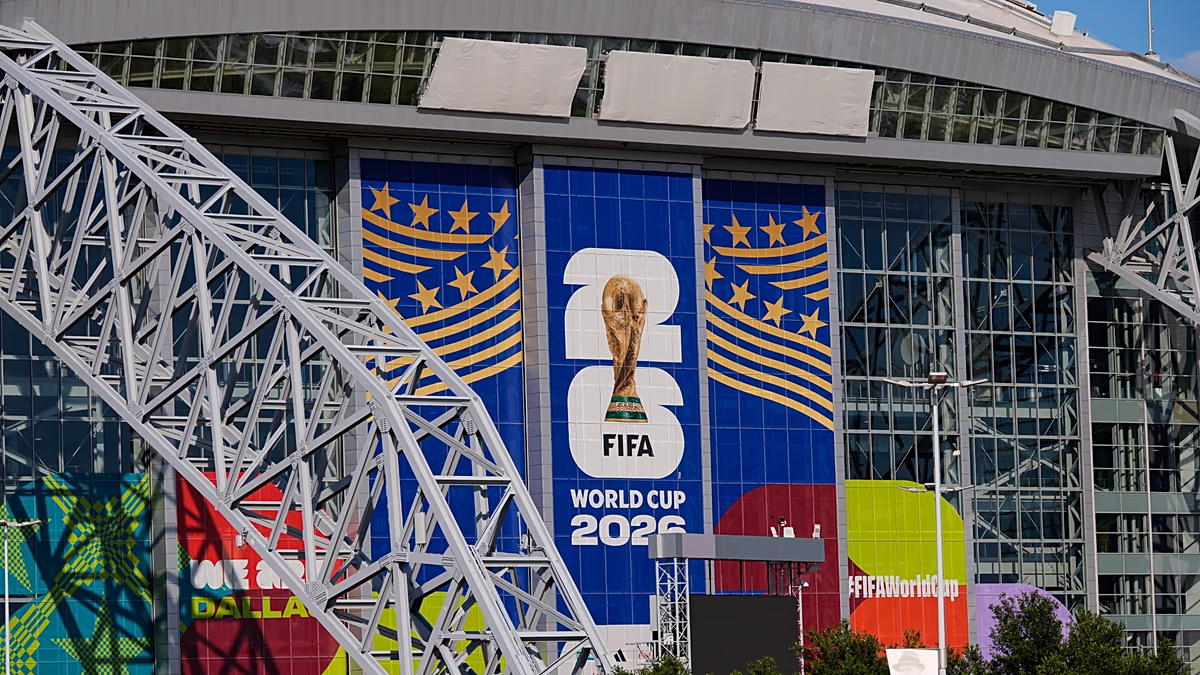
As the globe turns its attention to the impending FIFA World Cup, a parallel and far less celebratory competition is already in full swing online. While millions of fans eagerly anticipate the kick-off across North America, cybercriminals are executing their own elaborate plays, exploiting the tournament’s immense popularity to target unsuspecting supporters. Governments in Canada and the United States have proactively issued warnings, urging spectators to be vigilant. This digital battlefront is not a minor nuisance but a sophisticated, large-scale operation designed to prey on the excitement and urgency that surrounds such a monumental event. The scale is staggering; cybersecurity analysts have already uncovered thousands of malicious campaigns, setting the stage for what may be one of the biggest cybercrime spectacles running concurrently with the sporting action.
One of the most prevalent and dangerous schemes involves the creation of fraudulent websites and online stores. Cybersecurity firms like Fortinet have identified a flood of over 13,000 World Cup-themed domains registered in just a few months, with a significant portion deemed malicious. These sites cleverly mimic official FIFA pages or merchandise outlets, using tournament keywords and branding to lure fans searching for tickets, travel packages, or official gear. Their goal is brutally simple: to steal payment details, personal identification, and login credentials. By fabricating a sense of scarcity—advertising last-minute tickets or exclusive deals—they pressure fans into making rapid, unguarded purchases. This “card not present” fraud is a well-worn tactic seen at events like the previous World Cup and the Paris Olympics, proving that where global attention goes, digital fraud quickly follows. Scammers have even infiltrated messaging platforms like Telegram, promoting fake all-inclusive travel bundles that redirect to sham checkout pages, leaving victims with nothing but a fake invoice and compromised financial information.
The threat landscape extends far beyond counterfeit websites, deeply infiltrating the social media ecosystems where fans congregate. Researchers have uncovered thousands of fake profiles on platforms like Facebook and Instagram, impersonating FIFA, teams, or sports personalities. These accounts engage in brand abuse, spread misinformation, and launch phishing campaigns disguised as exclusive promotions or fan contests. On professional networks like LinkedIn, scammers post enticing fake job ads for event staff, hospitality, or media roles, impersonating real recruiters only to direct applicants to phishing sites hidden within fake calendar invites. Furthermore, a major lure is the promise of illicit live streams. In closed groups on Facebook, X, or Telegram, links to “free” streams often appear minutes before a match, pressuring users to quickly register or install a malicious media “player” application. While the report notes that savvy fans often crowdsource scam identification on forums like Reddit, the volume and cleverness of these social media attacks mean many will inevitably be caught off guard.
The mechanisms of these scams are psychologically shrewd, exploiting core human emotions: excitement, urgency, and trust. The fear of missing out (FOMO) on a once-in-a-lifetime experience drives fans to bypass normal caution when a seemingly legitimate site offers coveted tickets. The impersonation of trusted brands and recruitment agencies preys on our inherent trust in established institutions. The social engineering is meticulous, with every element—from professional-looking website design to urgent, limited-time-offer language—crafted to override logical skepticism. It’s a cruel irony that the very passion that makes sporting events so unifying is systematically weaponized against supporters. The criminals understand that in the heated moments before a big match or when dreaming of a stadium visit, a person’s guard is most likely to drop, making them the perfect target.
Thankfully, awareness and proactive measures can provide a strong defense. Cybersecurity experts offer clear, practical advice for fans navigating this risky digital environment. First, always scrutinize website URLs and email addresses for slight misspellings or odd domain extensions that mimic legitimate sites. For official hospitality packages, book only through FIFA’s authorized partner, On Location, or directly with known hotels. When making any online purchase, using a credit card is strongly advised over a debit card due to superior fraud protections and dispute resolution. The most crucial rule is to consciously slow down; if an offer creates an overwhelming sense of urgency, it should be a major red flag. Take a breath, do a quick search, and verify before clicking or entering any information. For those attending in person, a simple but critical step is to update your smartphone and all apps before heading to the stadium, as outdated software can contain security flaws that hackers exploit in crowded public venues.
In essence, the 2026 FIFA World Cup presents a dual arena: one of athletic excellence on the pitch, and one of digital deception off it. As the world celebrates the beautiful game, a shadow game of cyber trickery runs in parallel. The responsibility is shared; while platforms can enhance moderation and detection, and cybersecurity firms can expose threats, the final line of defense is an informed and cautious individual. By embracing a mindset of healthy skepticism—verifying sources, rejecting undue pressure, and using secure payment methods—fans can protect themselves. This allows the focus to remain where it belongs: on the unity, passion, and sheer joy of a global tournament, ensuring that the only surprises are the glorious, unforgettable moments created by the athletes themselves.