



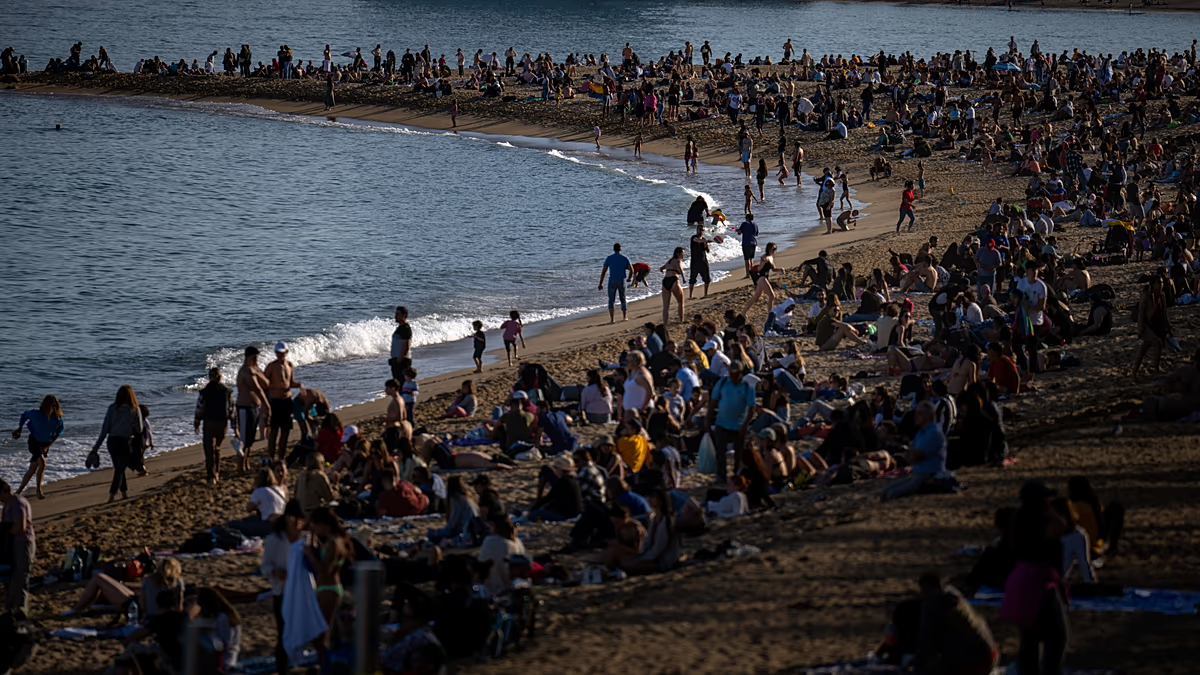
Spain’s tourism sector is experiencing a remarkable and robust resurgence, as evidenced by the latest figures released for the month of April. The country welcomed 9.1 million international visitors during that month alone, representing a significant 5.2% increase compared to the same period in the previous year. This surge translates to nearly half a million additional tourists choosing Spain for their travels. The data, published by the National Statistics Institute (INE), solidifies the industry’s strong performance in the first four months of the year, with a cumulative total of 26.5 million arrivals—a 3.4% year-on-year growth. This consistent upward trajectory places Spain firmly on a path that could see it challenge the symbolic threshold of 100 million tourists within a single calendar year, a milestone that once seemed daunting but now appears increasingly attainable.
The traditional source markets continue to play a pivotal role in this growth, though with some shifting dynamics. The United Kingdom remains the undisputed leader, sending almost 1.7 million visitors in April, a 2.7% increase. France followed closely in second place, contributing around 1.3 million tourists, marking a healthy 5.1% rise. However, the figures revealed a notable downturn from Germany, one of Spain’s most important markets, which saw a 9.1% decline to 1.2 million travelers. Geographically within Spain, Catalonia reaffirmed its status as the premier destination, absorbing 20.8% of all international arrivals. It was closely pursued by the sun-drenched regions of Andalusia and the Valencian Community, both of which also enjoyed a high influx of foreign visitors, demonstrating the diverse appeal of Spain’s coastal and cultural offerings.
This strong performance in April is particularly significant as it marks a decisive turning point for the year. The first quarter had shown signs of a moderating pace, prompting some caution within the sector. However, as spring progressed, growth accelerated markedly. The April year-on-year increase stands as the most substantial in the past twelve months, confirming a powerful resurgence in international demand. Analysts attribute this positive shift to a confluence of factors, including the robust recovery of long-haul travel, particularly from the American continent, and a rebound in business travel following years of pandemic-related constraints. Furthermore, in a world marked by geopolitical tensions and uncertainty, Spain’s perception as a stable and safe destination is proving to be a major asset.
In this context, several industry observers suggest that ongoing conflicts, such as the situation in the Middle East, may be inadvertently benefiting Spanish tourism. The theory posits that international unrest can redirect tourist flows toward destinations perceived as more secure and predictable. While the precise impact is difficult to quantify, the accelerated growth witnessed in March and April correlates with an increased number of travelers from distant markets and a revival in corporate trips. This combination of leisure and business demand helps explain why the sector’s momentum strengthened after a more subdued beginning to 2026, painting a picture of resilient and diversified appeal.
Looking ahead, the current trend reinforces the strong possibility that Spain will close the year with yet another record-breaking performance. However, the industry’s focus is evolving beyond mere visitor numbers. There is a growing and conscious emphasis on improving the quality and profitability of tourism. The goal is to attract travelers with greater spending power, ensuring that economic benefits are maximized while managing the impacts on local communities and environments. This strategic shift acknowledges that sustainable success is not solely measured in volume, but also in value and positive experience.
Ultimately, the coming summer season will be critical. If the prevailing demand and booking patterns continue through the peak travel months, Spain could indeed approach the historic landmark of 100 million international tourists within a single year. Achieving this unprecedented milestone would be a testament to the enduring global allure of Spain’s culture, landscapes, and hospitality. While the target is within sight, the sector remains watchful, understanding that the next few months will be decisive in transforming this potential into a concrete reality for the national tourism industry.