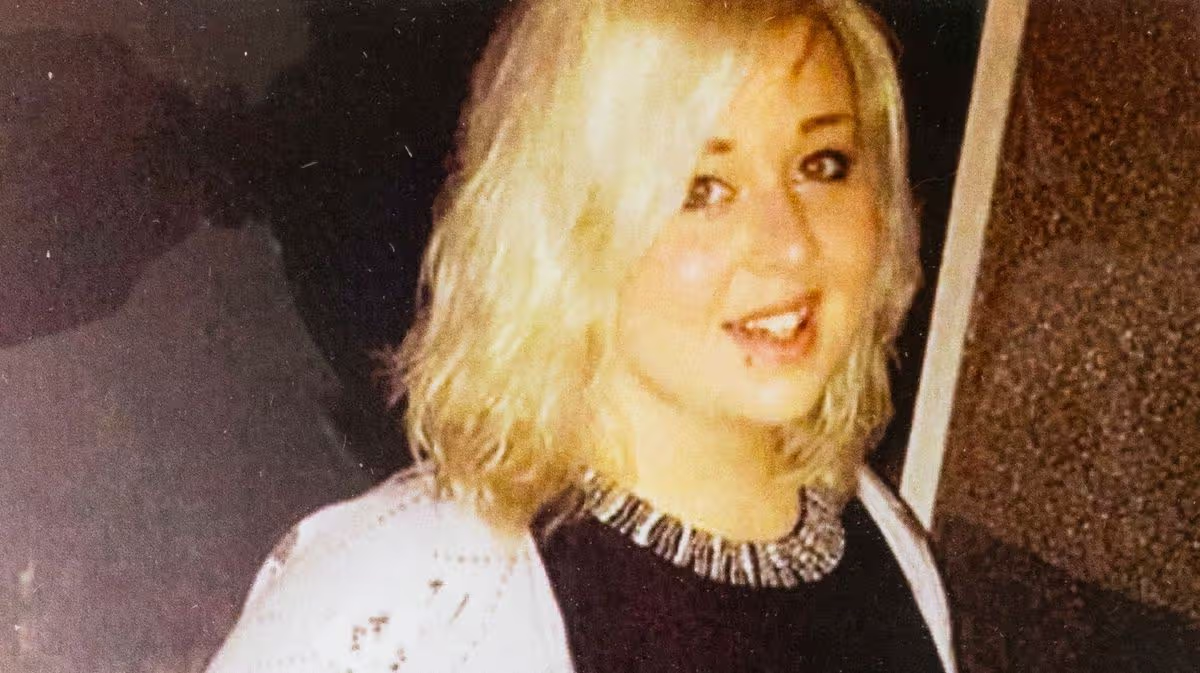





In a heartbreaking coda to a joyous Bank Holiday Monday, the community of Rotherham and beyond is mourning the loss of 16-year-old Muhammed Secka. During the recent spell of intense heat that blanketed the UK, Muhammed visited Rother Valley Country Park in South Yorkshire with friends, seeking relief and recreation. Tragically, what began as a day of summer camaraderie ended in unspeakable loss when Muhammed entered the water and disappeared from view around 7pm. The alarm was raised, and emergency services rushed to the scene, but their efforts turned from rescue to recovery. In the early hours of the following day, Muhammed’s body was located in the lake, and he was pronounced dead at the scene. This single moment has left a family shattered and a community grappling with a profound sense of grief.
An inquest into Muhammed’s death was opened this week at Doncaster Coroner’s Court, where initial, painful details were formally presented. Coroner’s officer Siobhan Golightly recounted the sequence of events, revealing the stark and critical fact that Muhammed was not able to swim. A preliminary post-mortem examination found features consistent with drowning, a finding senior coroner Nicola Mundy stressed is provisional pending further investigation. The inquest was adjourned to a date yet to be fixed, beginning the slow, meticulous legal process of understanding the full circumstances. No family members were present for this initial hearing, a silence that speaks volumes of the raw, private pain they are enduring in the wake of this public tragedy.
Muhammed was far more than a headline; he was a vibrant young man whose absence has created a void felt by all who knew him. In the days following his death, friends and family have turned to online fundraising campaigns, not just to support practical needs, but to honor his memory. In their tributes, a portrait emerges of a beloved son, friend, and student, a young man who “brought light, laughter and kindness to those around him.” The organizers poignantly noted that “his loss has deeply affected everyone who knew him, and the pain felt by his family and loved ones is unimaginable.” These words underscore a life full of promise, cruelly and abruptly ended, leaving a community to rally around a family navigating the unimaginable.
Devastatingly, Muhammed’s story is not an isolated one. He is one of at least 17 people who lost their lives in open water during the recent hot spell, a shocking toll that highlights a perennial seasonal danger. Among them were Declan Sawyer, 15, at Swanholme Lakes in Lincoln; Reco Puttock, 13, at Leadbeater Dam near Halifax; and Chiedza Nyanjowa, 15, who died after getting into difficulty on Formby beach. Each name represents a similar story of a life cut short, a family plunged into mourning, and a community left to ask agonizing questions. This pattern of tragedy transforms individual losses into a collective crisis, revealing the lethal allure that rivers, lakes, and quarries can hold, particularly for young people during warm weather.
In response to this cluster of fatalities, emergency services, bereaved families, and safety campaigners have issued renewed and urgent pleas for young people to understand the hidden dangers of open water. These environments can be treacherously deceptive, with hazards including cold water shock, which can incapacitate even strong swimmers; unpredictable currents; and hidden debris beneath the surface. The water that seems inviting on a hot day can turn deadly in moments. The message is a desperate and simple one: the momentary thrill is never worth the ultimate risk. These appeals, born from profound loss, are a crucial plea for awareness in hopes of preventing other families from enduring similar heartbreak.
As the investigation into Muhammed Secka’s death continues, his passing serves as a somber reminder of the fragility of life. The legal proceedings will seek answers and closure in time, but for now, the focus remains on a community in mourning. The memory of a kind, lively 16-year-old boy is what endures, even as his death becomes a painful part of a larger, urgent conversation about water safety. In honoring Muhammed, the greatest tribute would be for his story to resonate, to make others pause and think, and ultimately, to prevent future tragedies in the water during heatwaves yet to come.