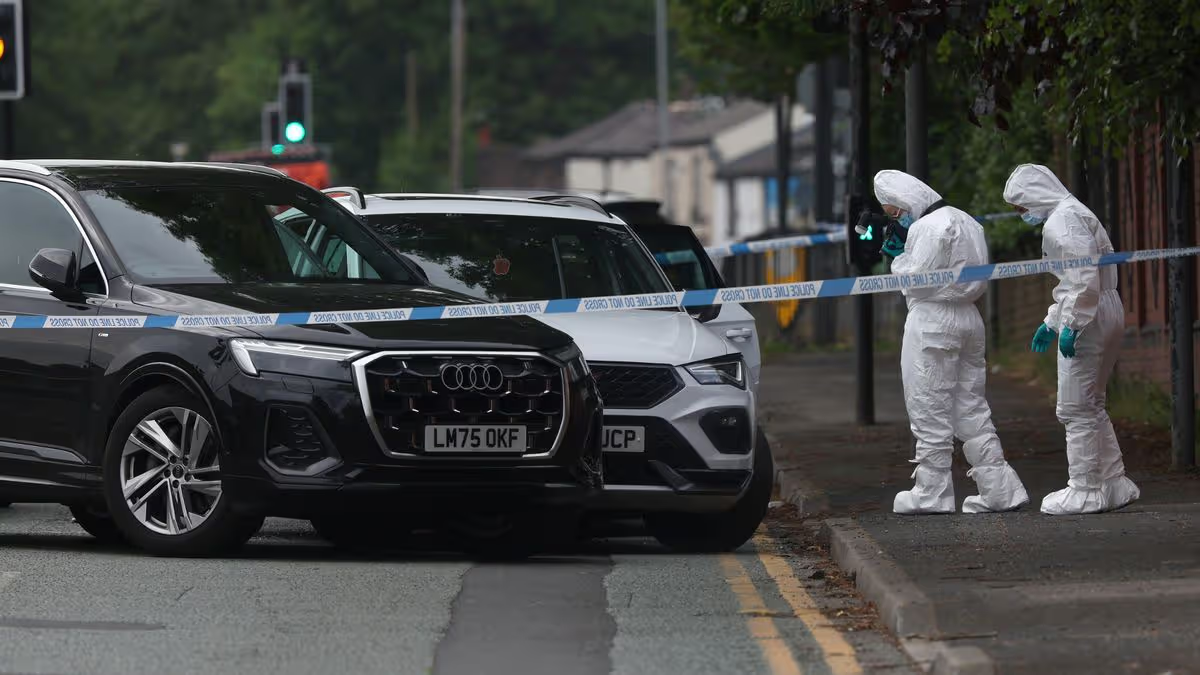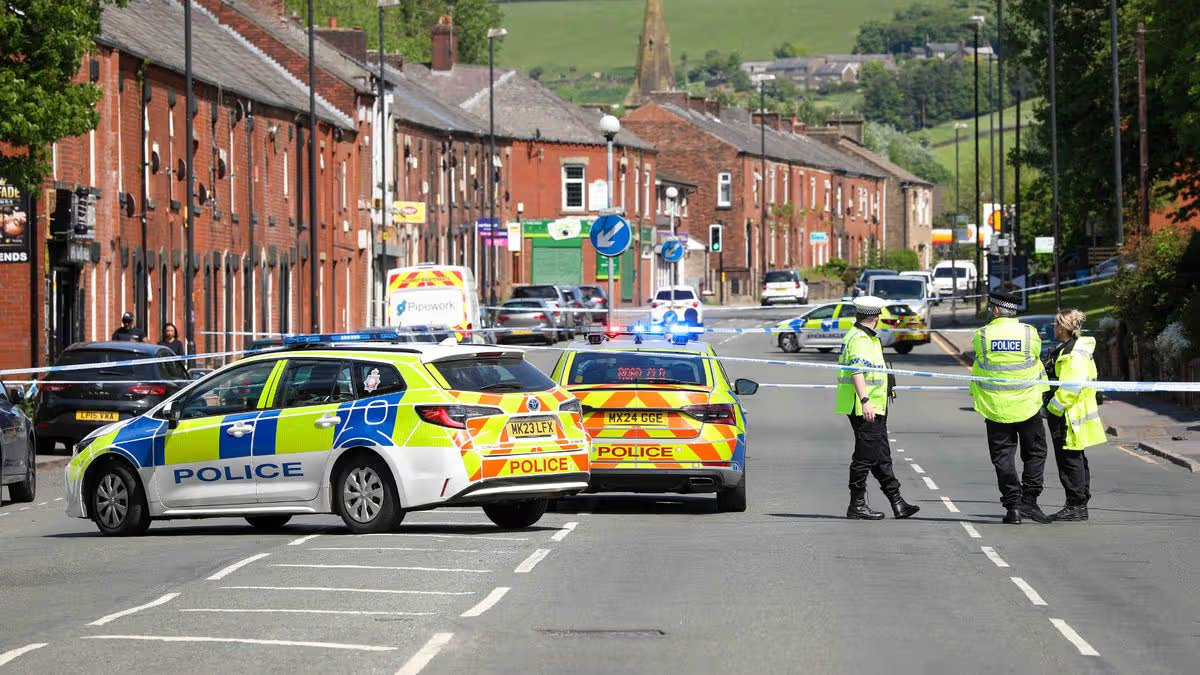



The sunny Saturday afternoon in Oldham was shattered by the sounds of sirens and the urgent flash of blue lights. At approximately 12:35 PM on May 23, 2026, emergency services descended upon Huddersfield Road following a harrowing report: a child had been struck by a car. The immediate aftermath was a scene of profound tension and focused activity. Police swiftly established a substantial cordon, stretching from the local Asda supermarket to Cypress Road, sealing off the area to allow for a meticulous investigation. This visual boundary of tape and officers underscored the seriousness of the incident, transforming a familiar urban stretch into a zone of solemn inquiry. Amidst this procedural response, however, lay the core human tragedy—a young life, suddenly and violently altered.
Central to this distressing event is the child, who sustained serious injuries and was rushed to hospital for urgent treatment. The Manchester Evening News reported that while the injuries are significant, the full extent of the child’s condition remains unclear, leaving a community holding its breath for further updates. Every such incident reverberates beyond the immediate scene, sending waves of anxiety through families, friends, and neighbors. The child’s identity and age are not yet public, but this anonymity does little to soften the blow of the news; it is a reminder of the fragility of young lives in our shared spaces. The hope now rests entirely on the skill and dedication of medical professionals, as they work to stabilize and heal the young victim.
In the wake of the collision, the driver of the involved vehicle remained at the scene, cooperating fully with the authorities. Greater Manchester Police confirmed that the individual is assisting officers with their enquiries, a crucial step in piecing together the events leading to the accident. The decision to remain is not only a legal obligation but often a moral one, reflecting a direct engagement with the consequences of the moment. No arrests have been made at this early stage, indicating that the initial focus is on gathering evidence and understanding the circumstances rather than immediate criminal proceedings. This careful, methodical approach is essential for ensuring that any subsequent actions are based on fact and clarity.
The precise circumstances that led to this collision are still shrouded in uncertainty. Investigators are now tasked with reconstructing the sequence of events—examining factors such as vehicle speed, pedestrian movement, road conditions, and visibility. As part of this process, police are expected to obtain CCTV footage from the nearby Asda store, a technological aid that can provide an unambiguous record of the moments before impact. This evidence is vital, not only for potential legal purposes but for providing answers to a shaken community and, ultimately, for informing future preventative measures. The lifting of the police cordon suggests the initial on-scene evidence collection is complete, but the analytical work continues behind closed doors.
Greater Manchester Police issued a formal statement confirming the basic facts: the time, the nature of the incident, that the child was hospitalized, and that the driver remained. The statement’s calm, procedural tone serves an official purpose, but it stands in stark contrast to the human emotion swirling around the event. For the residents of Oldham, this is not a statistical entry in a logbook; it is a stark reminder of the dangers that can emerge unexpectedly on local roads. It prompts reflections on road safety, pedestrian awareness, and the shared responsibility all community members bear in protecting the most vulnerable.
As the investigation progresses quietly, the community’s outward rhythm returns. Huddersfield Road is reopened; the tangible signs of the crisis are gone. Yet, the intangible impact lingers. There is a child fighting for recovery in a hospital room, a driver grappling with the profound weight of the day, investigators sifting through evidence for truth, and a neighborhood collectively reminded of life’s precariousness. The path forward now holds two parallel tracks: the judicial and the human. The police will seek objective conclusions, while the community must offer support, patience, and hope. The ultimate measure of this tragedy will be found not only in the final report but in the healing that follows, and in the lessons learned to safeguard against a repetition of such a painful day.