



The Heart Still Beats: Serena Williams’ Unforgettable Return to Tennis
The stadium held its breath. It was a late summer evening at the 2024 US Open, and the air crackled with a rare, palpable electricity. The occasion was the first round of the women’s doubles event, a competition that often hums in the background of the singles-focused Grand Slam narrative. Yet, on this night, it was the main event. Serena Williams, at 44 years old, a figure who had transcended sport to become a global icon, was walking back onto the court for a competitive match. She was not merely entering a tournament; she was stepping back into a cathedral she had helped build, a realm she had dominated for over a quarter-century. Her partner for this historic foray was none other than her older sister, Venus Williams, 43. Together, they formed a partnership that was far more than the sum of its parts—it was a living chronicle of tennis history, a testament to enduring love, and a defiant answer to the relentless question of retirement.
A Partnership Forged in Family and Fire
The choice of Venus as a partner was profoundly symbolic. Their first professional match together was in 1998; now, over two decades later, they were bookending a saga. This was not a nostalgia act, but a reunion of warriors. While Venus had maintained a more consistent presence on tour, Serena’s journey back was layered with complexity. Her last competitive singles match had been at the 2022 US Open, an emotionally charged farewell that felt, for many, like a sunset. Since then, she had fully embraced life as a venture capitalist, a devoted mother to her daughter Olympia, and a fashion visionary. The tennis world had, in many ways, begun to write its post-Serena chapters. Yet, here she was, her famous game face on, the powerful shoulders that had carried the weight of expectation still formidable. The sight of the two sisters warming up—their familiar, powerful strokes cutting through the New York air—was a powerful rewind of time, yet underscored by the graceful wisdom etched on their faces. They were competing not just against their opponents but against the very passage of time itself.
The Match: A Symphony of Skill and Sentiment
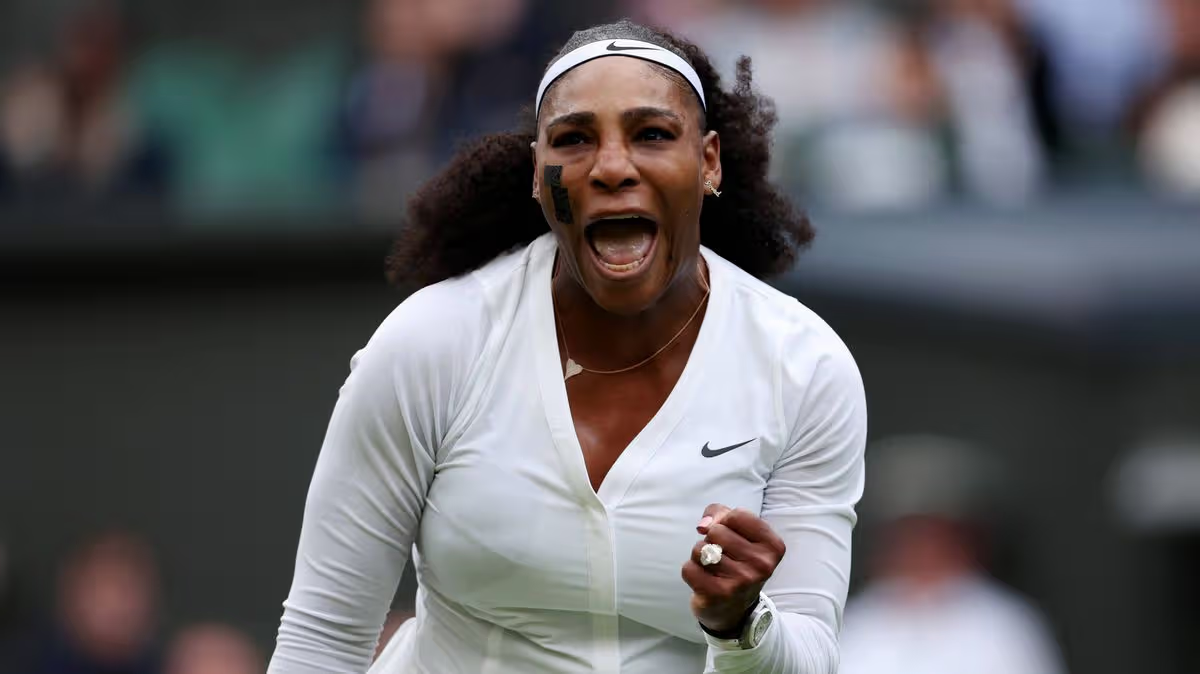
From the first serve, it was clear this was an event that transcended the scoreboard. The crowd, a mosaic of die-hard fans, curious spectators, and emotional onlookers, erupted with every Williams point, treating unforced errors with a hushed, forgiving reverence. The sisters’ opponents, the accomplished Czech duo of Lucie Hradecká and Linda Nosková, were not mere foils; they were respected adversaries in a unique moment of shared history. On the court, glimpses of the old magic flickered—Serena’s explosive return of serve, a trademark shriek of effort and will, Venus’s elegant, sweeping volleys. There were also moments of understandable rust, a split-second delay in movement that spoke of time away from the daily grind of the tour. Yet, the competitive fire burned undimmed. Between points, the sisters conferred with the familiar, wordless communication only siblings possess, a mix of strategy and silent support. The match was a breathtaking blend of high-level athleticism and raw, human theater, a three-set rollercoaster that held the entire stadium captive.
The Roar of a Legacy Reignited
The atmosphere reached a fever pitch in the decisive moments. This was not the silent tension of a typical Grand Slam match; it was a continuous, roaring wave of affirmation. Every service winner from Serena was met with a deafening ovation, a collective thank you for the thousands she had delivered before. Every elegant winner from Venus was cheered as a celebration of her own enduring class. When the sisters ultimately clinched a nail-biting victory in a third-set tiebreak, Arthur Ashe Stadium exploded in a cathartic release of joy and appreciation. The victory itself was significant, a testament to their innate skill and champion’s mentality. But the true victory was in the demonstration. It was proof that Serena Williams, the greatest women’s tennis player of all time, could still command the stage, could still summon the will, and could still make millions feel the sheer, unadulterated thrill of her presence in the arena.
The Meaning Behind the Moment
In the aftermath, the significance of Serena’s return crystallized. This was far more than a one-off appearance. It was a powerful statement about agency, legacy, and the definition of an athlete’s journey. Serena had redefined “retirement” on her own terms, refusing to be confined by traditional narratives. Her return whispered that a champion’s spirit is not extinguished by a farewell speech; it merely awaits the right moment to reignite. It highlighted the unique and unbreakable bond with Venus, showing that their story—one of mutual support, shared struggle, and unparalleled success—remains one of sports’ most powerful narratives. Furthermore, for a generation of fans, it was a gift—an unexpected bonus scene in a film they thought had reached its credits. For young athletes, it was a lesson in timelessness, proving that passion and power can defy calendars.
A Timeless Echo in the Game’s Cathedral
Serena Williams’ return to action in that US Open doubles match will be remembered not for its impact on the rankings or its effect on the tournament draw, but for its profound human resonance. It was a celebration of an unparalleled career that is, remarkably, still allowed a present tense. It was a masterclass in how to own one’s narrative completely. As she and Venus walked off the court, arms around each other, they left behind more than just a scoreline. They left an echo—a powerful, resonant reminder that some legends are so monumental, their light never fully sets. It flickers, waits, and when it chooses to blaze again, it illuminates not just a court, but the very soul of the sport, warming everyone fortunate enough to witness it. The heart of a champion, it seems, beats on its own schedule, and on that night in New York, it beat loud enough for the whole world to feel its rhythm once more.