



Paragraph 1: A Solemn Discovery in Familiar Woods
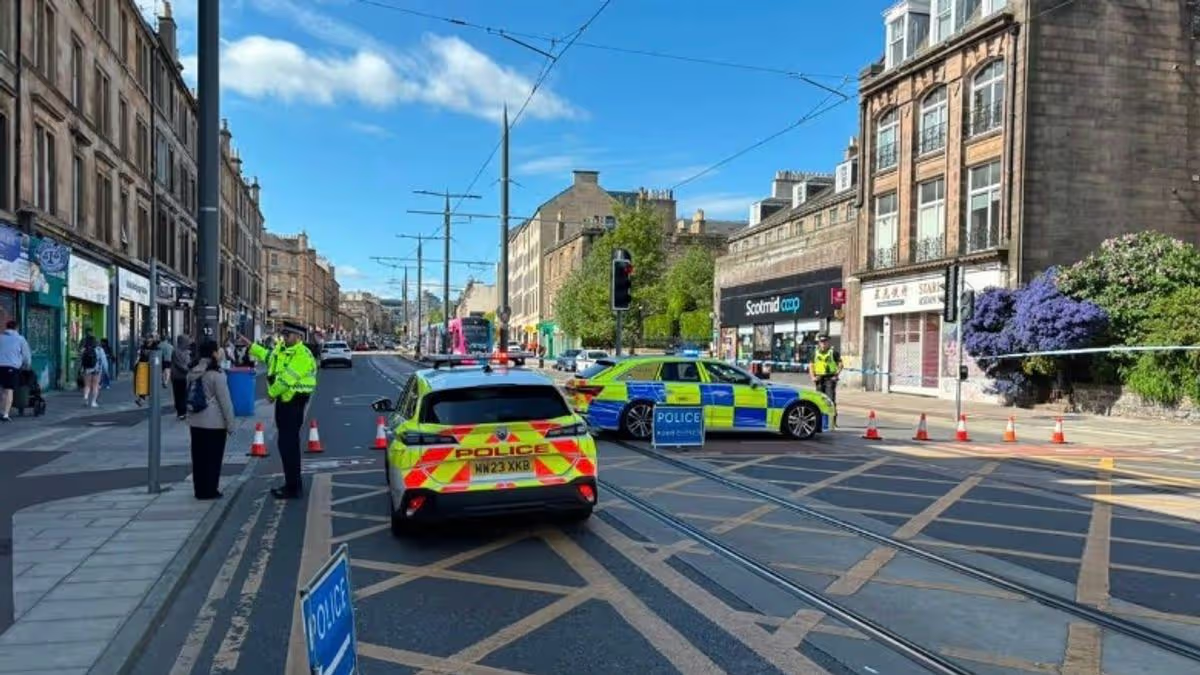
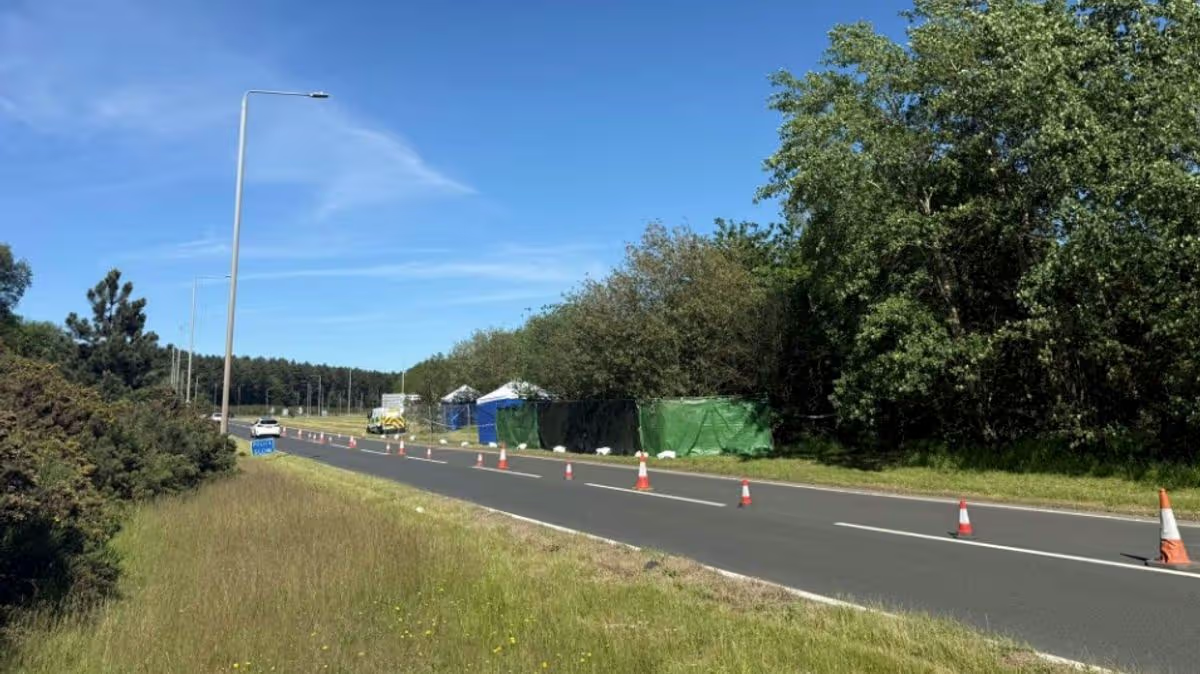
On a quiet Saturday afternoon, amidst the mundane rhythms of a late May weekend, a walk through a familiar stretch of Nottinghamshire woodland took a profoundly unsettling turn. A member of the public, whose identity remains private, made a grim discovery that halted the ordinary life of the area: skeletal human remains were found lying in a wooded patch adjacent to the busy A617 Rainworth Bypass. The time was 2:45 PM on May 23rd, a moment that transformed this stretch of common ground into the heart of a complex mystery. The immediate response was one of gravity and protocol, with Nottinghamshire Police swiftly sealing off the area with a large cordon, a stark, visual intrusion signaling that something deeply serious had occurred. While traffic continued to flow on the bypass, the woods themselves fell into a hushed, investigative silence.
Paragraph 2: The Delicate Process of Unraveling a Mystery
Detective Inspector Matt Scott, leading the investigation, addressed the public with a tone of measured reassurance and candid honesty. He acknowledged the inevitable concern such a discovery generates within a community, emphasizing that there was no perceived risk to public safety. The early assessment, based on preliminary inquiries, suggested the remains belonged to a single individual. However, the most fundamental questions—who this person was, how they came to be there, and the circumstances surrounding their death—remained shrouded in uncertainty. DI Scott stressed that the police were keeping an “open mind,” a necessary approach in the initial phase of any such investigation, where assumptions could cloud the path to truth. The scene, he warned, would be a fixture for some time, guarded by officers for several days as the meticulous work began.
Paragraph 3: The Unseen Work Behind the Police Tape
Behind the blue-and-white tape, a dedicated and specialized team began the painstaking, slow-motion work of forensic archaeology. Specialist officers combed the wooded area, their search deliberate and thorough, treating the site not just as a crime scene but as a fragile repository of stories and evidence. Their task was multilayered: to carefully recover all remains, to search for any personal effects or clues that could whisper a name or a history, and to analyze the immediate environment for clues about time and events. This initial forensic work is the crucial foundation upon which the entire investigation rests, a process where patience is not a virtue but a professional necessity. Every fragment, every artifact, is a potential piece of a puzzle that has, until now, been lost to the elements and time.
Paragraph 4: The Human Element at the Heart of the Inquiry
At its core, beyond the procedural updates and scene preservation, this investigation is a profoundly human endeavor. It is a search for identity and closure. A dedicated team of detectives is working in parallel with the forensic specialists, pursuing lines of inquiry to connect these skeletal remains to a name, a life, and a network of people who may have been missing them. This work often involves cross-referencing with missing persons databases, examining cold cases, and slowly building a profile from the biological evidence. The goal is to restore personhood to these remains, to transition from “an individual” to someone with a name and a story. This pursuit of identity is the first and most critical step toward understanding the narrative of their death, whether it was a tragic accident, a medical episode, or something more sinister.
Paragraph 5: Community Impact and the Path Forward
DI Scott acknowledged the disruptive weight this event places on the local community. The continued police presence over the Bank Holiday weekend and into the following week, while essential, serves as a constant reminder of the unsettling discovery. Residents living near the bypass cordon are confronted with an unusual and sobering sight in their daily routines. The detective extended an invitation for concerned citizens to speak directly with officers, an effort to maintain transparency and community dialogue. He also expressed gratitude for the public’s patience, recognizing the anxiety and curiosity such an event naturally provokes. This open channel is vital, as sometimes the key to solving such mysteries lies not in the forensic lab but in the memory of a neighbor or an observation from a passerby that only now gains significance.
Paragraph 6: A Long Road Toward Answers and Resolution
The concluding message from police is one of cautious realism. DI Scott was clear that this investigation is “likely to take us some time yet.” Unraveling a mystery of this nature is a complex jigsaw puzzle where the pieces may be scattered across both geography and time. The path forward involves exhaustive forensic analysis, including potential dental records, DNA testing, and anthropological examination, all processes that cannot be rushed if they are to be reliable. As the investigation progresses from the scene to the laboratory and the interview room, the police have committed to keeping the public updated. For now, the woodland by the A617 holds its secret, but a concerted, careful, and compassionate effort is underway to listen to its silent testimony and, ultimately, to provide answers where currently there are only questions.