



The story of Louise Cameron and her eight-year-old son, Rhys, is one of those profoundly tragic narratives that stretches beyond the stark facts of a crime report and into the darkest corners of human despair. On a day that began like any other in their home in Billingham, County Durham, a catastrophic sequence of events unfolded, resulting in the unimaginable: a mother responsible for the death of her own child. According to court proceedings, Cameron, then 41, administered a lethal dose of morphine to her young son, hiding the potent opioid within a seemingly innocent glass of blackcurrant juice. After this act, she then attempted to end her own life. The scene discovered by arriving family members was one of utter devastation—a mother unconscious, and her little boy, Rhys Anthony Cameron, lifeless beside her. This single moment shattered a family and sent ripples of horror and grief through their community, prompting urgent questions about the circumstances that could lead a parent to such an irreversible act.
To humanize this tragedy is to acknowledge that behind the clinical terminology of a court hearing lies a complex web of a life lived. Louise Cameron was, first and foremost, a person—a mother who, for eight years, had cared for, nurtured, and loved her son, Rhys. The portrait painted by the brief facts is not of a monster, but of someone engulfed by a profound crisis, the nature of which the initial reports only hint at. The choice of morphine, a powerful painkiller often associated with severe medical conditions or deep addiction, suggests a backdrop of significant physical or psychological pain, whether her own or, perhaps, even her son’s. The method—concealing it in a child’s drink—speaks to a horrific intention, yet also a twisted desire to avoid distress or confrontation. This act stands in chilling contradiction to the fundamental instinct to protect one’s child, indicating a state of mind so fractured that logic, love, and law had been completely overwhelmed by desperation or delusion.
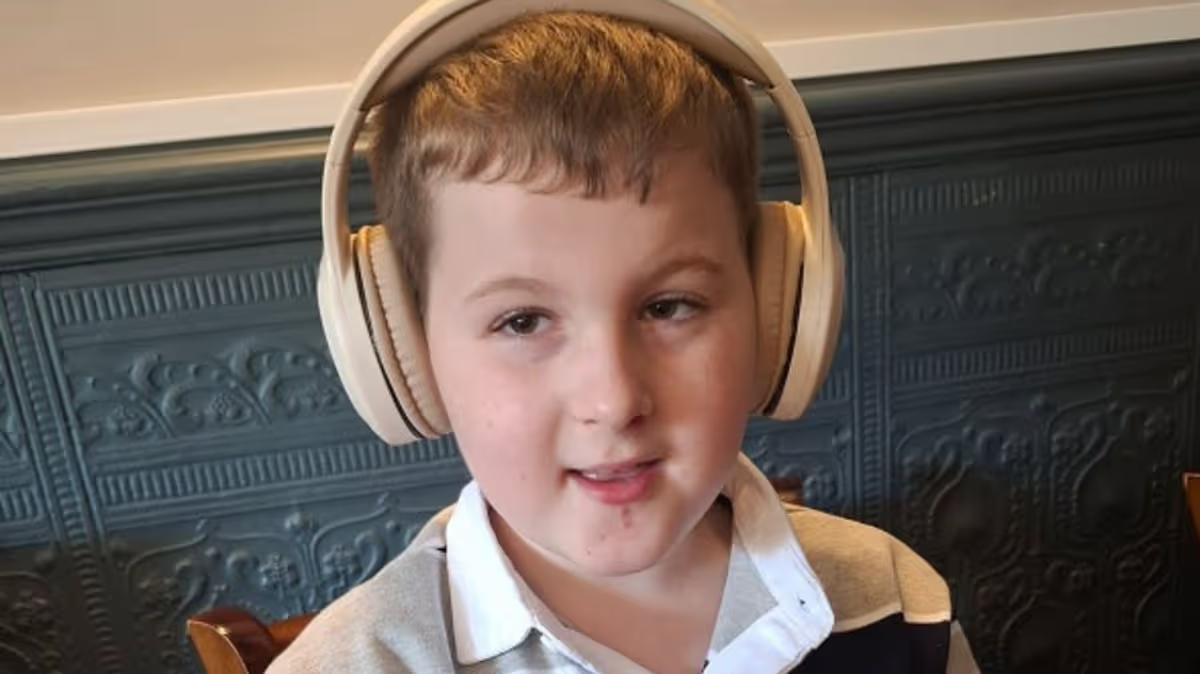
The victim, Rhys, is at the heartbreaking center of this story. At eight years old, he was at an age of burgeoning independence, of school projects and friendships, of trust in the parent who was his entire world. The image of a child being given a poisoned drink by the person he relied on for safety and comfort is particularly harrowing. It violates the most sacred bond of trust. His death is not just a statistic; it is the loss of a future filled with potential, a life ended before he could truly begin to shape it. The community’s grief is compounded by the unnaturalness of his passing, a senseless theft of innocence that leaves everyone grappling with a pain that has no clear outlet. Remembering Rhys as a individual—a boy with a name, a smile, and a life—is crucial in resisting the numbness that can accompany such shocking news.
The legal proceedings that followed would seek to establish the precise facts and motivations, to determine the degree of culpability and the appropriate path of justice. The court would have to navigate the difficult terrain where criminal act meets possible mental illness, where accountability intersects with compassion. Was this a premeditated act, or the culmination of a psychotic break? Were there untreated mental health issues, unbearable external pressures, or a catastrophic convergence of both? The answers to these questions do not excuse the outcome, but they are essential to understanding it, and perhaps to preventing similar tragedies. The justice system, in such cases, carries the heavy burden of balancing societal condemnation with the need to address the human breakdown that precipitated the crime.
For the wider family and community, the aftermath is a landscape of dual trauma. They are not only mourning the violent loss of a beloved child but also confronting the reality that the person responsible is someone they also know and love. The family members who discovered the scene will carry that horrific image for life. There is the complex grief for Rhys, mixed with anger, betrayal, and a bewildering pity for Louise. The community of Billingham is left to reconcile the everyday normality of their streets with the extraordinary horror that occurred behind one of its doors. Such events rupture the social fabric, leaving people to question how such suffering could go unseen and what signs might have been missed—a burden of hindsight that is both natural and often deeply unfair.
Ultimately, the story of Louise and Rhys Cameron is a stark, painful reminder of the silent battles many face and the catastrophic points to which untreated anguish can lead. It underscores the critical importance of accessible mental health support and societal vigilance. While nothing can ever justify the death of an innocent child, understanding the depth of despair that leads to such an act is a necessary, if agonizing, part of the human response. It challenges us to look beyond the headline and see the cascading failure—of an individual’s coping mechanisms, and potentially of the systems meant to safeguard the vulnerable. The legacy of this tragedy must be a renewed commitment to recognizing cries for help, however muffled, and to strengthening the networks of care that can sometimes be the only barrier between a troubled mind and an irreversible, devastating act. Rhys’s memory, and the broken life of his mother, stand as a somber testament to the cost of despair left unaddressed.