




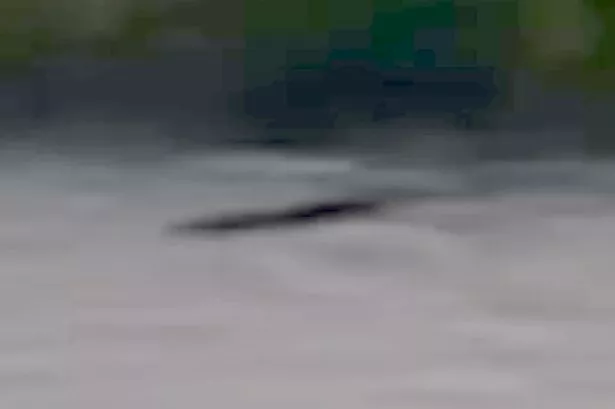
Eoin O’Faodhagain, a veteran Nessie enthusiast, reported another potential sighting of the elusive Loch Ness Monster while monitoring the loch’s surface via webcam. O’Faodhagain described the sighting as a solid black object, significantly larger than a seal, moving across the water for several minutes before disappearing beneath the surface. He asserted that its characteristics ruled out conventional explanations like boats, debris, or known aquatic animals, leaving him convinced that he had witnessed Nessie. This sighting adds to a growing list of reported encounters in recent years, contributing to the persistent mystery and allure of the creature that has captivated the world’s imagination for decades. O’Faodhagain’s claim, while unsubstantiated by concrete evidence, fuels ongoing speculation and debate surrounding the existence of a large, unidentified animal inhabiting the depths of Loch Ness.
The enduring legend of the Loch Ness Monster has spawned countless searches, investigations, and theories, yet definitive proof remains elusive. The loch’s murky depths, combined with its complex underwater topography, create a challenging environment for scientific exploration. Sonar scans, underwater photography, and even expeditions using remotely operated vehicles (ROVs) have yielded intriguing results, including unexplained sonar anomalies and ambiguous images, but none have provided conclusive evidence of Nessie’s existence. Skeptics attribute sightings to misidentification of known animals, floating debris, or even optical illusions created by the loch’s unique water conditions. However, believers maintain that the sheer volume of eyewitness accounts, coupled with the persistent mystery, suggests the possibility of a hidden creature yet to be discovered.
O’Faodhagain’s reliance on webcam footage for his sighting highlights the increasing role of technology in the search for Nessie. Webcams positioned around the loch provide a continuous stream of live images, allowing enthusiasts and researchers across the globe to monitor the water’s surface in real time. This constant surveillance has arguably increased the frequency of reported sightings, offering a new avenue for observation and documentation. However, the limitations of webcam technology, such as distance, resolution, and potential distortions, can also complicate interpretation and raise questions about the reliability of evidence gathered through this medium. While webcams can capture intriguing events, they often lack the detail and clarity necessary to definitively identify observed objects, leaving room for ambiguity and speculation.
The ongoing debate surrounding the existence of Nessie often centers on the interpretation of eyewitness testimony, which can be notoriously unreliable. Factors such as lighting conditions, distance, and the observer’s own perceptions and biases can influence what they see and how they interpret it. The excitement and anticipation surrounding the possibility of sighting a legendary creature can further color perceptions, potentially leading to misidentification or exaggeration. While eyewitness accounts form a significant part of the Nessie narrative, they lack the scientific rigor required to substantiate the creature’s existence. Therefore, while O’Faodhagain’s account adds to the body of anecdotal evidence, it does not offer the concrete proof sought by scientists and skeptics.
Despite the lack of irrefutable evidence, the Loch Ness Monster continues to capture the public imagination, fueled by a combination of mystery, folklore, and the enduring human fascination with the unknown. The legend has become deeply ingrained in Scottish culture and tourism, attracting visitors from around the world eager to catch a glimpse of the elusive creature. This cultural significance, combined with the ongoing debate and occasional reported sightings, keeps the story of Nessie alive, perpetually fueling speculation and driving further investigation. Whether Nessie is a real creature or a product of myth and misidentification, its enduring presence in popular culture underscores the power of mystery and the enduring human desire to explore the unexplained.
The pursuit of Nessie, whether driven by scientific curiosity or a fascination with the unknown, exemplifies the human drive to explore and understand the natural world. While the existence of the creature remains unproven, the ongoing search contributes to our understanding of the loch’s ecosystem and the challenges of exploring complex underwater environments. The advancements in technology used in the search, from sonar to underwater robotics, have applications beyond the hunt for Nessie, contributing to broader scientific knowledge and exploration. Even if the Loch Ness Monster proves to be a myth, the enduring quest to uncover its secrets has undoubtedly spurred scientific inquiry and fostered a sense of wonder and curiosity about the natural world.