

A Summary and Reflection on a Violent Encounter Near the White House
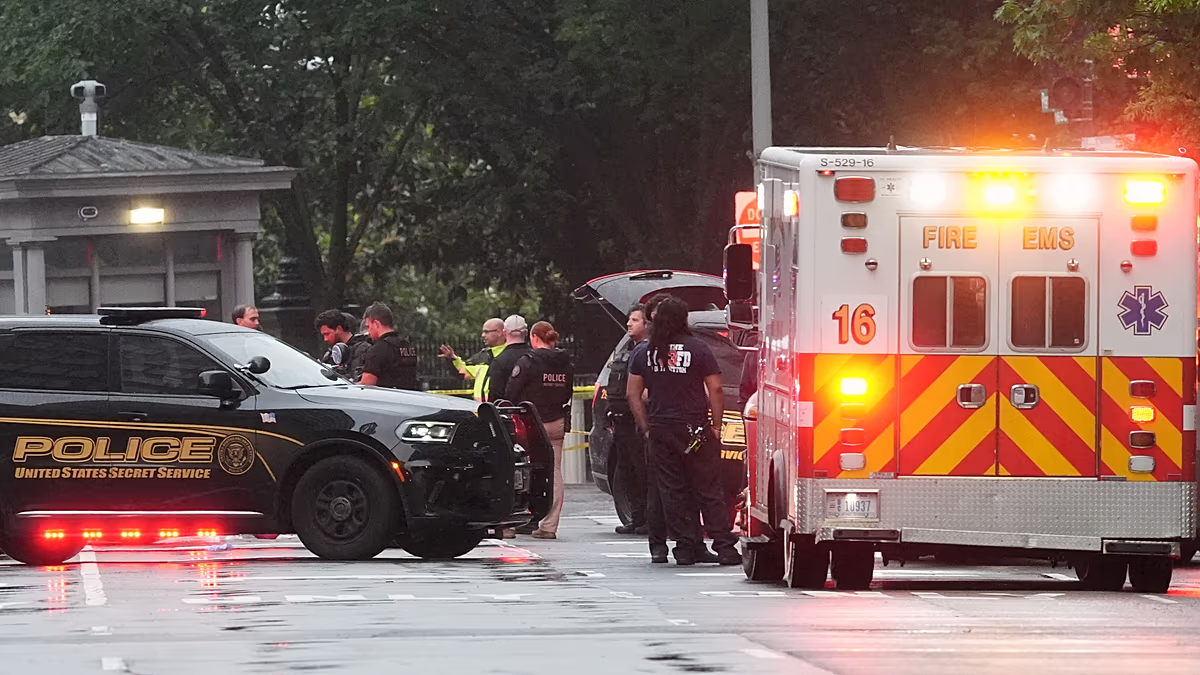
On a Saturday evening in late May, the meticulously guarded perimeter surrounding the White House was pierced by the sound of gunfire. According to official statements from the U.S. Secret Service, an individual armed with a firearm began shooting near the intersection of 17th Street and Pennsylvania Avenue, a location deeply embedded in the nation’s political and symbolic landscape. In the swift and violent exchange that followed, Secret Service agents returned fire, striking the assailant. The gunman was transported to a nearby hospital but did not survive his injuries. Tragically, the incident also resulted in an innocent bystander being caught in the crossfire and wounded. No law enforcement officers were harmed during the confrontation. President Donald Trump, who was inside the White House at the time, was reported to be unharmed and secure.
The immediate response from authorities highlighted the perpetual state of vigilance required to protect such a high-profile target. Anthony Guglielmi, the Secret Service’s chief of communications, outlined the basic facts in a sobering statement, a procedural recounting that belies the chaos of the moment. These events underscore the immense and often unseen pressure borne by the Secret Service, whose mission is to neutralize threats with split-second precision while minimizing collateral damage in one of the most densely populated and watched areas of the country. The wounding of a bystander is a grim reminder of the difficult realities of such operations, where even the most disciplined defensive actions can have unintended, heartbreaking consequences.
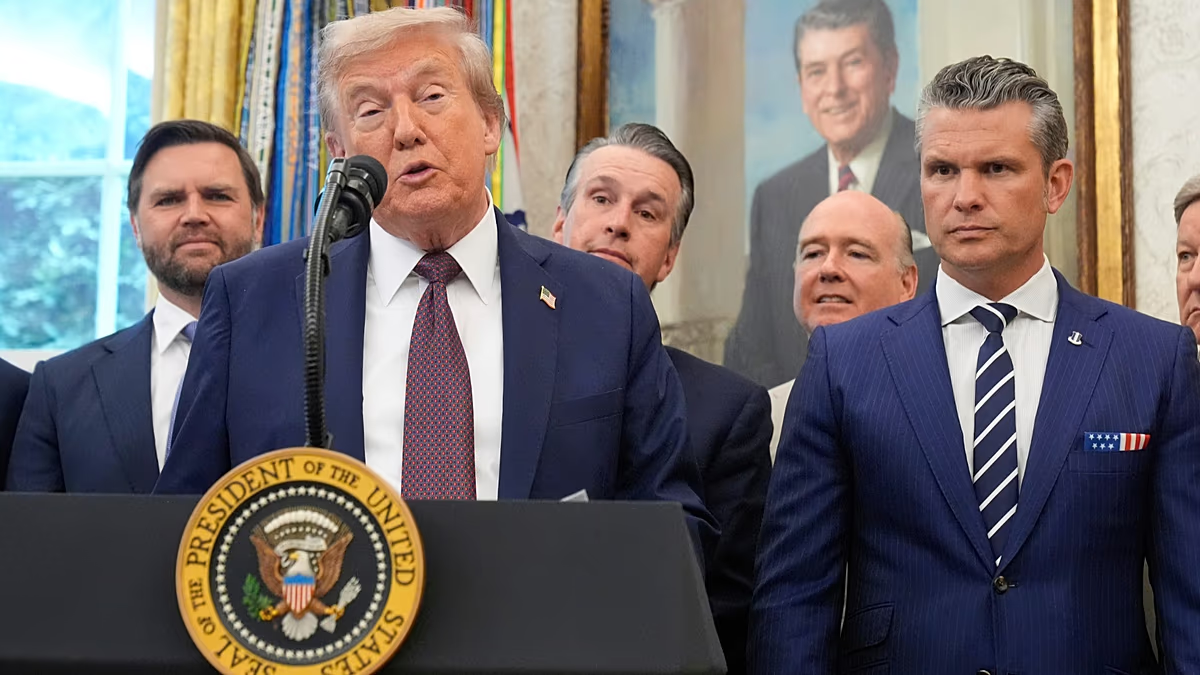
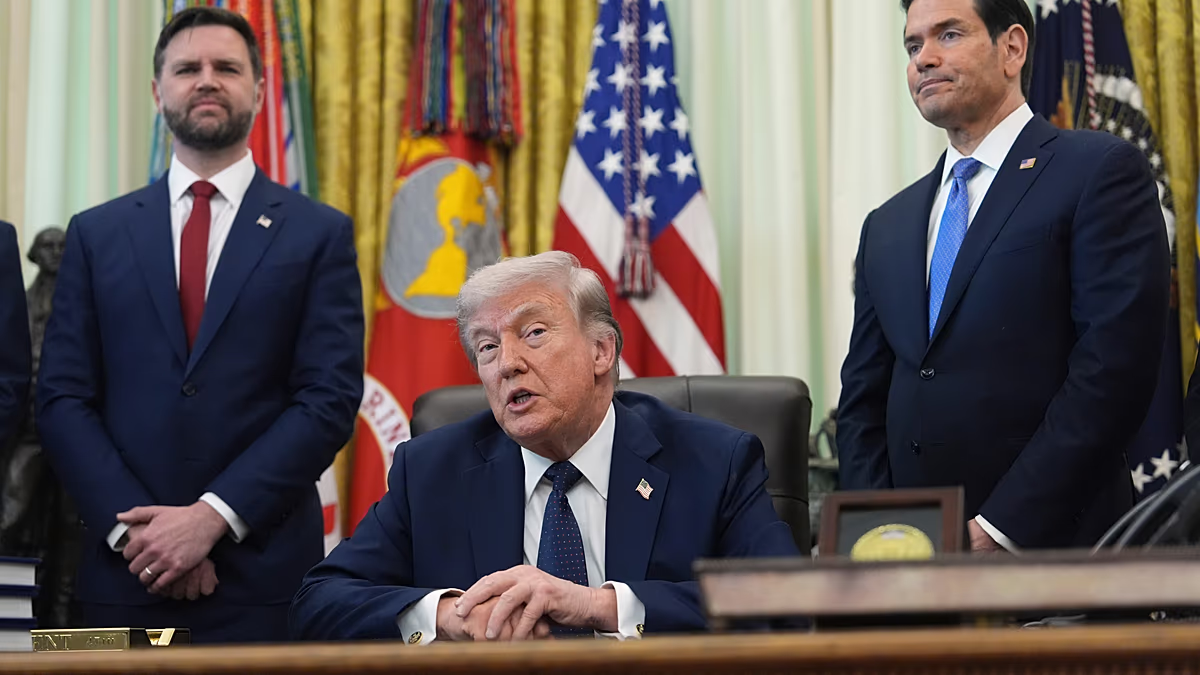
Following the incident, President Trump took to his social media platform, Truth Social, to comment. He characterized the shooter as having a “violent history and possible obsession” with the White House and extended his thanks to the authorities for their “swift and professional action.” His statement then pivoted to a political point, suggesting the event validated his calls for a future presidential security complex that would be “the most safe and secure space of its kind ever built.” This reaction intertwines personal relief with political narrative, a fusion that has become commonplace in an era where presidential communication is direct, immediate, and often polarizing.
This episode did not occur in a vacuum. It is the latest in a disturbing series of security breaches and violent incidents targeting or approaching President Trump and the institution of the presidency itself. As noted in the report, just the previous month, a man was charged with attempted assassination after allegedly storming the White House Correspondents’ Dinner armed with weapons. These repeated events paint a picture of a heightened and increasingly volatile threat environment. They speak to a fractured political climate where the symbolic seat of American power can become a focal point for destabilizing rage and obsession, challenging security protocols in new and alarming ways.
The human dimension of this story extends beyond the principal actors. For the agents involved, it represents another critical incident in a career defined by the weight of immense responsibility. For the wounded bystander, it is a life-altering event of simply being in the wrong place at a catastrophic time—a jarring intrusion of violence into an ordinary evening. For the public, it is another unsettling news alert that momentarily shakes the sense of normalcy, prompting questions about safety, polarization, and the safety of those in leadership. It is a story of procedure and politics, but also one of random chance and profound personal impact.
Ultimately, this violent Saturday evening near the White House serves as a stark microcosm of contemporary American challenges. It highlights the relentless demands on protective services operating in an age of amplified threats. It illustrates how moments of crisis are instantly filtered through the lens of political discourse. And, most fundamentally, it is a reminder of the fragile human elements—the agents, the bystanders, the citizens—that exist within the grand narratives of security and power. As the investigations continue and the political commentary subsides, the enduring images are those of swift professional response, tragic collateral damage, and the unsettling frequency with which such scenes now seem to unfold.