


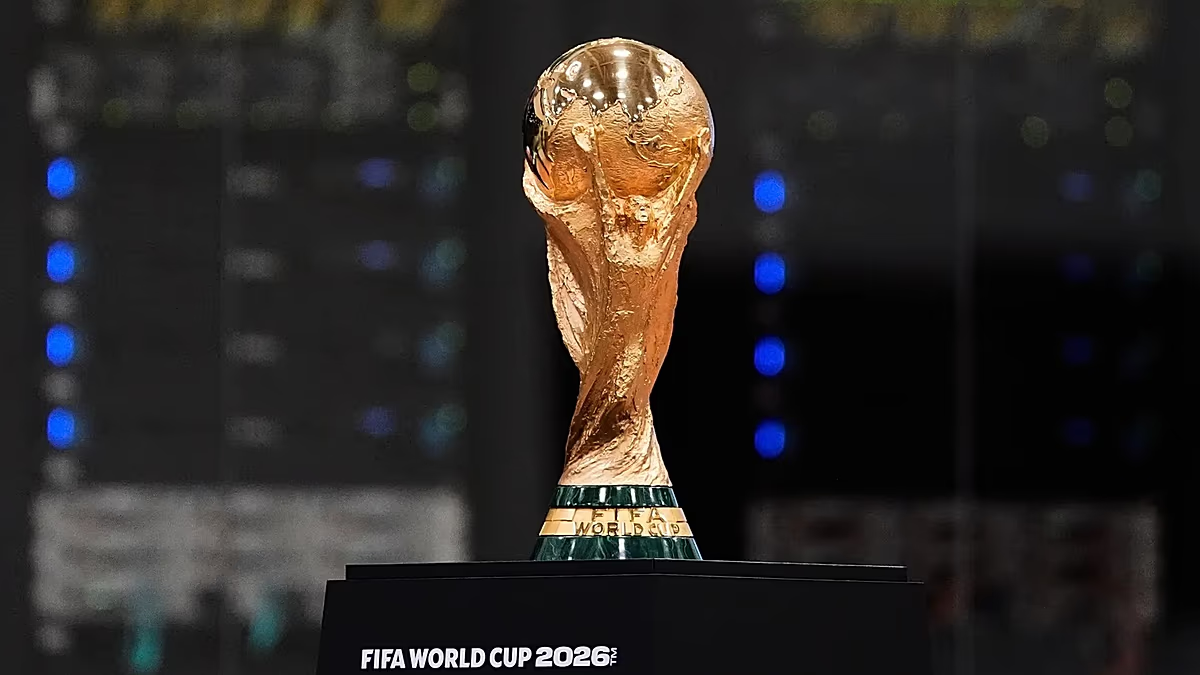
The world of sports is often celebrated for its ability to unite people across borders, but a recent incident underscores how geopolitical realities can abruptly intersect with athletic dreams. In early June 2026, just as the FIFA World Cup was set to begin across North America, award-winning Somali referee Omar Abdulkadir Artan was denied entry into the United States upon arriving at Miami International Airport. FIFA confirmed that as a result, Artan would play no part in the tournament, a crushing blow not only to his personal career but to a historic milestone. He would have been the first Somali national to referee on football’s grandest stage, an achievement that had already made him a celebrated figure at home and across Africa. This decision, rendered by U.S. immigration authorities, left FIFA powerless and highlighted the stark limits of sporting diplomacy when confronted with national sovereignty over border control.
The official response from both FIFA and U.S. authorities painted a picture of a procedural, if devastating, outcome. A FIFA spokesperson emphasized that the organization “is not involved in host country immigration processes,” stating that the adjudication of visas and entry remains the “sole preserve” of the host nation. For its part, U.S. Customs and Border Protection (CBP) explained that Artan underwent “additional inspection,” a routine step, and was subsequently “determined to be inadmissible due to vetting concerns.” While no specific details were disclosed, the context is deeply significant: Somalia is among several nations subject to a travel ban list instituted by a previous U.S. administration. This policy framework ultimately overrode Artan’s credentials as an elite athlete invited by a global institution, demonstrating how broader immigration policies can directly impact international cultural and sporting exchanges.
In the face of this profound personal and professional setback, Omar Artan’s response was one of remarkable grace and resilience. In a statement, he expressed being in a “positive mood” and focused on the “next challenges” in his refereeing career. He thanked the global football community for their support and wished his colleagues success in the tournament, looking forward to joining them in future competitions. This dignity stood in stark contrast to the disappointment felt by his supporters and nation. His attitude transformed him from a victim of circumstance into a model of sportsmanship, choosing to look forward rather than dwell on the opportunity lost. It was a poignant reminder of the human element often overshadowed by bureaucratic announcements and political contexts.
Artan’s journey to the brink of the World Cup was a testament to his skill and dedication, making the denial of entry all the more poignant. Named the Confederation of African Football’s men’s referee of the year in 2025, he had built an impressive resume since becoming a FIFA-listed referee in 2018. He officiated domestically in the Somali league and on the continental stage at the Africa Cup of Nations. His selection for the 2026 World Cup was a crowning achievement, hailed by Somali President Hassan Sheikh Mohamud as a moment of national pride. The President commended Artan’s “effort, professionalism and integrity,” declaring him a “symbol of inspiration for the new generation of Somalis.” This context makes it clear that Artan was far more than just a match official; he was a beacon of hope and positive representation for a country often defined by its challenges.
The Somali government swiftly rallied behind its citizen. The Ministry of Youth and Sports issued a statement reaffirming “unwavering support for Omar Artan” and full confidence in his “integrity, professionalism and continued contribution.” This solidarity highlighted the national significance of his role. His story transcends sport, touching on themes of global mobility, representation, and the barriers faced by individuals from certain nations regardless of their personal stature or international acclaim. The incident raises difficult questions about the balance between national security protocols and the spirit of global events designed to foster international camaraderie. When a preeminent global sporting event cannot guarantee the participation of its selected officials due to immigration barriers, it reveals a fundamental friction at the heart of our interconnected world.
Ultimately, the story of Omar Artan is a narrative of juxtapositions: celebration and rejection, potential and limitation, global sport and national borders. While he was forced to watch the World Cup from afar, his dignified response and the outpouring of support solidified his legacy as a pioneer. His absence from the tournament serves as a sobering footnote to the 2026 World Cup, a reminder that for all the universal joy football aims to promote, access to its stages remains uneven. Yet, his focus on future competitions offers a note of optimism. The hope remains that his talent will ultimately triumph, allowing him to officiate at the highest level in a future where achievement, not origin, is the sole passport required.