


Of course. Here is a humanized and expanded summary of the provided content, structured into six paragraphs.
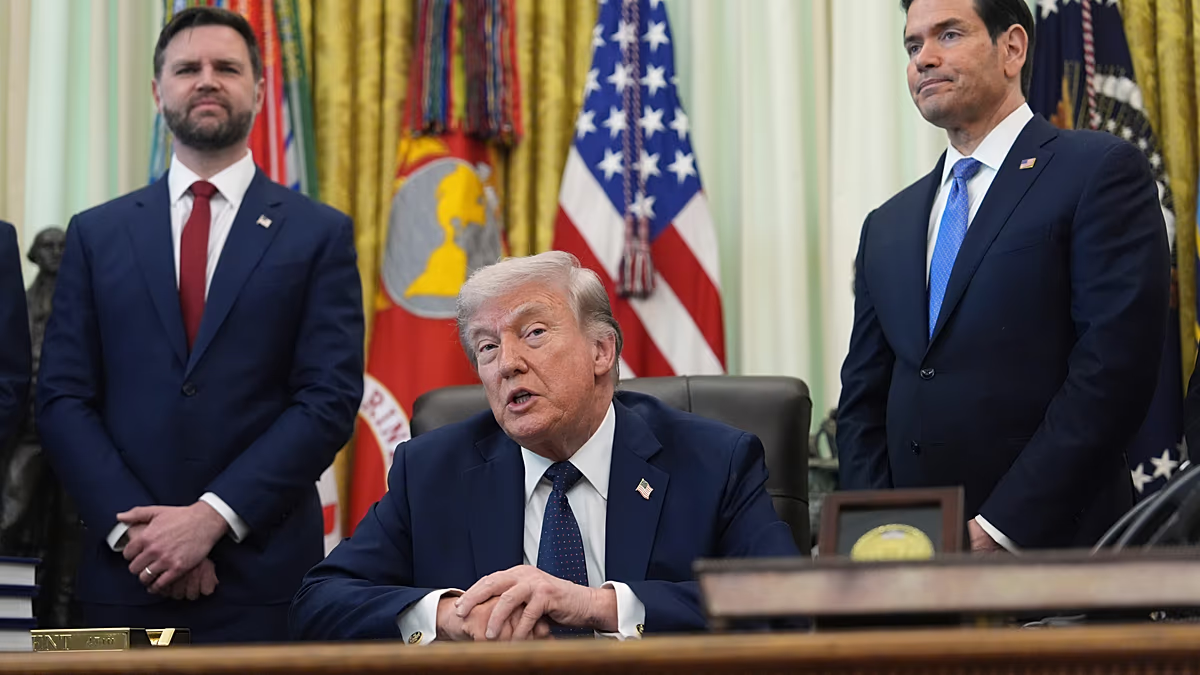
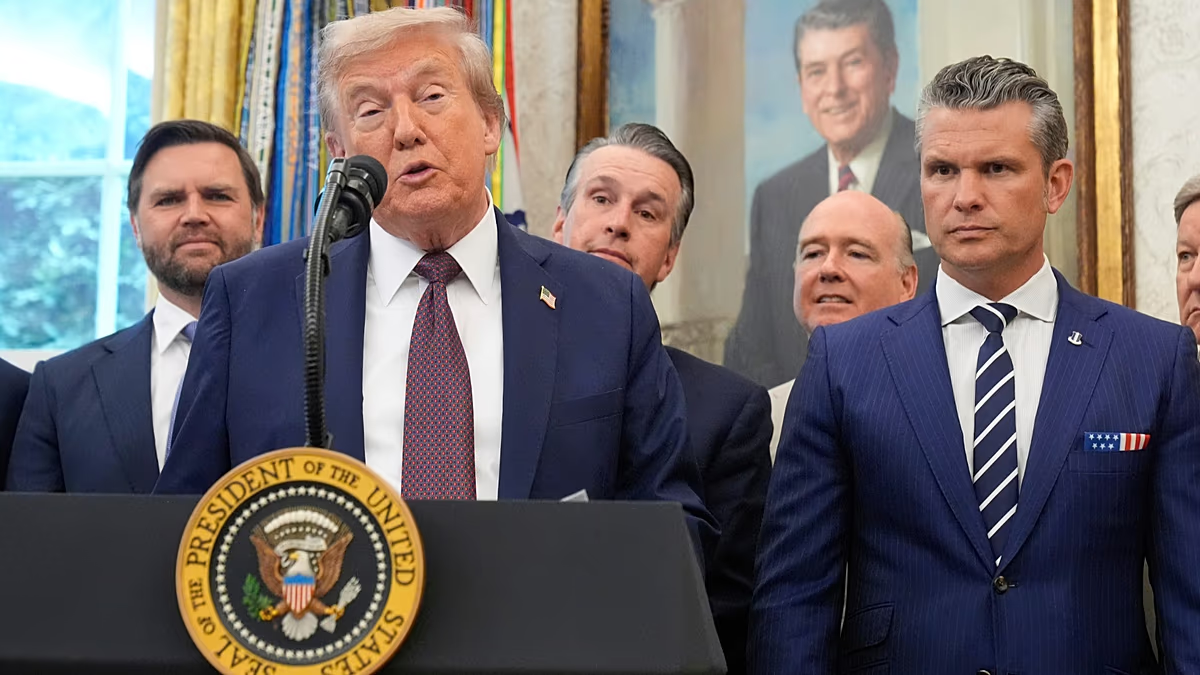
A significant and potentially transformative breakthrough appears to be on the horizon in the Middle East. On a recent Saturday, U.S. President Donald Trump announced that a draft framework for a comprehensive agreement with Iran has been “largely negotiated” and is pending final details. This development, communicated via the President’s preferred social media platform, signals a dramatic de-escalation from the brink of a wider regional war. At the heart of this tentative deal is a critical economic and strategic provision: the reopening of the Strait of Hormuz, a vital maritime chokepoint for global energy supplies that Iran effectively closed months earlier in retaliation for U.S. and Israeli strikes. The announcement suggests that after a period of intense conflict and stalemate, diplomatic channels, heavily influenced by key regional powers, have finally yielded a viable path forward.
This diplomatic momentum did not emerge in a vacuum but was the product of concerted, behind-the-scenes pressure and mediation from America’s allies in the region. President Trump noted that he had held a “very good call” with the leaders of Saudi Arabia, Qatar, the United Arab Emirates, and other pivotal nations like Egypt, Jordan, and Pakistan. These conversations underscored a clear regional imperative: to convince the United States to halt further military action and to pursue a definitive end to the hostilities. A separate discussion with Israeli Prime Minister Benjamin Netanyahu was also described as having “gone very well,” indicating an effort to maintain coordination with a key ally who views the Iranian threat with utmost seriousness. The collective weight of these regional voices seems to have been a decisive factor in steering the administration toward the negotiating table.
The outlines of the emerging deal, as reported by news agencies and confirmed by Iranian officials, extend beyond simply reopening the strait. According to sources familiar with the Pakistan-led mediation, the framework includes an official declaration to end the war, which began with strikes on Iran in late February. In return for Iran reopening the vital waterway, the United States would end its naval blockade of Iranian ports—a blockade that, by the U.S. military’s own account, had turned away over a hundred commercial vessels. Perhaps most crucially, the agreement would establish a defined follow-on process: a period of 30 to 60 days of dedicated negotiations focused squarely on Iran’s nuclear program. This structure aims to decouple the immediate crisis from the longer-term nuclear dispute, creating a sequential rather than a simultaneous set of challenges to resolve.
From Tehran’s perspective, the priorities in this draft framework are clear and sequential. Iranian Foreign Ministry spokesperson Esmail Baghaei confirmed the existence of the “framework agreement,” emphasizing that the immediate and non-negotiable focus is on ending the war “on all fronts,” including the volatile Lebanon theater. He stated that the lifting of U.S. sanctions has been explicitly included in the text as a fixed Iranian demand, a key objective for the economically strained nation. Notably, Baghaei clarified that nuclear issues are deliberately not part of this initial phase; Tehran’s strategy is to first secure a ceasefire and relief from the immediate pressures of war and blockade before engaging in the immensely complex discussions about its nuclear ambitions. This step-by-step approach, Iran suggests, has allowed differences to narrow significantly over recent days.
President Trump’s announcement also served to explain his own reversal from earlier, more bellicose positions. He acknowledged that he was holding off on a promised military strike against Iran precisely because “serious negotiations” were now underway, a move he attributed to the direct requests of Middle Eastern allies. This pattern—setting firm deadlines for Tehran and then backing away from them under diplomatic pressure—has characterized the administration’s approach, reflecting the tension between maximalist rhetoric and the pragmatic realities of global and regional statecraft. The conflict itself, ignited by the late February strikes that derailed previous nuclear talks, had quickly spiraled into an economic standoff with global repercussions, making the pursuit of a diplomatic off-ramp increasingly urgent for all parties involved.
In conclusion, the announced framework represents a fragile but hopeful pivot from military confrontation to structured diplomacy. By agreeing to a draft that promises to reopen the Strait of Hormuz, end the war officially, and lift the port blockade, the U.S. and Iran are taking tentative steps to unwind a crisis that has threatened regional stability and global energy markets. The deal’s architecture, which postpones nuclear talks for a dedicated two-month window, is a pragmatic, if risky, acknowledgment that solving every problem at once is impossible. Its ultimate success now hinges on the “final details” President Trump mentioned, the good-faith implementation of initial steps, and the willingness of both nations to then navigate the even more treacherous terrain of nuclear negotiations in the weeks to come. The world now watches to see if this framework can be finalized and become the foundation for a lasting peace.