


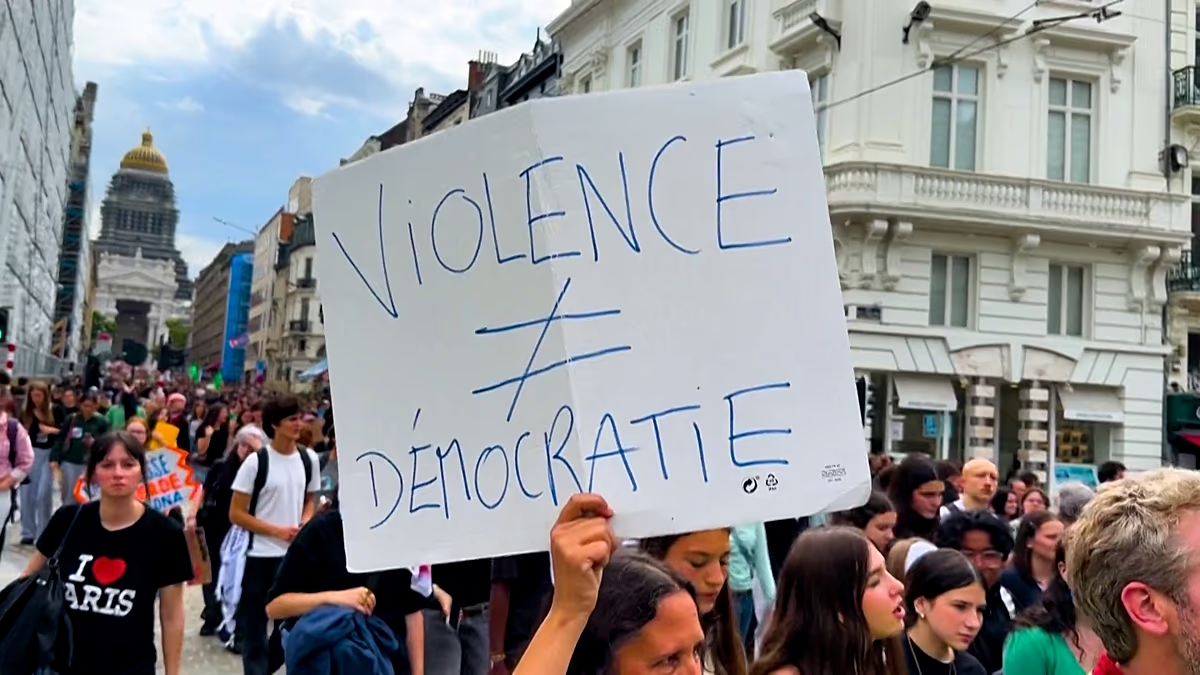
The streets of Brussels echoed with a chorus of civic discontent, as protesters marched under banners that framed their cause in deeply human terms: “My teachers, my heroes” and “Violence is not democracy.” These slogans sought to anchor the political demonstration in the personal and the universal, appealing to shared values of respect for educators and democratic principle. Yet the scene was not one of untarnished idealism; the path of the march bore the scars of earlier unrest, with graffiti-scrawled walls and the charred frames of bicycles serving as stark reminders that the dialogue between the people and their government had already begun to fracture. This visual juxtaposition—of hopeful, massed citizens alongside the debris of conflict—set the stage for a complex story of protest, policy, and escalating tension.
This large-scale demonstration was the culmination of several fraught days, a boiling-over point in a sustained period of friction between activists and law enforcement. In the preceding confrontations, the tools of crowd control—water cannons and tear gas—had been deployed against gatherings that protest organizers insisted were largely peaceful. From the perspective of those marching, this police response represented a disproportionate and violent reaction to their fundamental democratic right to assemble and voice dissent. The underlying catalyst for this rising public anger is a series of proposed budget reductions, backed by French-speaking Belgian lawmakers, which would enact significant spending cuts. Critics argue that these measures would fall most heavily on schools and education services within Belgium’s French-speaking communities, directly threatening the resources and stability of the very institutions the protesters seek to defend.
Leading the charge against these austerity measures is a coalition of activists, prominently featuring the group known as Mars Attacks. With a resolve that matches the scale of their concern, the movement has announced plans to sustain its pressure through daily demonstrations over the coming fortnight, with actions planned across several cities in the Wallonia region. This strategy signals a shift from sporadic outbursts of frustration to a coordinated, persistent campaign of civil disobedience, aimed at keeping the issue at the forefront of public and political consciousness. In Brussels, the authorities’ apprehension about this planned escalation was visibly evident in the heavy deployment of riot police, their presence a formidable barrier intended to prevent further property damage and maintain public order, but also a symbol of the state’s prepared stance against the rising tide of protest.
At its heart, the conflict transcends a simple debate over balance sheets. It represents a fundamental clash over priorities and the social contract. For the families, teachers, and students marching, the proposed cuts are not abstract fiscal adjustments but direct assaults on the future—a degradation of educational quality, larger class sizes, reduced support services, and a devaluation of the teaching profession. The “heroes” they carry on their placards feel betrayed, their vocation undermined by financial decisions made in government chambers. The protest is thus a powerful manifestation of a community defending its most valued public institutions, arguing that investment in education is an investment in societal well-being and future prosperity, which should be insulated from the blunt instrument of austerity.
However, the situation is ensnared in a dangerous, self-perpetuating cycle of action and reaction. Each instance of police using force to disperse crowds—even if prompted by isolated acts of vandalism—fuels narratives of oppression and heavy-handed governance, lending moral weight to the protesters’ cause and potentially radicalizing elements within the movement. Conversely, each instance of property destruction or clashes with police allows authorities to frame the protests as threats to public safety, justifying their robust security measures. This escalation risks overshadowing the original, substantive debate about education funding, reducing a complex policy issue to a simplistic narrative of lawlessness versus authoritarianism. The graffiti and burned debris, while minor in the broader context, become potent visual fodder for this simplified storyline, undermining the dignified message of the majority who march peacefully.
Consequently, this latest mobilization is more than a single event; it is a critical flashpoint that highlights a deepening political and social crisis. The growing opposition to the reforms has moved from the margins to the mainstream, capturing widespread public sympathy and demonstrating significant grassroots organization. As the protest movement digs in for a prolonged campaign, and the state reinforces its commitment to the contested budgetary path, the potential for further confrontation looms large. The coming weeks will test the resilience of democratic institutions, challenging both sides to find a way to de-escalate tensions, re-engage in genuine dialogue, and bridge the chasm between fiscal policy and the lived reality of citizens who see their heroes and their children’s futures on the budgetary chopping block. The banners in the streets are a plea for that dialogue, a call to remember that democracy is measured not only by the balance of accounts, but by the value placed on its people’s voices and their children’s potential.