

The Unseen Tremor: A Day of Caution and Resilience in Havana
On a seemingly ordinary day in early June, the rhythm of life in Havana was abruptly interrupted. Far off the coast, the Earth’s plates shifted, generating a potent 6.1 magnitude earthquake that sent its energy rippling toward the Cuban capital. The tremor, powerful and unmistakable, was felt across the city’s diverse neighborhoods, from the bustling streets of Centro Habana to the quieter, tree-lined avenues of Vedado. In a city more accustomed to the rhythms of salsa and the crash of ocean waves than the unsettling roll of seismic activity, the immediate response was one of instinct and protocol: a widespread, precautionary evacuation. Office workers, residents, and visitors alike streamed out of buildings, gathering in open plazas and streets, united by a shared moment of uncertainty. Miraculously, initial reports from authorities brought a collective sigh of relief—no immediate injuries or significant structural damage. Yet, for those who experienced it, the event was a profound reminder of nature’s unpredictable force.
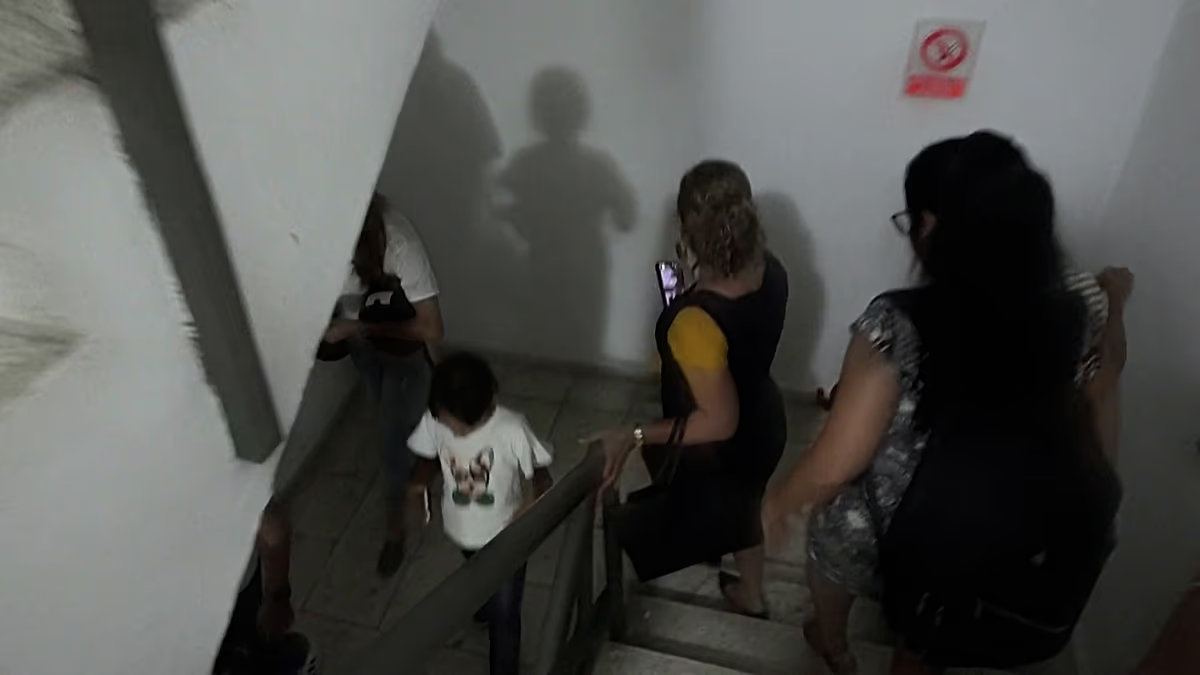
The tremor made its presence intimately known within the walls of Havana’s historic landmarks. In the iconic Lonja del Comercio, a beautiful early-20th-century building in the heart of Old Havana, the quake transformed a routine workday into a scene of sudden urgency. Workers and visitors described a deep, rolling vibration that caused desks to shudder, computer monitors to dance in place, and hanging lights to sway. For a moment, confusion reigned as the unfamiliar sensation registered. Then, training and instinct took over. The orderly but urgent sound of footsteps filled stairwells as hundreds made their way from their offices down to the safety of the street below. One witness recounted the surreal moment of seeing her computer screen begin to shake independently, a silent herald of the event seconds before her colleagues erupted into motion. Outside, beneath the building’s elegant dome and statue of Mercury, a crowd gathered, their faces a mix of concern, curiosity, and relief as they watched officials begin their assessments.
This scene of evacuation was replicated across Havana’s urban landscape. In countless homes, apartment buildings, and workplaces, people felt the distinct, unsettling movement and chose caution, temporarily abandoning their activities to stand in the relative safety of open air. The event stirred more than just physical movement; it stirred memories. For many Habaneros, it was a rare and startling experience, reviving discussions of past, lesser-known seismic events and highlighting the uncommon nature of such a palpable quake in the city. The collective action of leaving buildings, while precautionary, was not born of widespread panic, but rather a communal and prudent response to an extraordinary situation. It was a city pausing, catching its breath, and checking on its neighbors while awaiting official word.
In the tremor’s aftermath, a systematic and precautionary machinery swung into action. Emergency protocols were activated, sending engineers and safety inspectors to scrutinize key structures, particularly older buildings and towering high-rises. This necessary response inevitably turned a spotlight on the state of Havana’s architectural fabric. The city, a UNESCO World Heritage site famed for its breathtaking but aging colonial, art deco, and modernist buildings, faces well-documented challenges in preservation and maintenance. The earthquake, however brief, prompted unspoken questions about how these historic structures, which have weathered centuries of tropical sun and salt air, would fare against the different, sheer force of seismic shaking. The evacuations were not just a reaction to the day’s event, but a reflection of an underlying, chronic awareness of the city’s fragile built environment.
The seismic event arrived at a time when Cuba navigates profound and complex infrastructure and economic challenges. This context made the rapid and thorough safety assessments following the quake not merely routine, but critically important. The ability to swiftly and accurately evaluate buildings for safety is a cornerstone of urban resilience, especially in a setting where resources are perpetually strained. The earthquake, therefore, served as an unannounced drill, testing systems and highlighting the enduring importance of preparedness. It underscored that beyond the immediate shock, the true measure of response lies in the capacity to ensure the ongoing safety and security of the population in the hours and days that follow.
As the all-clear was given and people slowly returned to their desks and homes, a sense of normalcy resumed over Havana. The palpable tension dissipated, replaced by the familiar hum of city life and shared stories of the afternoon’s unexpected event. The 6.1 magnitude offshore quake left no visible scars on the city’s face, but it left an imprint on its consciousness. It was a testament to the calm resilience of its citizens, the importance of precaution, and the silent, ongoing dialogue between a historic city and the powerful natural forces that surround it. The tremor faded, but the reinforced awareness of vulnerability and the demonstrated spirit of communal caution remained, a subtle but powerful aftershock in the life of the capital.