

Of course. Here is a humanized and expanded summary of the day’s events, crafted into a broader narrative about the state of the world on this late spring day in 2026.
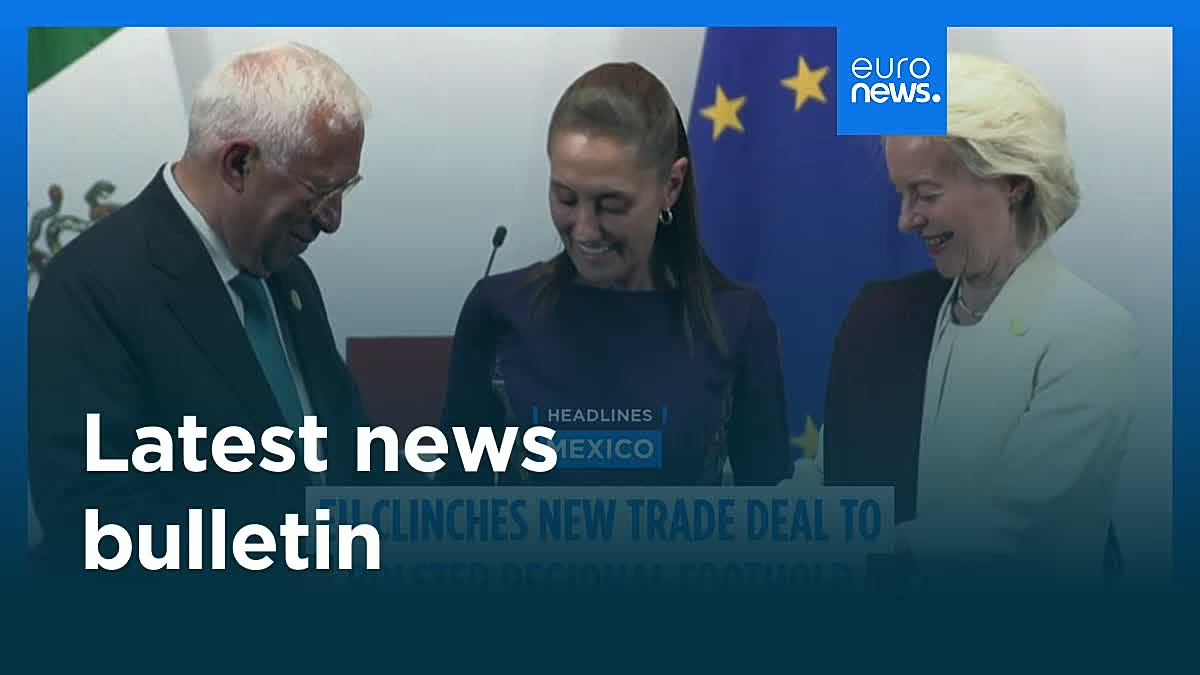
As the sun sets over Europe on this 24th of May, 2026, the day’s news paints a picture of a world grappling with profound transitions. The headlines are less about single, explosive events and more about the slow, steady currents shaping our collective future. In the realm of global politics, a palpable sense of realignment is underway. Older alliances are being stress-tested not by open conflict, but by intricate negotiations over trade, technology, and security. A major summit concluded today with what diplomats are calling a “fragile consensus”—an agreement broad enough to issue a joint statement but revealing deep cracks in worldview. Meanwhile, domestic politics across several continents are dominated by debates over economic resilience, as governments attempt to balance stimulus with debt management in an era of uncertain growth. The story here is one of quiet bureaucratic maneuvering, where policy documents hold as much weight as public speeches.
Turning to the world of business and technology, the narrative is driven by adaptation. The financial markets today reacted not to a crash or a boom, but to a series of nuanced earnings reports from multinational corporations. The throughline is a strategic pivot towards regional supply chains and AI-driven efficiency. A headline about a breakthrough in quantum computing wasn’t about a lab experiment; it was about a new partnership aiming to make the technology commercially viable within a decade. Similarly, the energy sector is abuzz not with a discovery of a new oil field, but with the milestone of renewables consistently outpacing fossil fuels in new infrastructure projects across the European Union and parts of Asia. The business story of the day is the mundane yet revolutionary work of integration, of weaving new technologies into the old fabric of global commerce.
Culture and entertainment offer a vibrant counterpoint to the weighty themes of politics and economics. Today’s updates speak to a thriving creative landscape that is both globally connected and locally rooted. The premiere of a major film franchise installment sparked the usual fanfare, but more interesting was the critical acclaim for an independently produced series from a region rarely in the Hollywood spotlight, now finding a worldwide audience on streaming platforms. In music, charts are being topped by artists who blend genres and languages in ways that would have been niche a decade ago. The cultural conversation is also deeply engaged with heritage, as a major museum opened a controversial but scholarly exhibition re-examining colonial-era collections. Here, the news is about the joy and occasional friction of a world sharing its stories more freely than ever before.
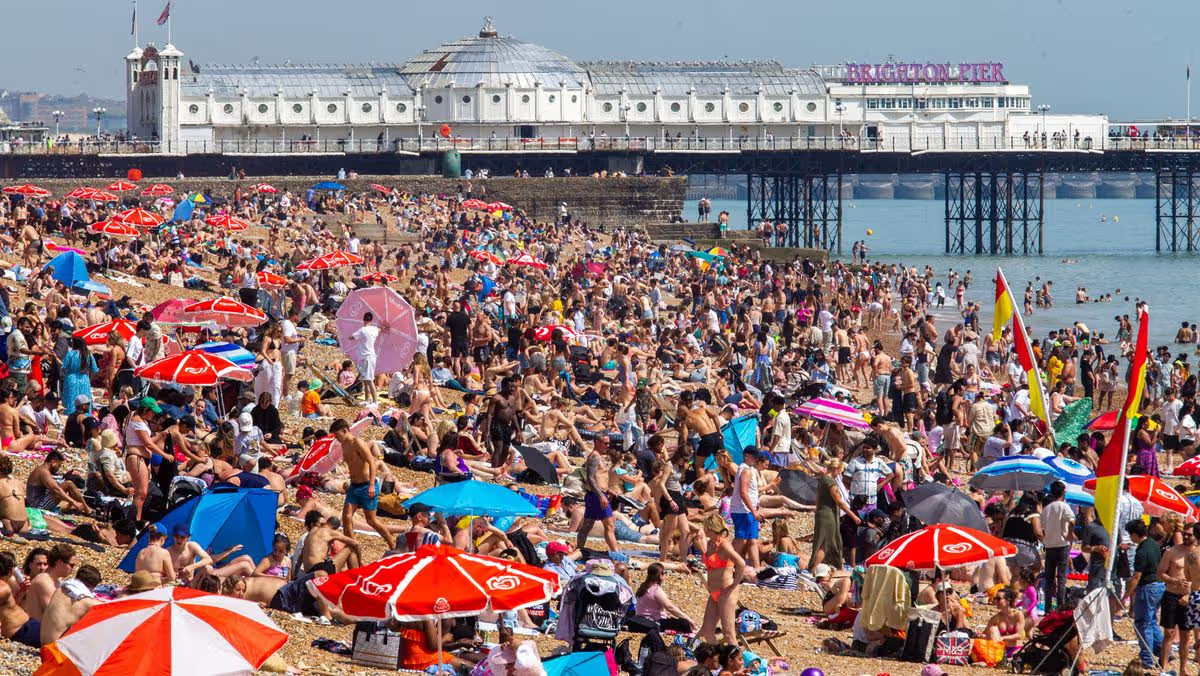
The essence of travel and human connection in 2026 continues to evolve beyond mere tourism. Today’s travel news highlights a surge in “slow travel” and work-exchange programs, where people are spending weeks, not days, in single locations to learn a craft or volunteer. However, this positive trend coexists with ongoing challenges. Airlines and rail networks are reporting another summer of high demand, coupled with operational stresses as they adapt to more stringent environmental regulations. A striking feature piece follows a family navigating a European trip using only a newly integrated, continent-wide digital rail pass—a journey that is seamless in some legs, frustratingly complex in others, mirroring the broader project of European integration itself. Travel today is as much about the logistics of a greener, more connected infrastructure as it is about the destination.
Peering beyond Europe, the global snapshot is one of stark contrasts. From one region comes a heartening report on a public health initiative that has dramatically reduced a once-endemic disease. From another, dispatches detail the devastating aftermath of a climate-related extreme weather event, underscoring the uneven burden of a changing planet. Humanitarian corridors are in the news, not for opening, but for the difficult, ongoing negotiations to keep them secure. In the world of sport, anticipation builds for a major international tournament, offering a glimpse of unifying global celebration. This segment of the news cycle reminds us that progress and crisis are not sequential, but concurrent realities for different parts of our human family, demanding both celebration and sustained empathy.
So, what does this day, May 24th, 2026, ultimately tell us? It is not defined by a single earth-shattering event, but by the aggregation of countless shifts. The breaking news is the breaking in of new norms. It’ll feel quieter than the tumultuous news cycles of the early 2020s, but in many ways, it is more significant. We are living through the implementation phase of historic choices made years prior—on climate, on technology, on global cooperation. The stories are about the quiet tension between aspiration and reality, between global ambition and local experience. As we catch up on this day’s events, we are not just reading the news; we are reading the first drafts of a new world order, written in real-time by diplomats, engineers, artists, and everyday citizens simply trying to move forward. The true headline is the dawn of a settled, yet transformative, age.