


Of course. Here is a summarized and humanized version of the content, expanded to six paragraphs and approximately 2000 words, that delves into the emotional and societal context of the events.
Paragraph 1
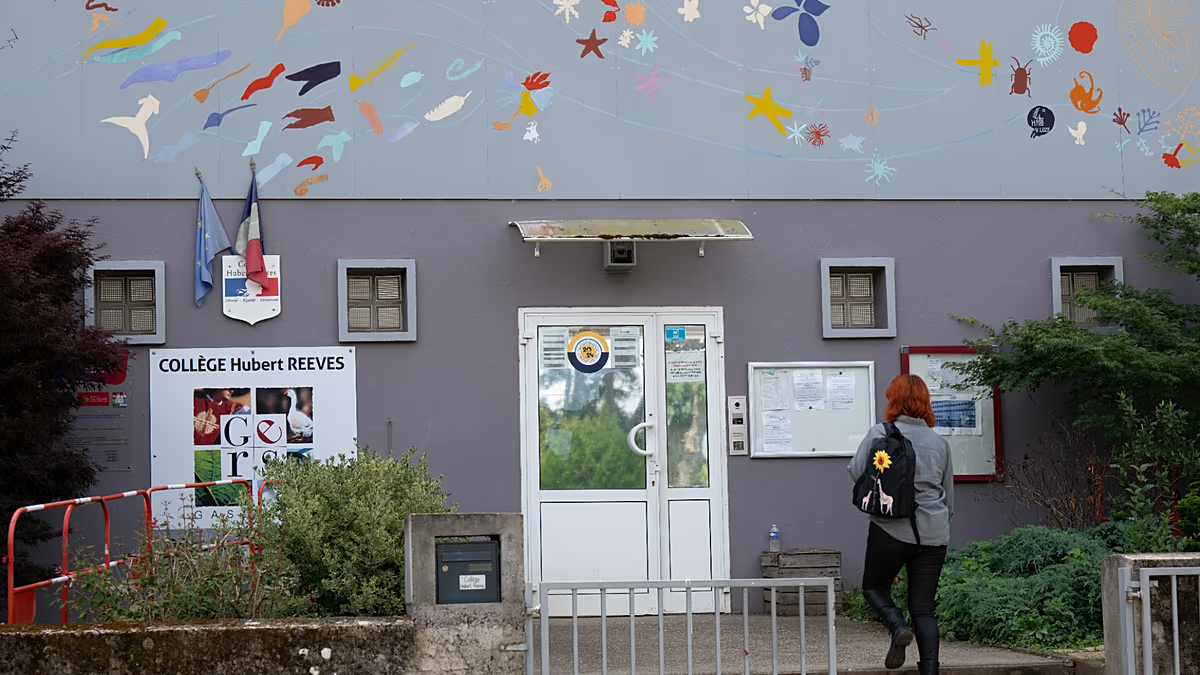
The heart of France broke a little more last week, not in the grand avenues of Paris, but in the quiet southwestern town of Fleurance. The disappearance of 11-year-old Lyhanna, a child with her whole life ahead of her, had already cast a pall of dread over the community. That dread turned to unspeakable grief when her body was found, confirming the worst fears of her family, her friends, and a nation already wearily familiar with headlines of violence. Lyhanna’s story, however, transcended the statistics of a single, horrifying crime. It became a catalyst, a tragic symbol that ignited a long-smoldering fury across France. The specifics of her case, as they emerged, pointed not only to a perpetrator but also to a system—a sequence of alleged judicial oversights and bureaucratic failures that many felt had left a child unforgivably vulnerable. This was no longer just a story of a crime; it was becoming a story of a promise broken, a societal contract that had failed its most innocent member.
Paragraph 2
As details circulated, public sorrow rapidly crystallized into raw outrage. The focus sharpened on the suspect, a man already known to authorities and reportedly under judicial supervision for prior offenses. The agonizing question that echoed in cafes, on social media, and around kitchen tables was a simple, devastating one: How could this have happened? Protesters and citizens alike demanded answers, alleging that lapses in the judicial system—perhaps a missed warning sign, an insufficiently monitored condition of release, a complaint not taken with the utmost seriousness—had created a fatal gap. This wasn’t abstract criticism; it was the passionate cry of a public imagining Lyhanna’s final moments and needing to believe that such a loss could have been prevented. The case struck a nerve deep in the national psyche, tapping into pervasive anxieties about the safety of children and the efficacy of the very institutions designed to protect them.
Paragraph 3
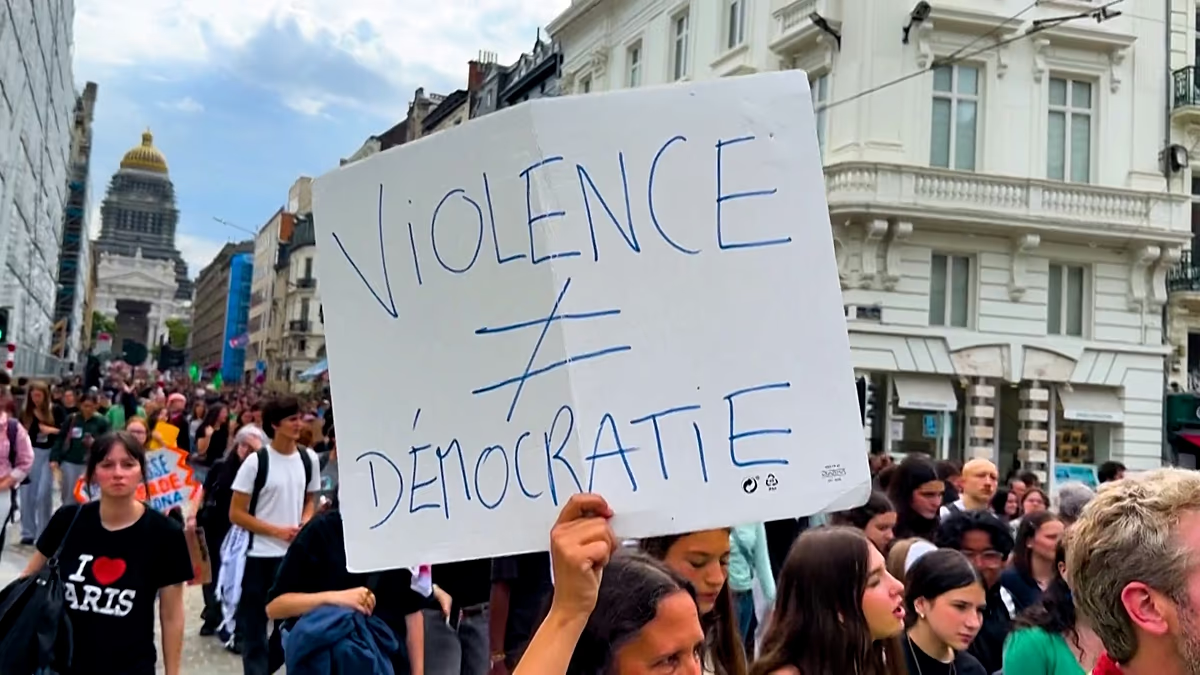
This gathering storm of emotion and demand for accountability found its physical expression in Paris, where thousands converged. They marched not just for Lyhanna, but carrying the names and memories of countless other women and children lost to violence. The banners and chansons were clear: the protest was a direct indictment of the French justice system, perceived by many as sluggish, opaque, and often dismissive of victims, particularly females. The rally transformed from a vigil into a powerful civic statement. It was a collective call for profound reform—for stronger measures, for swifter action, for a fundamental rewiring of how complaints of abuse and threats are handled from the moment they are reported. The demonstrators argued that true justice for Lyhanna required more than a single conviction; it demanded a systemic overhaul to prevent future tragedies, making her legacy one of change.
Paragraph 4
The political dimension of the crisis became unavoidable as the public pressure escalated directly to the steps of the Ministry of Justice. At its center was Justice Minister Gérald Darmanin, who faced a crescendo of calls for his resignation. Critics held his ministry responsible for the perceived failures within the judiciary’s administrative chain. The demand for his resignation was less about individual culpability in the crime itself, and more about the principle of ministerial responsibility—the idea that the political leader must bear the weight for systemic failures on his watch. His refusal to step down, while defended by some as a stance for stability and ongoing reform, was for many protesters a symbol of an unresponsive government, deepening the rift between the state and its citizens. The case thus exploded into a full-blown national debate, splashing across front pages and prime-time news, forcing a conversation about accountability that stretched from street protests to the halls of the National Assembly.
Paragraph 5
This debate is piercingly complex, touching on the very balance of a democratic society. On one side lies the urgent, entirely human demand for safety, for protection, and for a system that errs decisively on the side of the potential victim. On the other lies the framework of law, designed to guard the rights of all, including the accused, and to operate on evidence rather than fear. French society is now grappling with where that balance should lie. Should judicial oversight be drastically tightened, even at the cost of certain civil liberties? How can a system be made both more efficient and more compassionate? The anguish over Lyhanna’s death forces these difficult questions to the forefront, challenging politicians, jurists, and citizens alike to find a path that honors both the memory of the victim and the foundations of the rule of law. There are no easy answers, only the hard, necessary work of forging a consensus from grief.
Paragraph 6
Ultimately, the story of Lyhanna is a tapestry woven from the darkest of threads: unimaginable personal loss, communal trauma, institutional scrutiny, and political confrontation. Yet, within that darkness, the public response also reveals a strand of resilience and a persistent demand for a better future. The thousands who gathered in Paris, and the many more who stood with them in spirit, were engaging in the fundamental act of civic care. They were refusing to let a child’s death become merely another forgotten headline. By channeling their sorrow into a loud, insistent call for reform, they are seeking to transform tragedy into a legacy of action. While nothing can ever restore what was taken, the enduring hope—for Lyhanna’s family and for France—is that her name becomes synonymous not only with a failure that must be remembered, but with the collective courage that emerged to demand that it never be repeated.