


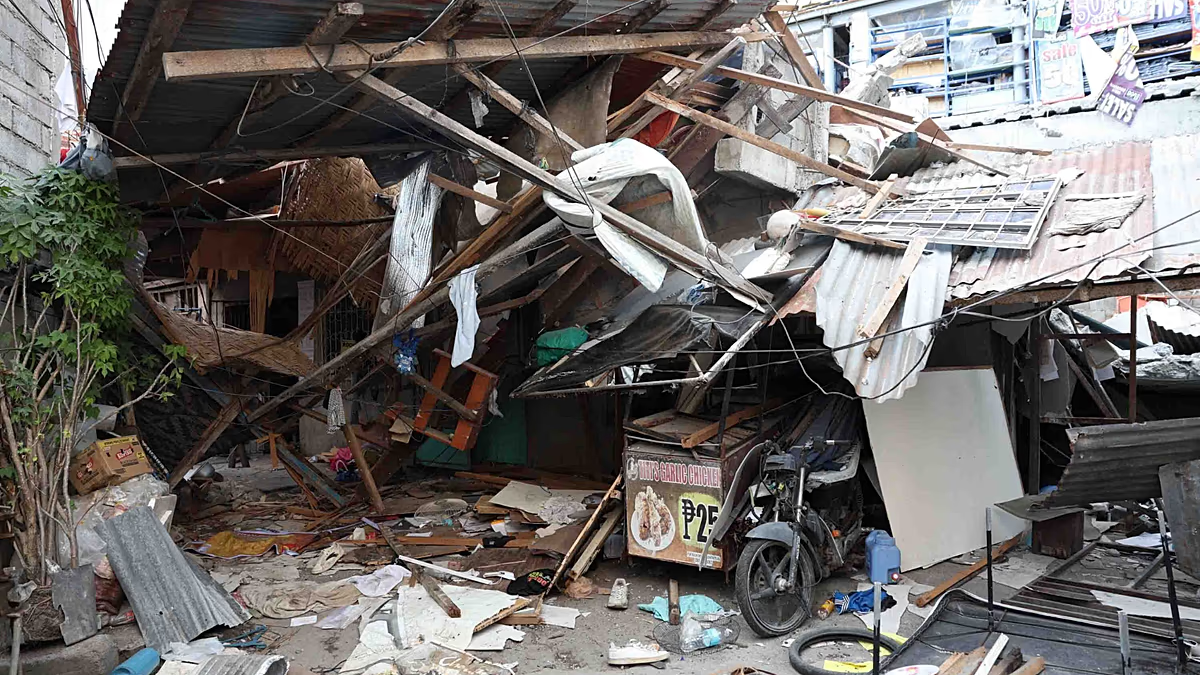
The Philippines finds itself in the painful, familiar rhythm of emergency and recovery following a devastating magnitude 7.8 earthquake that struck off the coast of Mindanao on June 9th. The tremor, the strongest to hit the nation this year, has left a trail of profound human loss and physical ruin. At least 41 lives have been tragically lost, with more than 450 people injured and thousands displaced from their homes. The initial terror was compounded by tsunami warnings that swept across parts of the Pacific, a fear later lifted but which added to the collective trauma. Now, as the immediate shock subsides, the arduous work of stabilizing communities and supporting survivors begins.
In cities like General Santos, one of the hardest-hit areas, the scene is one of cautious, somber activity. Residents, under the watchful eyes of engineers assessing structural integrity, gingerly search through damaged homes and apartment blocks to recover fragments of their normal lives. The landscape itself is altered: roads are damaged, public buildings compromised, and utilities disrupted. Power outages have darkened parts of southern Mindanao, adding a layer of practical difficulty to the emotional strain. The earth itself continues to protest; over 450 aftershocks have been recorded since the main quake, including several powerful ones measuring between magnitude 6.5 and 6.7. These persistent tremors not only slow rescue operations and complicate access to isolated communities but also sustain a state of anxiety, making each moment feel precarious.
The human stories emerging from the rubble speak to the sheer force of the event. Witnesses recount walls collapsing, floors splitting apart, and the surreal emergence of water and mud from the ground. For some property owners, the devastation extends beyond the visible damage to the very earth beneath their foundations. Buildings near known fault lines now stand on soil deemed unstable, facing the grim prospect of complete demolition. This reality underscores a longer-term challenge: rebuilding will not merely be about repair, but often about reimagining and reconstructing on safer ground. In the neighboring province of Sarangani, the aftershocks have dictated even the logistics of care; patients at a provincial hospital were moved outdoors as a precaution, receiving treatment under the open sky, a stark illustration of the disruption to every facet of daily life.
Among the most poignant disruptions is the impact on education. The earthquake struck on the first day of the new school term for millions of children across Mindanao, turning a day of anticipated routine and promise into one of chaos and fear. Approximately 3.2 million students have been affected, with classes suspended in more than 6,200 public and private schools due to damage to facilities. This interruption represents not just a logistical setback but a significant emotional and developmental one for a generation of young people. The suspension of learning compounds the instability they are experiencing, delaying not only academic progress but also the sense of normalcy and safety that school environments provide.
Now, relief teams and local authorities are shifting their focus from immediate rescue to sustained support. The priorities are clear: providing shelter for the displaced, ensuring continued medical assistance for the injured, and conducting thorough damage assessments to guide the recovery. The search for four missing individuals continues, a solemn mission holding the hopes of their families. Officials are meticulously evaluating the full extent of the destruction across the southern Philippines, a process that will reveal the true scale of the need. This marks the beginning of what is expected to be a lengthy and complex recovery process, requiring not only material resources but also immense resilience from the affected communities.
As the Philippines confronts this latest natural calamity, the narrative extends beyond statistics of magnitude and casualty counts. It is a story of communities navigating grief and uncertainty, of engineers assessing cracked foundations, of children missing their classrooms, and of families waiting for news of loved ones. The path forward is one of rebuilding both infrastructure and trust in the stability of the ground beneath. It is a testament to the enduring spirit of a people who, amidst aftershocks and instability, are already undertaking the first, determined steps toward healing and restoration.