

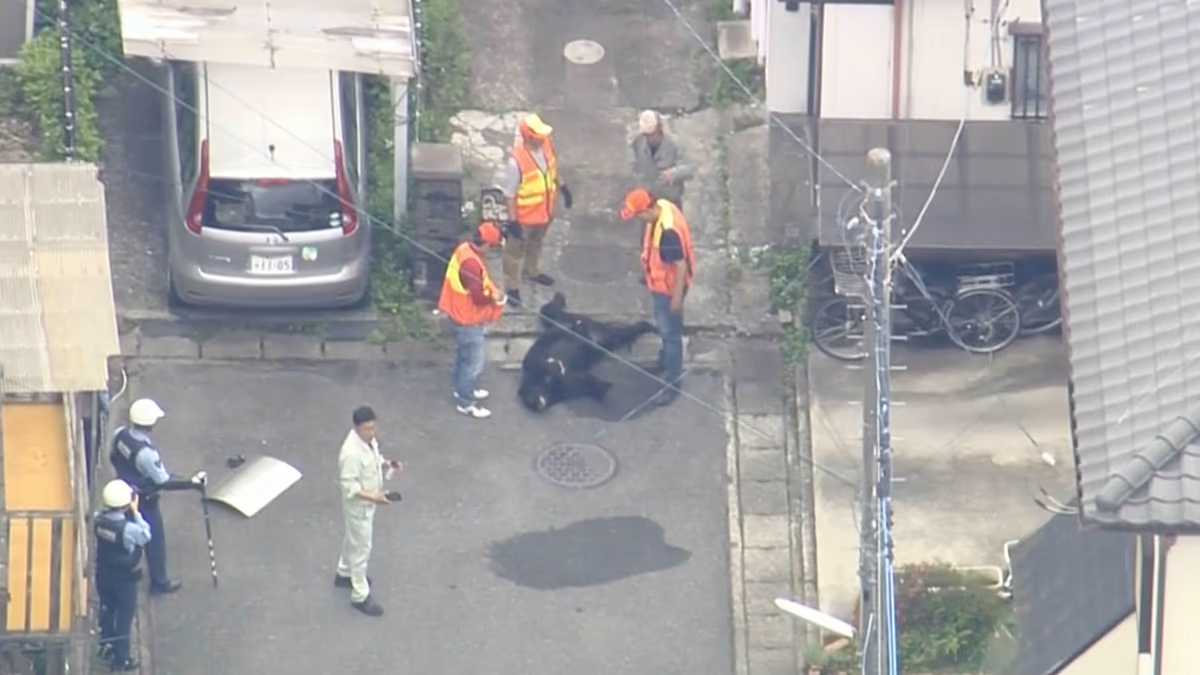
Of course. Here is a humanized and expanded summary of the event, structured into six paragraphs.
The familiar rhythms of daily life in Utsunomiya, a city better known for its savory gyoza dumplings than for wilderness encounters, were abruptly upended. For several tense days, residents navigated their streets with a newfound wariness, their ordinary commutes shadowed by an extraordinary and ancient fear. The cause was a single, powerful creature: a bear that had strayed from the forested mountains surrounding the Tochigi Prefecture capital into the very heart of the urban sprawl. This was not a distant rumor; it was a confirmed presence, transforming shopping districts and residential neighborhoods into scenes of a slow-burning thriller, where the unnamed protagonist was a wild animal simply trying to survive.
The drama shifted from speculation to stark reality when security camera footage, the kind usually reserved for minor thefts or lost property, captured the visceral truth. The grainy video showed the bear—a solid, dark shape of muscle and fur—lunging into a covered shopping arcade, a place dedicated to commerce and community strolls. The image of it running past shuttered storefronts was profoundly unsettling, a raw clash of worlds. That one clip crystallized the danger and triggered a swift, protective response. Local authorities, acting with urgent practicality, issued immediate safety warnings and took the sobering step of closing schools. The message was clear: the normal order was paused. Parents kept children indoors, evening walks were cancelled, and the community collectively held its breath.
What followed was a multi-day operation that felt both modern and primordial. Wildlife teams, along with police, embarked on a careful and fraught search, tracking the animal’s movements through back alleys, quiet parks, and the interstitial green spaces of the city. This was a delicate and dangerous task, balancing public safety with a need to resolve the situation without unnecessary harm. The entire city became an anxious participant, with every rustle in a garden or unexpected shape in the dusk fueling conversations and social media alerts. The bear, likely young and disoriented, driven into human territory perhaps by hunger or dwindling natural habitat, was now the subject of a sprawling urban hunt.
Finally, after a period of exhausting vigilance, the pursuit reached its climax. Authorities successfully located and captured the animal. While the clinical term “captured” ends the news bulletin, it opens a window into a mix of profound human emotions: widespread relief that the immediate threat had passed, sympathy for a confused creature torn from its natural environment, and a collective sigh as the tension broke. Schools could reopen, and the shopping arcade could return to being a place for errands, not escape routes. Yet, the simple resumption of routine was now layered with a memorable disruption, a story that would be told for years.
This incident in Utsunomiya is far from an isolated anomaly. It is a vivid snapshot of a growing and painful conflict playing out across Japan. As rural areas depopulate and forests reclaim abandoned farmland, and as climate change affects food sources, bears and other wildlife are increasingly venturing into suburban and urban zones in search of sustenance. Each sighting—on a golf course, in a residential garden, or yes, in a shopping arcade—is a poignant signal of this escalating tension between human expansion and wild frontiers. The animals are not being deliberately aggressive; they are adapting, often desperately, to a changing world where their traditional territories and resources are under pressure.
The capture in Utsunomiya provides a temporary resolution, but not an answer. It forces a necessary and difficult conversation about coexistence. How do communities safeguard themselves while respecting the wildlife that was there long before the cityscapes? Solutions are complex, involving habitat management, public education on securing trash and food sources, and developing more sophisticated non-lethal deterrents. The journey of that one bear through a shopping arcade is more than a startling headline; it is a powerful metaphor and a direct call to action. It reminds us that the boundary between our world and the wild is thinner than we think, and maintaining it requires not just fences and capture poles, but wisdom, foresight, and a deep respect for the natural forces that, when pressed, will find their way to our doorsteps.