


Paragraph 1: The Serene Scene Shattered
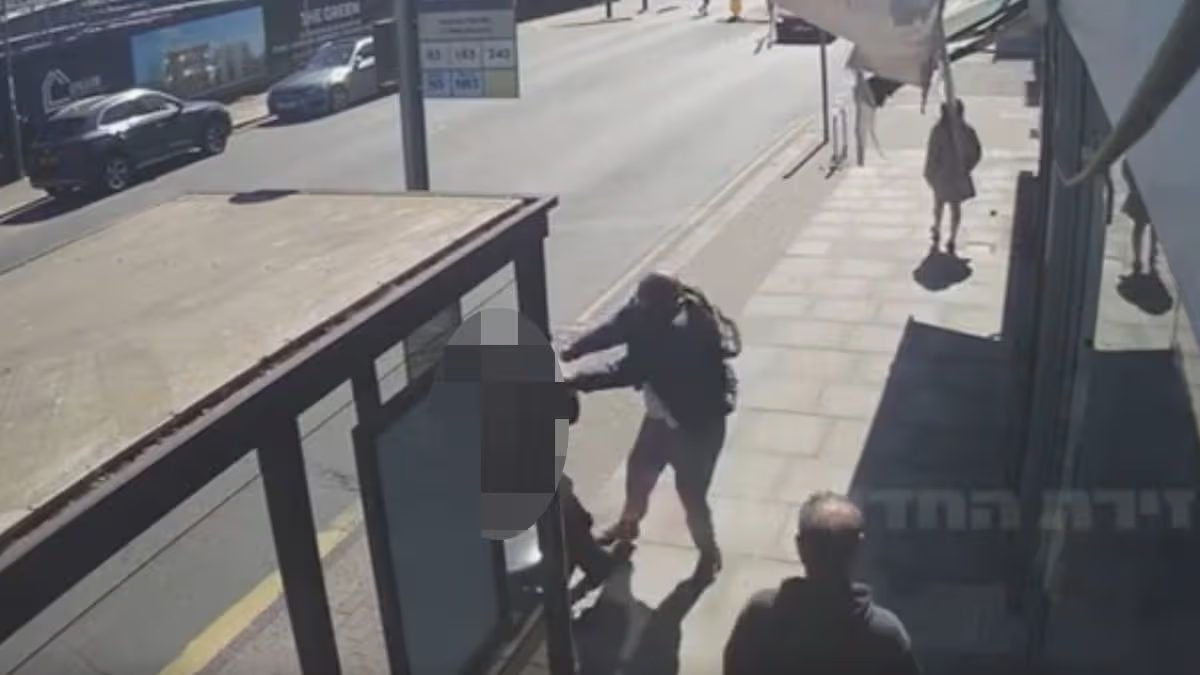
On a seemingly ordinary, sun-dappled morning in the leafy north London suburb of Golders Green, a moment of quiet routine was violently shattered. At approximately 11:16 am on Tuesday, April 29th, 2026, a man was waiting patiently at a bus stop on Highfield Avenue, a commonplace act repeated by thousands every day. Closed-circuit television cameras, ubiquitous guardians of modern urban life, captured the tranquil scene: an individual standing in the spring sunshine, performing the simple, personal act of adjusting his kippah, the traditional Jewish skullcap. This brief, peaceful snapshot of daily life was about to become a chilling tableau of sudden violence, as the footage would soon reveal an advancing figure that transformed the bus stop from a place of waiting into one of terror.
Paragraph 2: The Sudden Onslaught and Brave Response
The CCTV footage, later described as capturing a “horror moment,” shows a man in a dark jacket purposefully walking along the pavement toward the unsuspecting victim. Without warning or discernible provocation, the attacker lunges forward. The brutal assault appears targeted, with the suspect striking toward the victim’s neck. In the immediate, chaotic aftermath, the true character of the community shone through. As the victim reeled from the attack, members of the public, displaying remarkable courage and disregard for their own safety, rushed forward to intervene and offer aid. Their swift actions in those critical first moments underscored a powerful human impulse to protect one another in the face of senseless brutality.
Paragraph 3: A Broader Attack on the Community
Tragically, this was not an isolated incident. The attack was part of a broader assault that left two men wounded—one in his 70s and one in his 30s. Both victims, as confirmed by Rabbi Levi Schapiro of the Stamford Hill Jewish Community Council who spoke from their hospital bedside, are from the local Jewish community. One is a teacher who works in Golders Green. Rabbi Schapiro’s words painted a picture of a community under strain, describing the attack as “terrible” and expressing a profound weariness, stating, “This [is] happening every day and for many of us it feels like there is no end in sight.” His poignant remark about recently burned-out ambulances—the very resources needed to respond to such crises—highlighted a distressing context of stretched services and heightened anxiety.
Paragraph 4: The Arrest and Immediate Aftermath
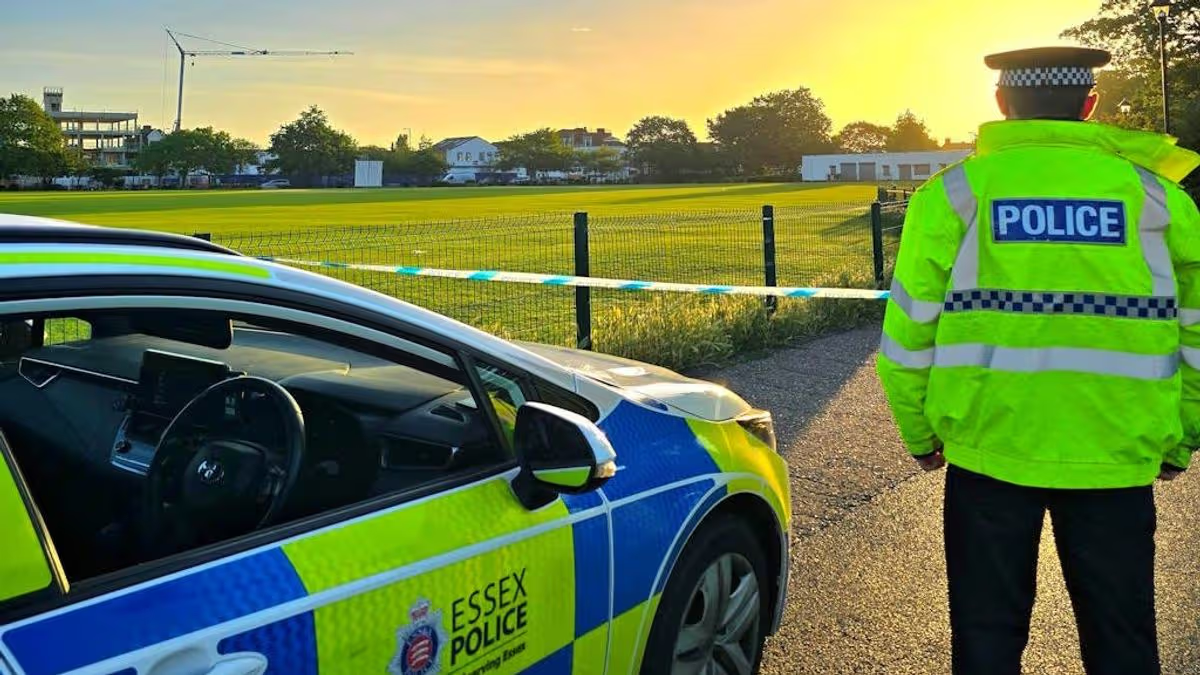
The response from both the community and authorities was rapid and decisive. Members of Shomrim London, the Jewish community neighbourhood watch group, played a crucial role, reportedly detaining the suspect at the scene until police could arrive. The situation remained volatile, however, as the Metropolitan Police reported that the attacker also attempted to stab responding officers. Officers were forced to use a Taser to subdue and safely arrest a 45-year-old man on suspicion of attempted murder. Thankfully, no officers were injured in the confrontation. This swift arrest, facilitated by armed officers and local police working alongside the London Ambulance Service, prevented further potential harm. Both stabbing victims received urgent treatment at the scene before being transported to hospital, where they were later reported to be in a stable condition.
Paragraph 5: The Shadow of Terrorism and a Seeking of Answers
The profound shock of the attack was immediately followed by a pressing need for answers. The Metropolitan Police confirmed that the investigation is being led by specialist officers from Counter Terrorism Policing, who are working to establish the full circumstances and any potential links to terrorism. This elevated response indicates the serious nature with which authorities are treating the assault, particularly given the specific targeting of visibly Jewish individuals in an area with a significant Jewish population. The police stated they are “working to establish [the suspect’s] nationality and background,” a process central to understanding the motive behind an act that has left a community reeling and a city seeking to comprehend the hatred that spawned it.
Paragraph 6: The Lingering Impact and the Human Cost
Beyond the immediate physical wounds and the procedural details of the police investigation lies a deeper, more enduring human cost. An attack at a mundane bus stop, a place associated with commuting, errands, and the rhythm of daily life, violates a fundamental sense of security. For the local Jewish community, it is a terrifying reminder of vulnerability, forcing individuals to confront fear while performing simple acts of religious observance in public. For the wider public, it is another assault on the shared social fabric that allows diverse communities to coexist. As the victims recover and the suspect remains in custody, the event leaves behind a complex legacy of trauma, resilience, unanswered questions about motive, and a collective hope that such “horror moments” do not become a commonplace feature of life in the city.