

A Harrowing Scuffle in the Skies: The Day Passengers and Crew United Against Chaos
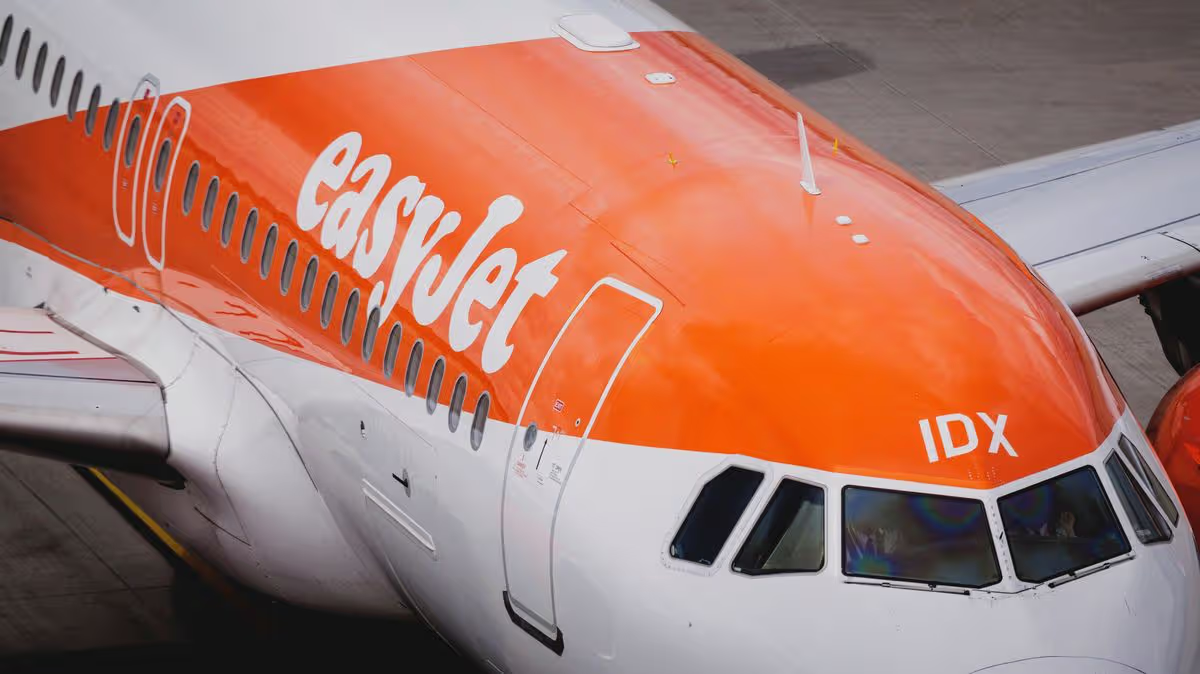
What should have been a routine short-haul flight from Luton to Amsterdam descended into a scene of alarming chaos, showcasing both the fragility of civil aviation and the remarkable courage of ordinary people. On June 13, 2026, aboard easyJet flight EZY2511, the familiar pre-takeoff rituals were shattered not by technical issues, but by human volatility. As the Airbus A319 taxied toward the runway, a passenger, described by witnesses as severely intoxicated, erupted into a violent rage. His screams and abusive threats, initially directed down a phone, quickly escalated, poisoning the cabin’s atmosphere with fear and uncertainty. The crew’s initial attempt to de-escalate by moving him to the front of the aircraft proved futile, setting the stage for a dramatic physical confrontation that would test the mettle of everyone on board.
The situation reached a critical point as the plane continued its journey toward takeoff. The disruptive passenger, seemingly overwhelmed by a combination of intoxication and panic, “completely lost it.” He leapt from his seat, demanded to disembark immediately, and then sprinted at full speed down the aisle toward the rear of the aircraft. There, he targeted the toilet door, unleashing a barrage of violent headbutts with such force that he reportedly dented the metal. This act of self-destructive aggression transformed a disruptive incident into an immediate safety crisis. The thunderous impacts echoed through the cabin, a terrifying sound that signaled the utter breakdown of order and the very real risk of the individual harming himself or damaging the aircraft.
In that moment of acute danger, the chain of command and protocol snapped into action, led by a captain whose duties abruptly expanded from pilot to peacekeeper. Leaving the cockpit, the captain rushed to the epicenter of the chaos. Alongside flight attendants, who are trained for such scenarios but never immune to fear, the crew physically engaged the man, wrestling him to the floor in the aircraft’s rear galley. This was no mere restraint; it was a desperate struggle to contain a powerful, thrashing individual in a confined space. In a startling twist, the collective effort to protect the cabin was joined by a bystander—a fellow passenger who, witnessing the fierce scrap, intervened with a dramatic flying drop-kick. This unexpected assistance, while highlighting the sheer intensity of the melee, ultimately aided the crew in subduing the man after a grueling ten-minute battle.
With the individual finally restrained on the cabin floor, the immediate threat was neutralized, but the ordeal was far from over. Takeoff was aborted, and the plane returned to stand. Ground security personnel boarded to formally remove the passenger. Even this process was fraught, as the man, once escorted down the air stairs to the tarmac, broke free and made a perilous dash toward an active runway—an act that could have culminated in tragedy. He was eventually apprehended by waiting police officers, to the immense relief and audible cheers of the 156 other passengers. This final dash underscored the unpredictable and cascading nature of such events, where securing the aircraft is only the first step in restoring overall safety.
The consequences of those ten minutes of violence rippled outwards, impacting every innocent person on board. The flight, originally a brief hop, was delayed for nearly four hours, eventually arriving in Amsterdam at midday instead of the morning. For the passengers, this meant missed connections, ruined appointments, and hours of stressful waiting, all because of one person’s actions. In a statement, easyJet confirmed the denial of travel to the disruptive passenger, praising its crew’s swift response and reaffirming its zero-tolerance policy toward abusive or threatening behavior. The airline rightly emphasized that the safety and wellbeing of customers and crew is its highest priority—a principle that was tested in the most visceral way possible that day.
This incident stands as a stark microcosm of the challenges facing modern air travel. It illustrates the profound responsibility borne by airline crews, who must be diplomats, service professionals, and, when circumstances demand, security personnel. It also reveals the latent solidarity among passengers when the social contract of a shared journey is violently broken. While the image of a drop-kick on a commercial flight is almost cinematic, the underlying reality is gravely serious: a single individual, through intoxication and rage, can compromise the safety, schedule, and sanity of hundreds. The successful resolution of this event is a testament to training and bravery, but it serves primarily as a sobering reminder of the delicate balance that holds peaceful travel aloft.