


The Allure of the Evening Draw: A Chance at Millions
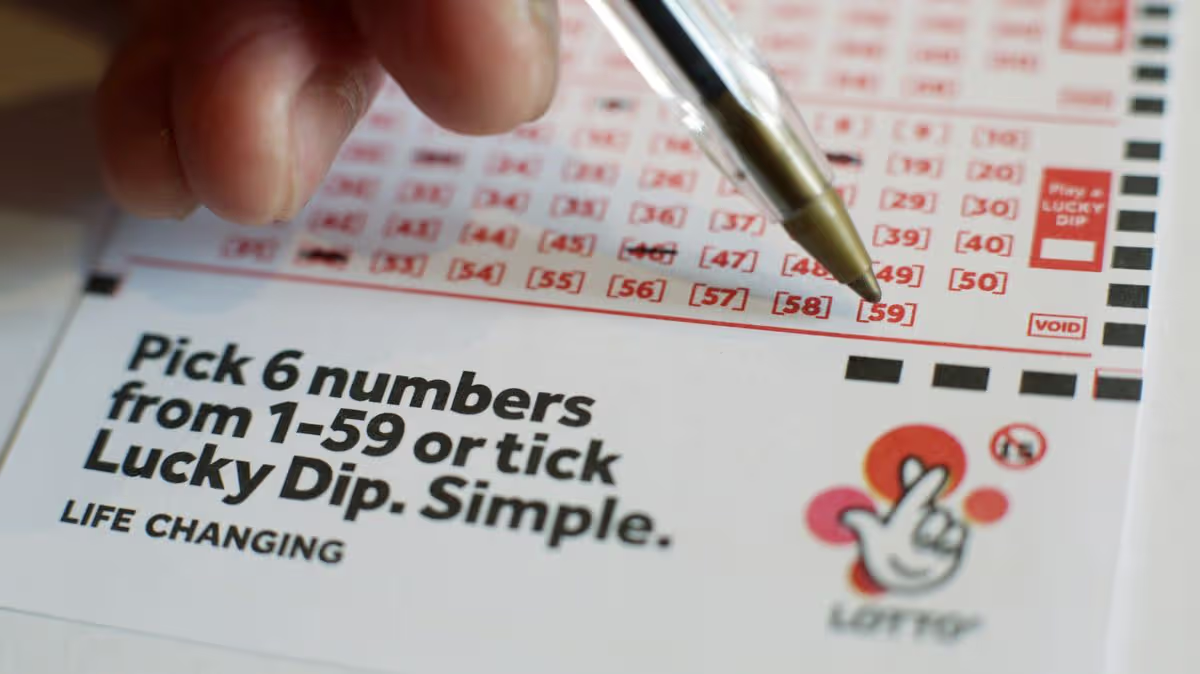
Tonight, as the clock approaches eight, a familiar ripple of anticipation will spread across the nation. It’s Lotto night, and the gleaming potential of a £2 million jackpot is waiting to be claimed. This isn’t merely a game of chance; it’s a weekly ritual, a moment where ordinary routines are gently paused to make room for extraordinary dreams. For the price of a ticket, participants buy a ticket not just into a draw, but into a shared narrative of possibility. The premise is straightforward, yet profoundly compelling: to seize that life-altering top prize, a player must see their six chosen numbers align perfectly with the six main numbers drawn. Behind that simple act, however, lies a mathematical reality of staggering scale. The odds of achieving this perfect match are approximately one in 45 million. To humanize that figure, imagine trying to pluck a single, predetermined grain of sand from a vast, sweeping beach. It is a testament to both the rarity of the jackpot and the powerful, enduring hope that defies those very odds.
The Thunderous Follow-Up: A Second Shot at Fortune
Scarcely has the excitement from the Lotto draw begun to settle when another opportunity arrives just fifteen minutes later. The Thunderball draw offers a different flavour of dream, with a formidable top prize of £500,000. While the jackpot may be smaller than the Lotto’s headline sum, the game operates under a distinct and enticing structure. Winning its top prize requires matching five main numbers plus the separate, namesake Thunderball. The odds here, while still immensely challenging, are considerably more favourable than the Lotto’s—roughly one in 8 million. This creates a strategic duality for players: the Lotto represents the ultimate, moonshot ambition, while the Thunderball presents a slightly more accessible, yet still transformative, summit to aim for. The simultaneous offering of these two draws caters to the spectrum of hopeful thinking, acknowledging that a fortune can be life-changing whether it contains six or seven figures.
Beyond the Jackpot: The Landscape of Smaller Wins
The true genius of these games, however, lies not solely in their headline prizes but in their carefully constructed ecosystem of smaller wins. The Thunderball, in particular, excels at this, offering a tiered prize structure that ranges from a modest £3 up to a substantial £5,000. Most importantly, the game boasts that a player has approximately a one in 13 chance of winning any prize in each draw. This is a crucial piece of psychological design. It transforms the experience from a binary, all-or-nothing gamble into a more engaging activity where a return, however small, is a reasonably frequent occurrence. That “heartbeat” of smaller wins—the thrill of matching a few numbers and seeing a ticket validate—provides tangible reinforcement. It keeps the ritual alive, offering little nods of encouragement that sustain participation week after week. The Lotto, too, has its own matrix of prizes for matching fewer numbers, ensuring that hope is nurtured not just by the distant jackpot, but by the more immediate proof that numbers can match and prizes can be won.
The Psychology of Participation: Why We Play Against the Odds
Understanding these games requires moving beyond cold statistics and into the warm realm of human psychology. Why do millions of people regularly engage with odds so astronomically stacked against them? The answer is woven from more than simple greed. For many, the ticket is a small, affordable token for a week’s worth of dreaming. Between the purchase and the draw, there exists a precious space of potential—a period where one can muse about paying off mortgages, helping family, traveling the world, or securing a future free from financial worry. This “dream phase” has intrinsic value. Furthermore, participation is often a social or habitual act: a tradition shared with a partner, a playful office syndicate that builds camaraderie, or a personal weekly treat. The games offer a democratized daydream, a moment where everyone, regardless of circumstance, can stand on equal footing and imagine a radically different tomorrow. The minuscule probability is intellectually acknowledged but emotionally overridden by the monumental impact of the potential reward.
A Nightly Ritual and Its Place in Our Culture
Thus, the sequence of draws at 8:00 PM and 8:15 PM on a Wednesday or Saturday night becomes a subtle but fixed cultural marker. It is a synchronized national moment of “what if?” In homes, in shops where tickets are checked, and in online communities, there is a collective holding of breath. The ritual provides a harmless injection of excitement into the ordinary rhythm of the week. It’s a conversation starter, a brief diversion, and a source of stories—from the heartwarming tale of a modest win making someone’s month to the earth-shattering news of a jackpot winner in a local postcode. These games are woven into the fabric of society not as a tax on the naïve, but as a licensed, regulated form of entertainment that acknowledges a nearly universal human fascination with fortune and fate. They sit at the intersection of mathematics and magic, where logic meets longing.
The Final Tumble: From Numbers to Narratives
When the balls finally tumble at the appointed hour, they do more than select random numbers. They write the opening line of a potential new story for countless individuals. For the overwhelming majority, the story will simply continue as before, perhaps with the minor consolation of a small Thunderball win to buy a nice dinner. But for a vanishingly small, yet ever-present, few, those tumbling balls will mark a before and an after in their lives. The £2 million Lotto jackpot and the £500,000 Thunderball prize represent more than money; they are symbols of sudden transformation. Tonight, as always, the nation will take its chance. Millions will hold their tickets, glance at the clock, and allow themselves, for just a moment, to wonder if their ordinary numbers might just be the ones to summon an extraordinary future. In the end, these draws are a celebration of hope itself—a regular, rhythmic reminder that in the midst of our predictable lives, the possibility, however faint, of a stunning surprise is always in play.