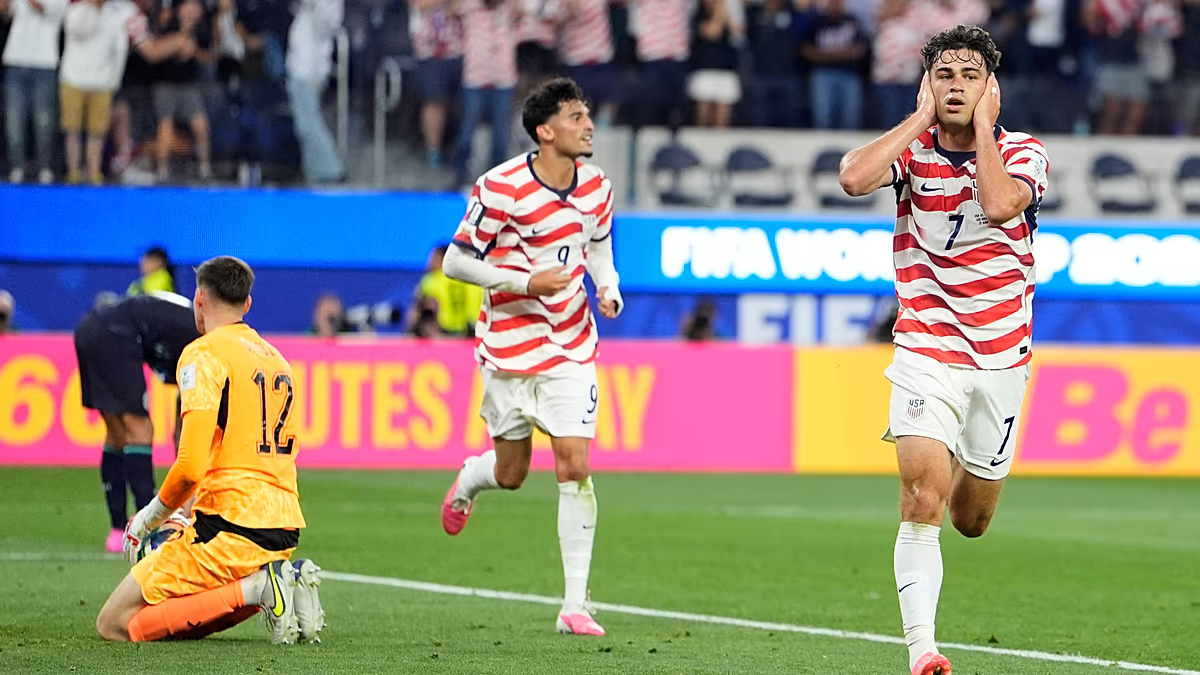


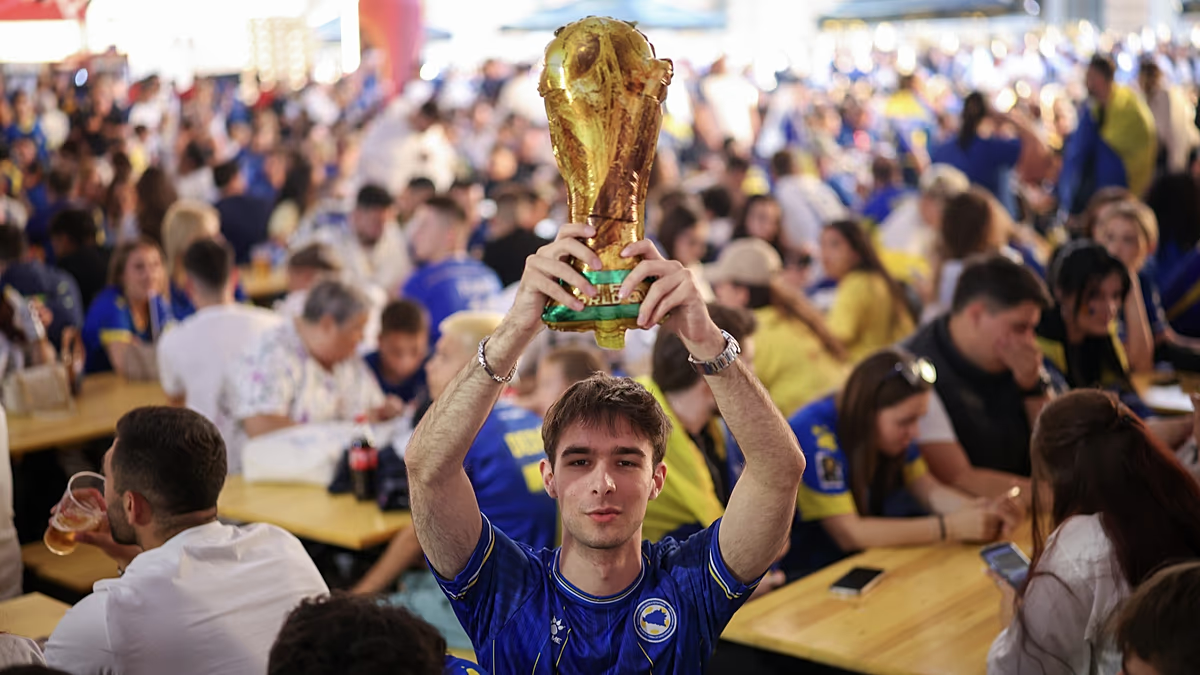
The roar that erupted from a pocket of blue in the sea of Canadian red at Toronto Stadium was more than just celebration for a goal; it was the release of a nation’s held breath. When stand-in forward Jovo Lukić headed Bosnia and Herzegovina into the lead against host nation Canada in their World Cup opener, it was a moment of profound pride for a young country with a complex history. This was only Bosnia’s second-ever appearance on football’s grandest stage, a feat made possible by a heart-stopping playoff victory that eliminated giants Italy. For the thousands of Bosnian fans in the stands—and millions more watching worldwide, many part of a vast diaspora scattered by war and hardship—Lukić’s goal was a symbol of resilience. Outnumbered but undaunted, they cheered for a team embodying the underdog spirit of a nation of just three million, proving that rolling over was never an option.
The emotional power of that moment in Toronto was amplified by an unofficial, viral national anthem echoing through the stands: “I am from Bosnia, take me to America” by the beloved band Dubioza Kolektiv. This 15-year-old song’s journey to becoming a World Cup “banger” is deeply symbolic. Originally a satirical take on the elusive “American Dream” and the hardships of immigration, it has been reclaimed and reimagined by a generation of Bosnians. As bassist Vedran Mujagić explained, it evolved from a “tongue-in-cheek take” into an “American football dream for the entire nation.” The song’s catchy refrain, sung live on global television by icons like Thierry Henry and Zlatan Ibrahimović (both with Bosnian heritage), speaks to a collective longing—not necessarily for literal emigration, but for a moment on the world stage where Bosnia is seen, celebrated, and united.
Yet, this sporting high exists against a stark and depressing national backdrop. The news from Bosnia itself in recent years has been a chronicle of political paralysis, economic struggle, and social division. Stalled on its path toward European integration, the country remains entangled in one of the world’s most complicated systems of government, a post-war structure that often entrenches ethnic divisions rather than fostering unity. Widespread corruption, a crumbling healthcare system, and rampant poverty have fueled one of Europe’s most severe rates of depopulation. An estimated 1.8 million people born in Bosnia now live abroad, a devastating brain and heart drain. In this context, Dubioza’s anthem resonates with a painful duality for the diaspora: the desire for a better life elsewhere, tempered by the knowledge, as Mujagić notes, of encountering “hostility” and the schizophrenic reality that “you won’t have it good on the other side either.”
It is precisely within this landscape of challenge that football ascends as a rare, potent unifier. The team’s nickname, Zmajevi (The Dragons), carries the hopes of a nation hungry for a positive collective identity. Their journey has been one of agonizing near-misses, most famously a controversially disallowed Edin Džeko goal against Nigeria in the 2014 World Cup that still haunts fans. Another 12-year wait followed, ended by the magical coaching of former captain Sergej Barbarez. This current campaign, therefore, is more than a tournament; it is a spark of hope in the face of persistent fear and division, a common flag under which Bosniaks, Serbs, Croats, and the diaspora can momentarily stand together.
The team’s heart and symbol is captain Edin Džeko, a living bridge between Bosnia’s traumatic past and its fragile present. Now over 40, he is one of only two survivors from the 2014 squad. His personal story, detailed in a moving pre-game letter, reads like a national fable: a boy practicing football between shellings in besieged Sarajevo, who through sheer force of will climbed from a €25,000 transfer to becoming a Manchester City star. His message to the children of Bosnia, wherever they live, is a powerful rebuttal to the narratives of division. “I’m playing for all the different cultures and religions that make our country so beautiful, even if some people are still trying to break us apart,” he wrote. His faith lies not in politicians, but in the new generation: “You never change.”
The draw against Canada, earned through a record-setting defensive effort, was a testament to this spirit. While the match ended level, the Dragons walked off to applause, having earned respect on the global stage. For Bosnia and Herzegovina, this World Cup is not measured in points alone, but in moments of unity, pride, and the defiant joy of a diaspora singing as one. Džeko’s final words to Bosnia’s youth serve as the perfect coda for this chapter: “Never forget where you came from. You are Bosnian. The world is at your feet.” On the football pitch in Toronto, for 90 glorious minutes, that world finally paused to listen.