


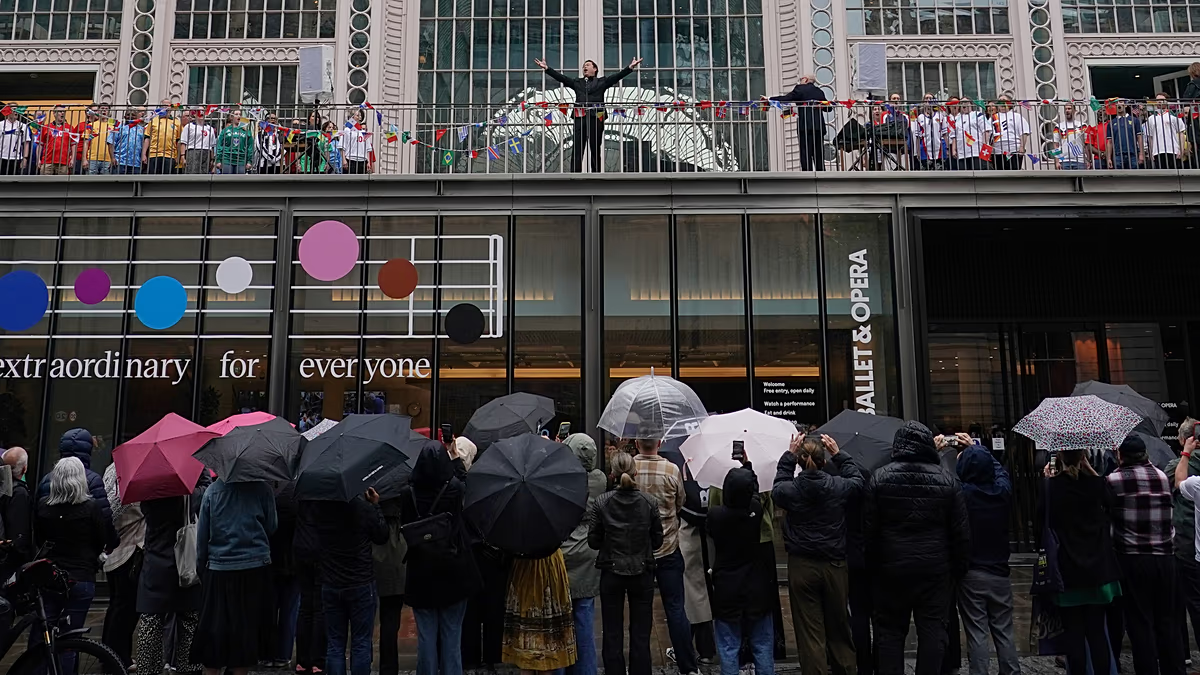
On a vibrant June afternoon in the heart of London, the United Kingdom offered a uniquely elegant welcome to the 2026 FIFA World Cup. As the tournament’s opening match commenced thousands of miles away in Mexico City, a different kind of spectacle unfolded outside the historic Royal Opera House at Covent Garden. On Davies Terrace, acclaimed South Korean tenor SeokJong Baek stood alongside the distinguished voices of the Royal Opera Chorus, ready to gift the bustling city an open-air performance. To the surprise and delight of passers-by—from hurried commuters to curious tourists—the first, powerful notes of Giacomo Puccini’s “Nessun Dorma” filled the air, creating a poignant bridge between the cultural heart of Britain and the global football festival just beginning.
This was no random musical selection, but a deliberate tribute to one of sport’s most enduring and emotional anthems. The aria, drawn from Puccini’s final opera Turandot, was forever woven into the fabric of football during the 1990 FIFA World Cup in Italy. Its triumphant climax, with the tenor’s soaring vow of victory, “Vincerò!”, became a soundtrack for athletic aspiration and nail-biting tension. Over three decades later, its opening phrases remain instantly recognizable to millions, evoking memories of legendary matches and shared national hopes. By choosing this piece, the celebration acknowledged that the World Cup is as much about collective memory and feeling as it is about athletic prowess, uniting diverse audiences through a universal language of melody and passion.
The performance was elevated by the caliber of its performers, blending international star power with local institutional prestige. SeokJong Baek, celebrated on opera stages worldwide for his commanding portrayal of Calaf—the very prince who sings “Nessun Dorma” within the opera—brought authentic dramatic heft to the outdoor rendition. Beside him, the Royal Opera Chorus provided a rich, harmonious foundation, their collective voice a testament to the UK’s deep-rooted musical heritage. This collaboration transformed a public square into a moment of unexpected grandeur, illustrating how high art can step gracefully off the formal stage and into the flow of daily life, capturing the imagination of those who stumbled upon it as surely as any planned audience.
Set against the backdrop of an ever-evolving London, the event also highlighted the modern character of global sporting celebrations. The 2026 World Cup itself is a landmark edition, the first to feature 48 teams, promising a wider, more inclusive festival of football across nations. This London performance mirrored that spirit of expansion and accessibility. It was a free, public gift, removing the barriers of ticket prices and venue walls, inviting everyone from opera aficionados to casual shoppers to partake in the shared moment. In doing so, it reflected how major tournaments now transcend 90 minutes on the pitch, generating cultural satellites and community events that allow people everywhere to feel connected to the central spectacle.
Ultimately, the afternoon served as a beautiful metaphor for the unifying power of both music and sport. Just as football fandom can ignite a common spirit across continents, a powerful melody can pause the rush of a great city, drawing diverse individuals into a single, breathless experience. The choice of Covent Garden—a crossroads of culture, commerce, and history—was particularly fitting. As the final, triumphant “Vincerò!” resonated against the historic facades, it did more than mark a tournament’s start; it reaffirmed the role of cultural capitals like London in hosting the world’s conversations, celebrations, and artistic interpretations of global moments.
Therefore, while the primary athletic drama of the 2026 World Cup will unfold in stadiums across North America, its opening was honored in England with a moment of reflective artistry. This poignant performance of “Nessun Dorma” was a bridge between eras and emotions, a testament to a timeless aria’s lasting grip on the sporting heart. It reminded all who heard it that the World Cup is a narrative of human endeavor, drama, and hope—themes as central to opera as they are to football. Through song, the UK not only celebrated the beautiful game’s latest chapter but also honored the deep, emotional tapestry that makes it a truly world-altering event every four years.