

The joyful roar of a global celebration can, in a single moment, be silenced by a far more brutal and local sound: the crack of gunfire. On Thursday, June 12, 2026, as Mexico prepared to host the glittering opening match of the FIFA World Cup—a moment of immense national pride and international attention—a stark and grim counter-narrative unfolded in the northern part of Veracruz state. In the city of Poza Rica, before the dawn had fully broken, crime reporter Luis Ángel López Valdez was fatally shot. According to his news outlet, Vanguardia de Veracruz, the vehicle he was traveling in was intercepted by armed individuals. This was not a random act; the report suggests López Valdez had received threats prior to his murder. His killing transformed a day of sporting unity into a devastating reminder of the perils faced by those who report on the harsh realities of Mexican society, a danger that persists even under the brightest spotlight.
The murder of Luis Ángel López Valdez is not an isolated statistic. It is a thread in a dark and ongoing tapestry of violence. Just months earlier, in January of the same year, another crime journalist in Veracruz, Carlos Castro of Código Norte Veracruz, was also killed. A UNESCO statement revealed a chilling detail: Castro had previously been under a protective scheme from local authorities, but this protection was reportedly withdrawn because he had lived outside the state for a time. This pattern points to a systemic failure, where safeguards are fragile and conditional, leaving journalists exposed. These individual tragedies culminate in a staggering collective toll. According to Reporters Without Borders (RSF), a Paris-based NGO defending press freedom, more than 150 journalists have been murdered in Mexico since 2000, with another 28 missing. The country is consistently ranked as one of the most deadly in the world for the profession.
The danger is particularly acute for journalists like López Valdez and Castro, who dare to cover the sensitive nexus of crime and corruption. They operate in a shadowy landscape where organized crime gangs often collude with local authorities, creating a formidable enemy for any truth-teller. Threats and warnings are a common occupational hazard. Each murder sends a calculated message of intimidation, intended to silence not just one voice, but to dissuade all others from investigating powerful, violent interests. This creates a vacuum of information in affected communities, leaving citizens in the dark about the forces that shape their lives. As the University of Guadalajara’s Observatory on Freedom of Expression stated in its condemnation of López Valdez’s killing, such violence “not only silences individual voices but also weakens democracy and violates the collective right to information.”
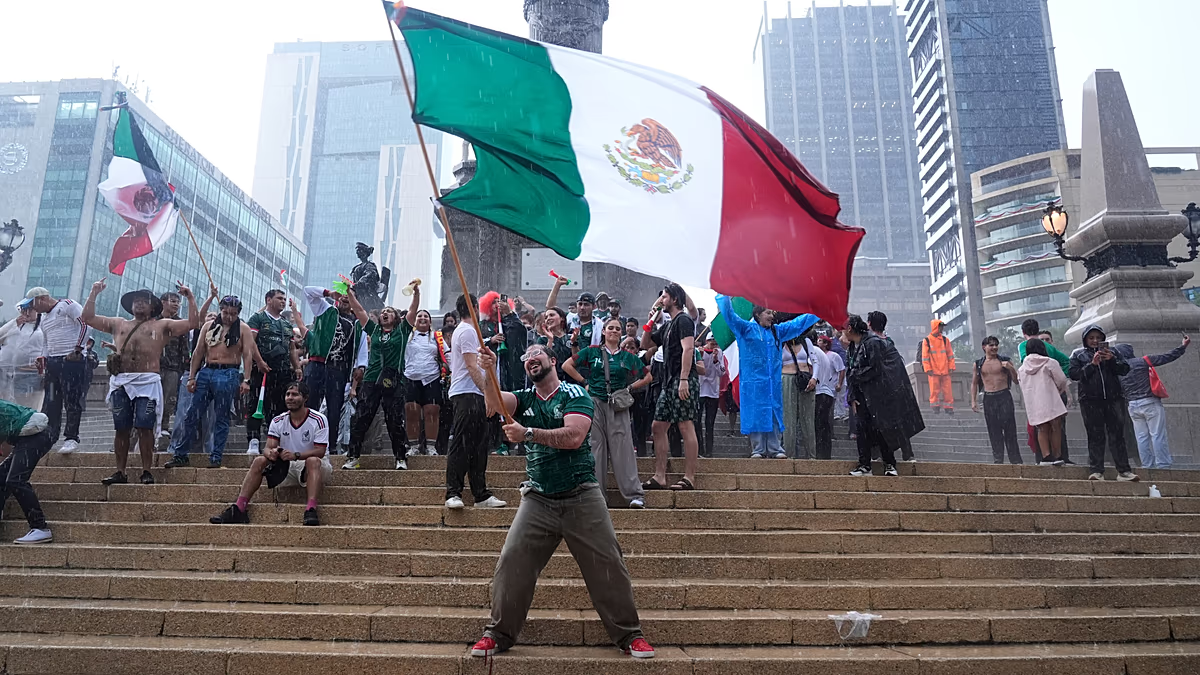
This latest murder arrived at a moment of maximum visibility and heightened security for Mexico. The nation was playing a central role in the 2026 World Cup, hosting matches in Guadalajara, Mexico City, and Monterrey. The Mexican national team itself began the tournament with a 2-0 victory against South Africa in the iconic Estadio Azteca, bathing the capital in celebration. The juxtaposition was jarring: a world watching Mexico for its athletic prowess and organizational capacity, while in a city hundreds of kilometers away, a journalist was executed for his work. It underscored a painful duality of modern Mexico: a nation capable of hosting a global festival, yet seemingly unable to protect the fundamental guardians of its own democracy within its own borders.
The international community and press freedom organizations have repeatedly sounded the alarm. RSF and UNESCO documents highlight not just the numbers, but the mechanisms of failure—the withdrawal of protection programs, the lack of effective investigations, and the climate of impunity that allows these crimes to continue. Each statement and report calls for robust, transparent investigations and sustainable protective measures. Yet, the killings persist. The murder of López Valdez, occurring on such a symbolic day, is a stark test for the Mexican government. It asks whether the authorities can marshal the same focus and resources used to secure stadiums and dignitaries to finally secure the lives of its journalists.
Ultimately, the story of Luis Ángel López Valdez is a human story, not merely a datum in a press freedom index. He was a person who got into a car, likely to pursue a story he believed the public needed to know. His death leaves a family grieving, colleagues traumatized, and a community less informed. While the World Cup games will continue, and the goals will be remembered, his killing leaves a lasting scar on the conscience of the nation. It challenges Mexico to reconcile its international aspirations with its domestic responsibilities. The true measure of the country’s strength will not be found in tournament standings, but in its ability to ensure that no journalist again has to pay the ultimate price for doing their job, regardless of the day on the calendar.