

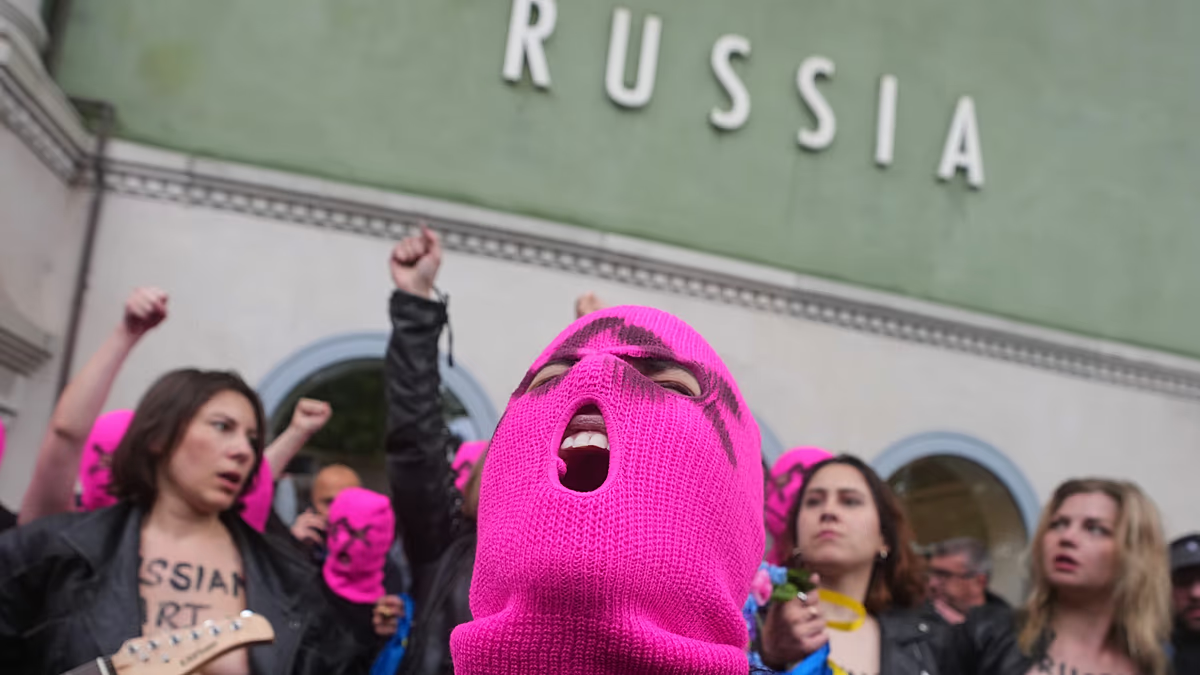
The ongoing 61st Venice Biennale, which runs until November 22nd, has become a significant geopolitical flashpoint, drawing the European Commission into a protracted dispute with the event’s organizers. At the heart of the conflict is Russia’s participation in the prestigious international art exhibition, which continues despite the nation’s protracted invasion of Ukraine. The European executive body has now escalated its concerns by sending a third formal letter to the Venice Biennale Foundation, seeking further clarifications. This move signals a deepening impasse, as the Commission indicates that issues raised in two prior letters remain inadequately addressed. The persistence of this dialogue underscores the tension between cultural institutions’ desire for open artistic exchange and the political imperatives of the European Union in a time of war.
The Commission’s campaign gained public momentum shortly after the Biennale’s opening in May, when European Commissioner Henna Virkkunen confirmed a second letter had been dispatched. The core of the EU’s objection is moral and legal. Commissioner Virkkunen reiterated the bloc’s strong condemnation of the Biennale’s decision to readmit Russian artists while their government’s military aggression continues. Beyond rhetoric, the correspondence carries substantial financial weight. The Commission explicitly warned that it “would not hesitate” to suspend or withdraw €2 million in allocated EU funding for the Biennale from 2025 to 2028. This threat frames the issue in stark terms: European taxpayer money, Brussels argues, must not be seen as indirectly rewarding or normalizing an aggressor state.
Legally, the Commission’s letters allege the Biennale may be in breach of specific EU sanctions regimes. They point to Article 5n, concerning the provision of certain services to the Russian government, and Article 5t, which prohibits accepting donations, economic benefits, or support from Kremlin-linked entities. By invoking these statutes, Brussels is attempting to shift the debate from one of pure cultural policy to one of legal compliance, suggesting that hosting a national pavilion could be construed as a “service” that confers prestige and a platform to the Russian state. This legal framing increases the pressure on the Biennale Foundation, moving beyond moral suasion to the realm of potential statutory violations.
In response, the Venice Biennale Foundation has maintained a stance of procedural correctness and artistic independence. It has committed to providing counter-arguments within the Commission’s deadlines but has firmly asserted its belief that it has complied with all national and international rules. The foundation highlights that it has cooperated fully with inspections from Italy’s Ministry of Culture and provided all necessary explanations. Crucially, spokespersons for the Biennale have stated they lack the authority to impose additional sanctions on Russia beyond existing international mandates, positioning themselves as followers, not makers, of foreign policy. This defense seeks to portray the institution as a neutral arena operating within the legal frameworks set by governments.
The Russian response has further inflamed the situation. The Russian Ambassador to Italy, Alexey Paramonov, condemned the EU’s actions as “unacceptable and brutal diktats and pressure,” framing Italy and the Biennale management as victims of external coercion. Meanwhile, Anastasia Karneeva, the responsible for the Russian Pavilion, thanked the Biennale for supporting the participation of all nations, echoing a long-held principle that art should remain a sphere independent of politics. This perspective champions the ideal of free cultural expression, a cornerstone of events like the Biennale, and directly challenges the EU’s position that in times of war, cultural platforms become extensions of state power and must be treated as such.
As the standoff continues, the European Commission has given the Foundation a 30-day deadline to reply to its latest concerns. This unfolding dispute presents a fundamental dilemma: should a major cultural institution sever ties with a nation due to its government’s actions, or does doing so undermine the separating principle of artistic freedom? The Biennale’s choice to include Russia has triggered a high-stakes confrontation that questions the very role of cultural diplomacy in an era of conflict. The outcome will resonate far beyond Venice, setting a potential precedent for how Western cultural institutions engage with state actors involved in international conflicts, and testing the limits of artistic autonomy against the demands of political solidarity.