

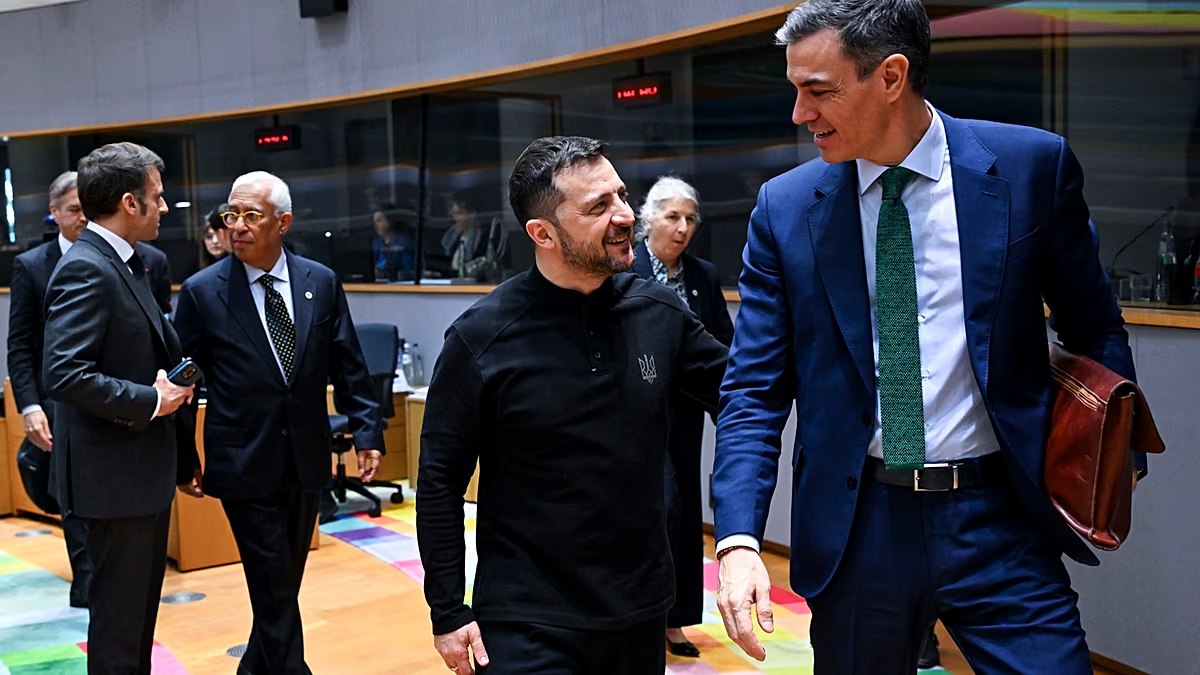
After two years of persistent diplomacy and overcoming significant political hurdles, a pivotal moment for European integration has arrived. On June 12, 2026, ambassadors from the 27 European Union member states reached a landmark agreement in Brussels, unanimously endorsing the opening of the first formal cluster of accession negotiations with Ukraine and Moldova. This breakthrough, achieved just days after Hungary lifted its protracted veto, signals a profound recommitment to the European project and a resolute show of solidarity with nations striving for a future within the EU family. The formal inauguration of these talks is scheduled for June 15 in Luxembourg, where separate intergovernmental conferences will mark the official start of this historic journey for both countries.
The path to this agreement was far from straightforward, with Hungary’s concerns over the rights of ethnic minorities in Ukraine representing the primary obstacle. The deadlock was broken through a meticulously negotiated compromise, resulting in an amended action plan on minority rights that reflected direct consultations between Budapest and Kyiv. This, paired with a detailed rule-of-law roadmap, formed the core of the common position endorsed by the EU ambassadors. European Commission President Ursula von der Leyen and European Council President António Costa hailed the decision, stating it recognized the “determination, courage and hard work” of Ukraine and Moldova in advancing critical reforms “even in the face of immense challenges.” They powerfully framed enlargement not merely as a bureaucratic process, but as a strategic choice to strengthen peace, security, and prosperity across the continent.
For Ukraine, mired in a brutal war for its very survival, the political and symbolic weight of this decision is immense. President Volodymyr Zelenskyy described it as “significant political and moral support” for the Ukrainian people. He framed his nation’s struggle as a defense of the core European idea—that nations can live “united, free, and in peace.” There is a palpable urgency in Kyiv to translate this momentum into tangible progress. The Ukrainian government is keen to open all six of the EU’s thematic negotiation clusters as soon as this summer, aiming to demonstrate to its war-weary citizens that the promise of EU membership is a concrete and attainable goal, offering a beacon of hope and a clear strategic direction for the nation’s future.
The technical process now beginning is arduous and meticulously structured. The first cluster, aptly named “Fundamentals,” is arguably the most critical, encompassing the rule of law, human rights, the functioning of the judiciary, and public administration. Successfully navigating this cluster is essential, as it lays the foundational trust upon which all other aspects of integration depend. While there is strong political will from the European Commission and several member states, including Cyprus which holds the rotating presidency, to open additional clusters rapidly, EU diplomats are careful to temper expectations. They emphasize that the process must remain “merit-based,” preserving its integrity and credibility. This means that while the EU seeks to accelerate procedures where possible, it will not circumvent the rigorous reform requirements, dismissing notions like “associate membership” in favor of the full, standards-based accession track.
This moment also casts a spotlight on the unique and intertwined journeys of the two candidate nations. While coupled in this initial step, Ukraine and Moldova face distinct challenges and realities. Moldova, though confronting its own set of geopolitical pressures, is not enduring a large-scale war. The question of how long the two countries will remain formally linked in the negotiation process now looms. Their progress will be assessed individually on their own merits, and their timelines may naturally diverge based on the speed and depth of their respective reforms. The EU’s approach demonstrates a nuanced balance: offering a united front of political support while acknowledging the specific circumstances and reform trajectories of each aspiring member.
Ultimately, the decision to open accession talks transcends bureaucratic procedure; it is a profound geopolitical statement. It reaffirms the EU’s commitment to its eastern neighbors and represents a strategic investment in a more stable, united, and resilient Europe. For Ukraine and Moldova, it is the start of a transformative domestic journey, requiring sustained political will to align laws, institutions, and economies with European standards. As the first chapter of this long negotiations process begins, the message from Brussels is one of unwavering solidarity paired with a firm expectation for continued, irreversible reform. The road ahead is long and demanding, but the gates to the European Union have now been firmly pushed ajar.