



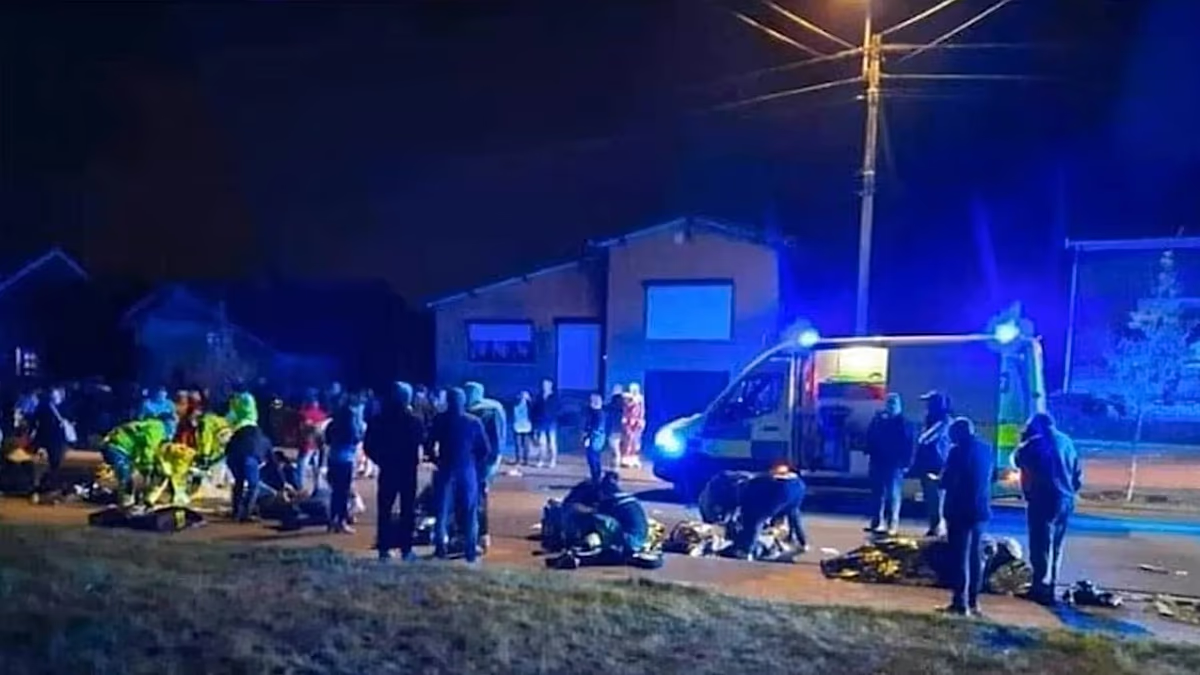
On a cold March dawn in 2022, the joyful preparations for a traditional carnival in the Belgian town of La Louvière were shattered by an act of catastrophic recklessness. Paolo Falzone, a 38-year-old driver with a history of traffic offences, was returning home from a nightclub in his BMW. Unaware that the streets were filled with costumed revellers for a parade, he accelerated his vehicle to a staggering 170 kilometres per hour in a 50 km/h zone. His attention was fatally diverted, as an investigation later revealed he was filming a social media post at the wheel, his eyes not on the road ahead but on his phone. In an instant, his car became a weapon, ploughing through the crowd and extinguishing seven lives, with dozens more injured across a scene of horrific devastation.
The human cost of that single moment is almost incomprehensible. Six people died at the scene, their celebration turned to tragedy in a flash of noise and violence. Emergency workers faced a harrowing task, treating around forty wounded individuals scattered over hundreds of metres, while a seventh victim would succumb to injuries later. The aftermath left a community in deep mourning and a trail of permanent suffering. Many survivors were left with life-altering disabilities, their futures irrevocably changed. The ripple effects of trauma extended to countless families, friends, and witnesses, all united by a profound and enduring grief.
Following the crash, a unique legal proceeding unfolded, reflecting the gravity of the incident and the public outrage it generated. In a rare move for a traffic case, an appeals court ordered that Falzone be tried not just by judges, but by a jury of his peers—a testament to the case being treated as a crime against society itself. The trial was held in a special hall to accommodate the nearly 200 civil parties who joined the prosecution. These claimants included those permanently disabled by the crash and the heartbroken relatives of the deceased, all seeking justice for irreparable loss. Even a passenger in Falzone’s car was convicted for failing to assist people in danger, highlighting the shared responsibility of those who enable such dangerous behaviour.
During the trial, Falzone faced the consequences of his actions, offering a stark admission of his guilt. “I fully admit that I used to film myself driving at crazy speeds. I did it a lot,” he stated. “I behaved like a complete idiot.” While he expressed regret and insisted he had no intention to harm anyone, his words could little comfort the bereaved. His acknowledgment of a pattern of thrill-seeking behaviour behind the wheel painted a picture of habitual disregard for the safety of others, making the final, fatal incident feel tragically inevitable rather than a mere accident.
On Friday, December 6, 2026, a jury delivered its verdict, finding Paolo Falzone guilty of murdering seven people. The conviction marks a solemn endpoint to a long quest for justice, though it cannot restore what was lost. Falzone now awaits sentencing, where he faces the possibility of up to thirty years in prison—a severe penalty that underscores how the law views the conscious decision to engage in such lethally irresponsible conduct. The verdict sends a powerful message about accountability, categorizing his actions not as a simple traffic violation, but as a profound criminal act with the gravest of outcomes.
This tragic event stands as a harrowing cautionary tale for our modern era, where the pursuit of online validation can have deadly real-world consequences. It underscores the lethal intersection of speeding, distraction, and a blatant disrespect for the law. Beyond the legal reckoning, the story of the La Louvière carnival crash is one of a community’s resilience in the face of senseless loss and a sobering reminder of the sacred responsibility every person holds when they take control of a vehicle. The memories of the seven lives lost will forever be entwined with a plea for greater awareness, urging all of us to see the road not as a personal racetrack, but as a shared space where vigilance and care are the only acceptable standards.