


For over a decade, the Crimean Peninsula has been the beating heart of the conflict between Ukraine and Russia, a prized trophy seized by Moscow and a sacred symbol of sovereignty for Kyiv. Russia’s war against Ukraine began not in 2022, but in 2014 with the illegal annexation of Crimea, a strategic landmass jutting into the Black Sea. From that moment, Ukraine vowed that true peace could only come with the peninsula’s liberation, its restoration to Ukrainian control, and its return to the stewardship of the indigenous Crimean Tatar community. For the Kremlin, however, Crimea represents the crown jewel of its imperial ambitions—a territory it is determined to hold onto at almost any cost. This fundamental clash of principles has made Crimea not just a backdrop to the war, but its central, enduring battleground.
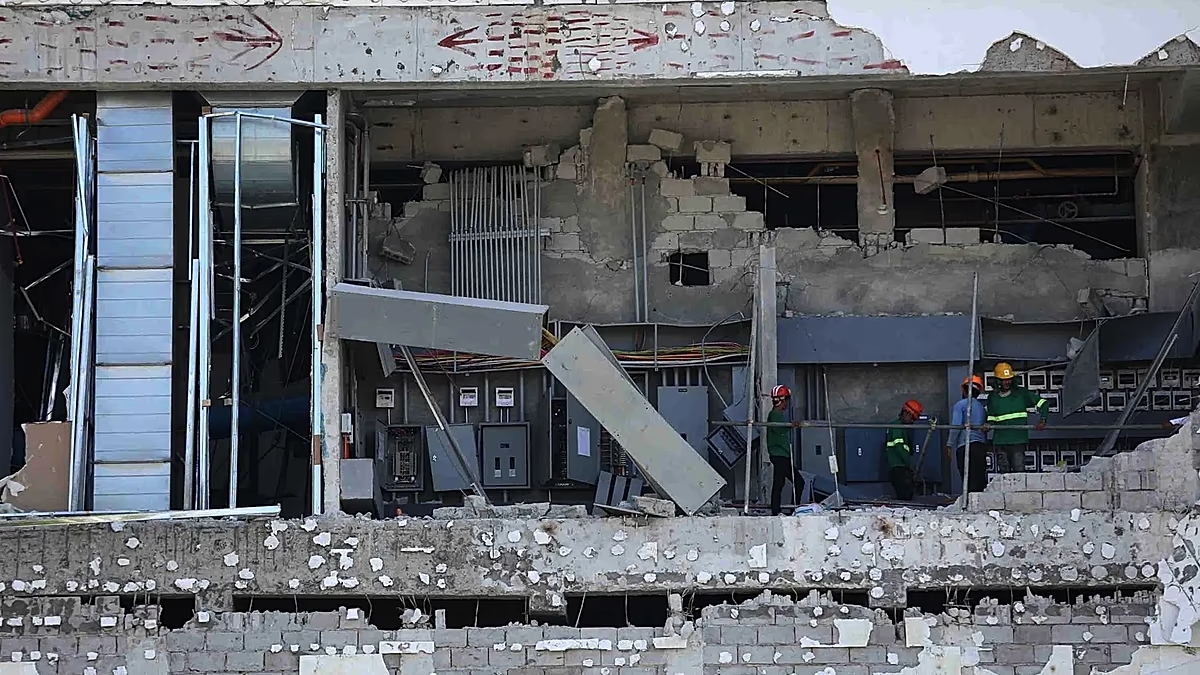
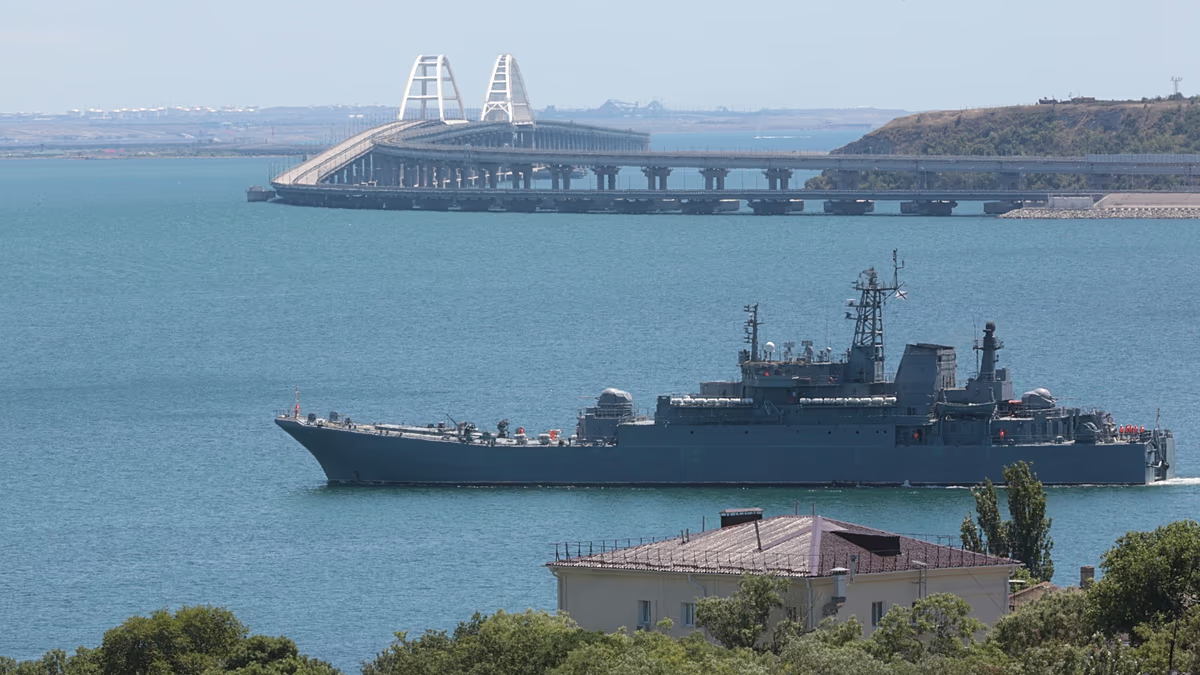
In the early years following annexation, Ukraine’s ability to challenge Russia’s hold was limited. The full-scale invasion of February 2022, however, marked a violent turning point, catalyzing a sustained Ukrainian campaign to dismantle Russian control piece by piece. This effort has been characterized by remarkable ingenuity and courage. Ukraine has successfully targeted the very pillars of Russian power on the peninsula: sinking key warships of the Black Sea Fleet at their Crimean bases, striking munitions depots and airfields, and repeatedly damaging President Putin’s personal symbol of connection, the Kerch Bridge. Each successful strike has chipped away at Russian military capability and prestige, forcing the redeployment of the fleet and demonstrating that no asset is safe. The bridge, in particular, has become a powerful metaphor—a concrete link repeatedly fractured, requiring constant, costly repairs, and proving to be a vulnerable artery.
Ukraine’s strategy has now evolved beyond symbolic strikes to a methodical campaign of strategic isolation, aiming to sever the physical lifelines that sustain the Russian occupation. Crimea’s geography is a complex web of connections: to the north, a narrow land corridor links it to other Russian-occupied parts of southern Ukraine via the Perekop isthmus; to the east, the Kerch Bridge stretches to Russia itself. Recognizing that Crimea is an island supplied by these routes, Ukrainian forces are systematically targeting what militaries call GLOCs—Ground Lines of Communication. Recent precision strikes have destroyed convoys of military cargo vehicles and critically damaged key bridges, like those near Armiansk, that are essential for moving troops, fuel, and ammunition from Russia proper into the peninsula. The goal is clear: to choke these supply routes, making the cost of resupply prohibitively high and logistics a nightmare for Russian commanders.
The effects of this tightening siege are manifesting in a very tangible crisis: a severe shortage of fuel. Crimea is supplied through a fragile triad—the Kerch Bridge, maritime shipments, and overland routes through occupied southern Ukraine. As Ukrainian drones and missiles increasingly disrupt all three, the peninsula is experiencing its most severe fuel shortages since 2014. The Kremlin’s occupation authorities have been forced into rare public admissions of the problem, implementing strict rationing. In Sevastopol, the historic home of Russia’s Black Sea Fleet, residents must now use a state-controlled app to secure QR codes allowing them to purchase a mere 20 liters of gasoline per week, a drastic reduction from previous limits. This civilian hardship is a direct symptom of military strain, revealing the vulnerability of the occupation’s logistical backbone.
Ukrainian military leaders are explicit about their objective. Commander Robert Brovdi of Ukraine’s Unmanned Systems Forces, known by his call sign “Madyar,” states that the aim is to completely isolate Crimea. He reports that due to relentless Ukrainian strikes on key highways like the “Novorossiya” route, Russian military cargo traffic has already dropped by over 70% in a matter of weeks. “Within another month, we will have total control over the road,” Brovdi asserts. The broader philosophy is to render the peninsula an unsustainable base for Russian military and defense industry operations. As he explains, “We will create conditions that will make it extremely difficult for any military personnel… to remain in Crimea… We will isolate Crimea in the near future.” This is not a hope, but a stated operational goal.
Thus, the battle for Crimea has entered a decisive, grinding phase. It is no longer solely about dramatic explosions on a bridge, but about a daily, calculated erosion of Russian capabilities. Ukraine is applying relentless pressure on the complex logistics required to maintain an army of occupation hundreds of miles from Russia’s core territory. Each destroyed fuel truck, each damaged rail line, and each rationing notice adds friction to the Russian war machine. While the peninsula remains under firm Russian control, its foundations are being shaken. Ukraine’ campaign is a testament to a profound strategic shift: making the cost of holding Crimea so high, so logistically paralyzing, and so militarily untenable that the very calculus of occupation must change. The ultimate goal remains the peninsula’s return, but the immediate path is one of systematic isolation, aiming to turn Russia’s greatest prize into its most burdensome liability.