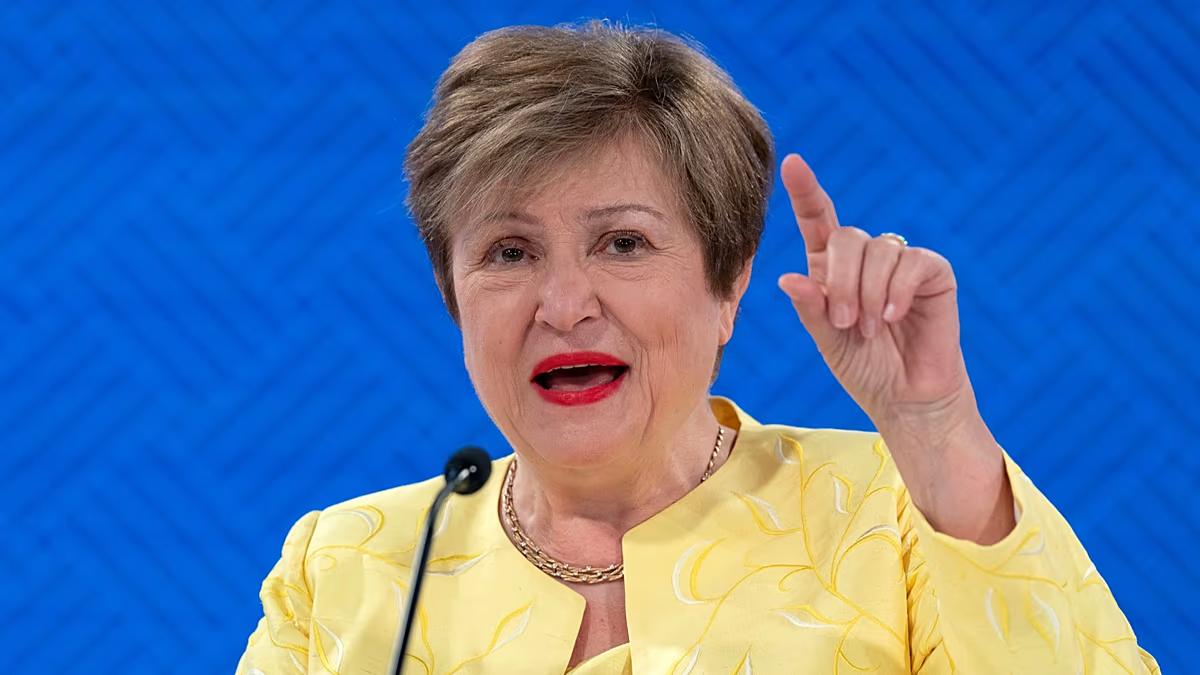


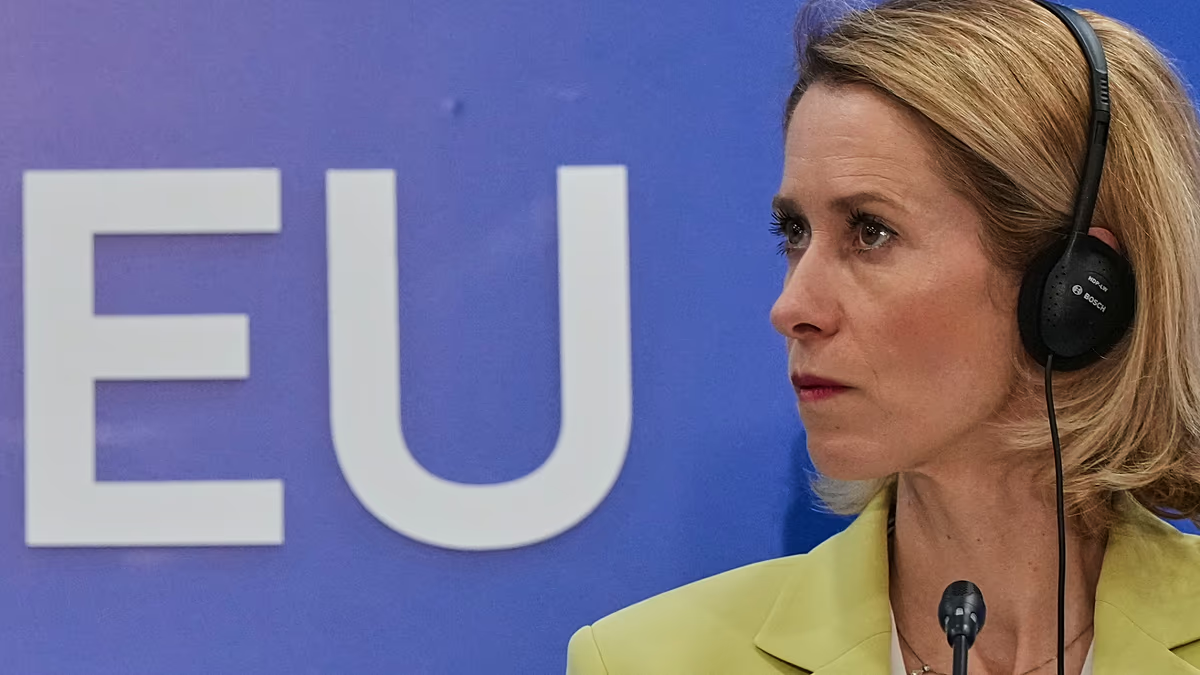
The European Union’s diplomatic machinery is at a crossroads, caught in a quiet but intense debate about its future shape and authority. At the center of this discussion is the European External Action Service (EEAS), the bloc’s diplomatic corps, and its chief, the High Representative for Foreign Affairs, currently Estonian Prime Minister Kaja Kallas. As the world grows more volatile, key EU capitals, led notably by France, are pushing for reforms to make European foreign policy more agile and effective. This has triggered a behind-the-scenes struggle over where power should ultimately reside—within the member states, the European Commission, or a strengthened High Representative. The outcome will determine whether the EU can speak with one clear, powerful voice on the global stage or remain a complex chorus of institutions.
France has taken the initiative by circulating a discussion paper outlining three distinct paths for reform, each with profound implications. The first scenario would see the High Representative’s role significantly diluted, with key foreign policy competencies transferred to the European Commission. This vision aligns with Commission President Ursula von der Leyen’s ambition to lead a “geopolitical Commission,” having personally stepped into numerous international crises. The second option would empower the European Council, the body representing member state governments, to take a more hands-on, operational role in running external relations, moving beyond merely setting political direction. Both of these routes would diminish the standing of the EEAS and its chief, essentially redistributing their influence to other Brussels power centers.
In a firm defense of her institution, Kallas has pushed back against these proposals in an internal email to EEAS staff. She emphasizes that the current roles and responsibilities of EU institutions are “clearly defined in the treaties,” a framework that remains unchanged. Implicit in her message is a caution that major institutional reshuffling cannot happen overnight; it would require treaty changes, which are not currently on the agenda. Her stance underscores a belief that the existing structure, with a dedicated diplomatic service led by the High Representative, provides the necessary focus and expertise. This internal support rally comes at a crucial moment, as the EEAS itself is drafting its own options paper to contribute to the debate, ensuring its perspective is heard.
The timing of this reform push is not accidental. Discussions have simmered for years, but they have gained fresh urgency due to a combination of geopolitical pressures and an institutional opening. The EEAS recently saw the departure of its top civil servant, the Secretary General, creating a temporary leadership gap that invites reflection on the service’s future structure. Furthermore, these talks are subtly linked to negotiations over the EU’s next long-term budget, where resources for diplomacy and global engagement will be allocated. However, diplomats generally agree that any sweeping overhaul is unlikely before the next EU institutional cycle begins, making the current debate a foundational one for setting the direction of travel for the coming decade.
The third option in the French paper presents a fundamentally different vision: instead of weakening the High Representative, it proposes strengthening the role. This model would grant the EU’s chief diplomat greater oversight of key policy portfolios within the European Commission that have major geopolitical ramifications, such as trade, energy, and climate. The logic is that in today’s world, foreign policy is inseparable from economic security, digital governance, and green transition strategies. Creating a more coherent command under the High Representative could, in theory, reduce bureaucratic silos and allow the EU to wield its substantial economic and regulatory power more strategically as part of a unified foreign policy.
As the debate unfolds, the first high-level discussion among EU foreign ministers is scheduled for early September. Ahead of that, Kallas’s planned meeting with French Foreign Minister Jean-Noël Barrot takes on added significance, though it was scheduled prior to the paper’s circulation. Ultimately, this is more than a bureaucratic turf war; it is a necessary struggle to define the EU’s operational identity in a world of rising tensions and strategic competition. Whether the solution is a more dominant Commission, a more operational Council, or a more powerful High Representative, the goal remains the same: to forge a European Union that can anticipate crises, act decisively, and defend its interests and values effectively. The path chosen will shape the EU’s global influence for years to come.