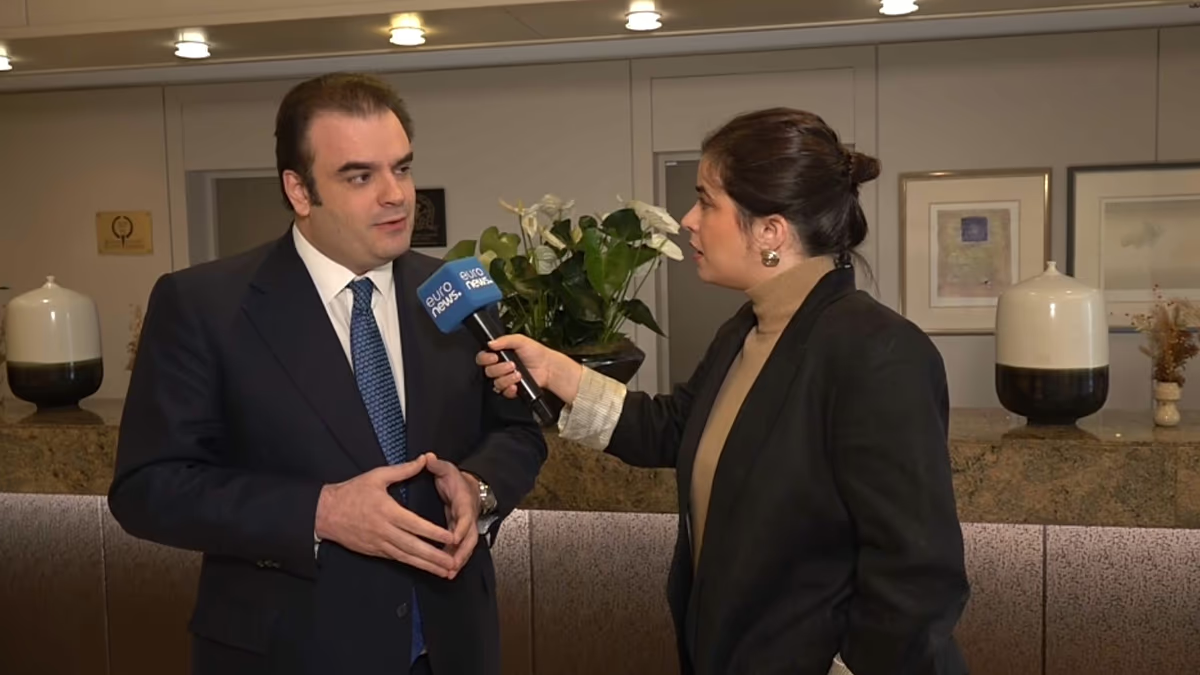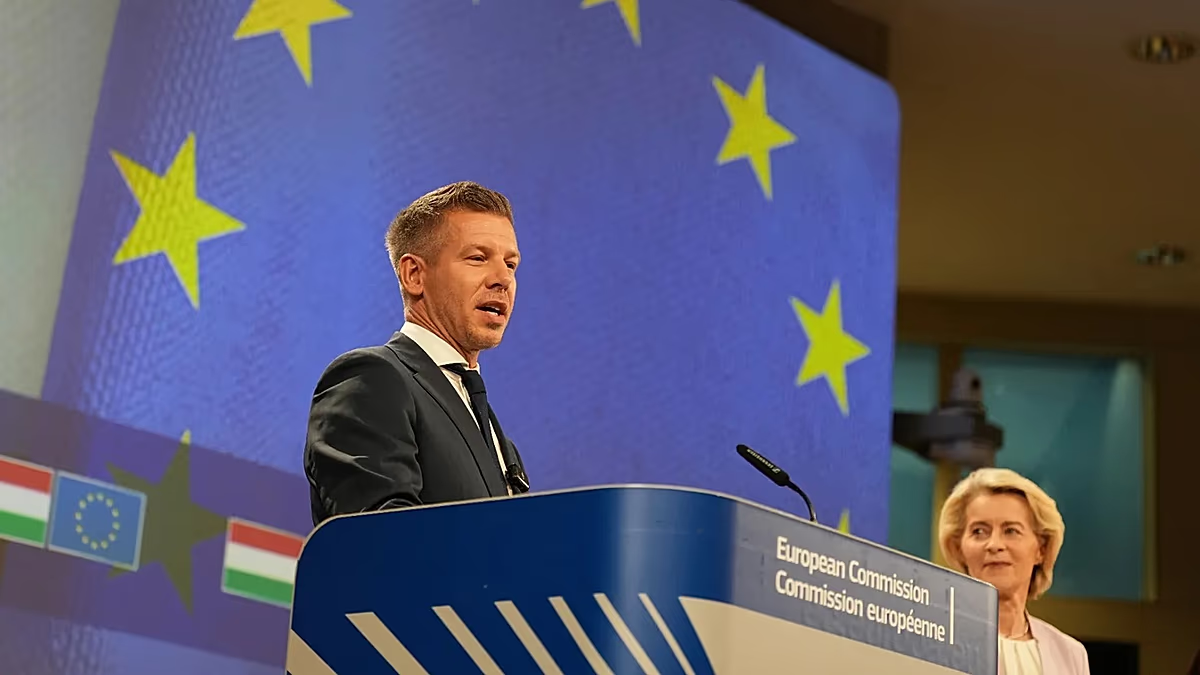


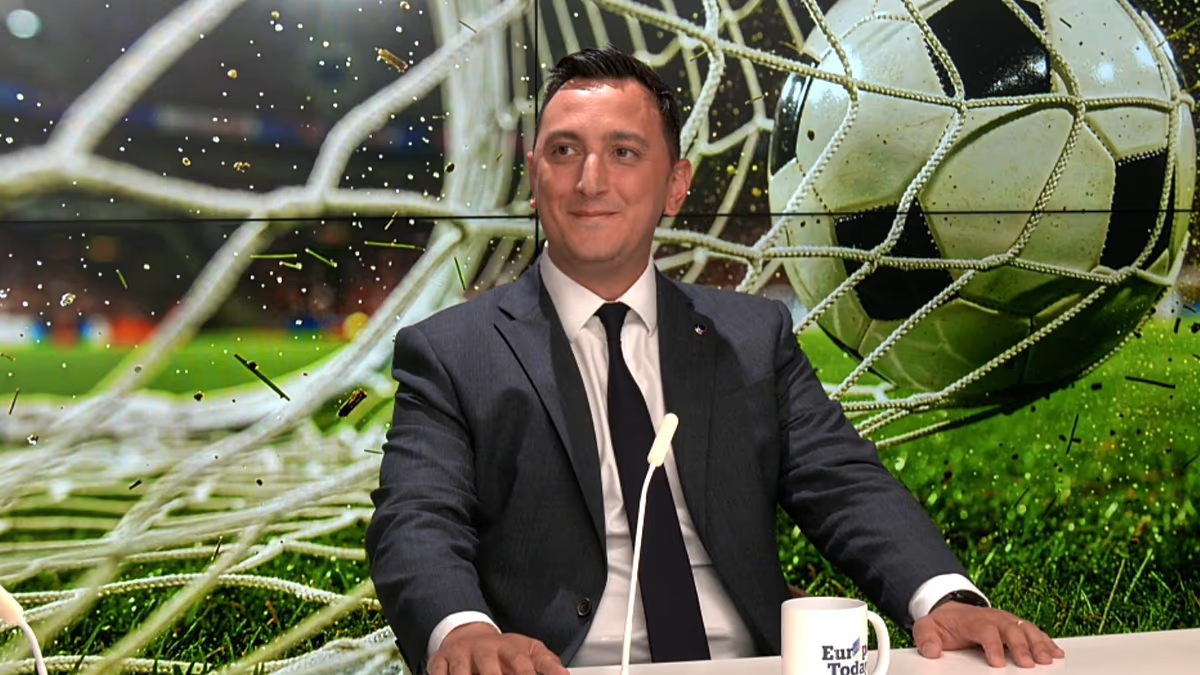
As the 2026 FIFA World Cup kicks off across Mexico, the United States, and Canada, the tournament is poised to be a historic spectacle. It is the largest World Cup ever, featuring 48 teams and 104 matches, designed to solidify FIFA’s footprint in the lucrative North American market. Yet, even before the first whistle, the event finds itself entangled in geopolitical and logistical controversies that threaten to overshadow the beautiful game. The core tension lies in the balance between a host nation’s sovereign right to enforce its security policies and the universal ideal of football as a unifying global festival. European Sports Commissioner Glenn Micallef, speaking to Euronews, captured this dichotomy perfectly, stating that while decisions on access “are for the host countries to make,” the ultimate hope is for the games to bring “joy” to the world.
This abstract tension became starkly real this week when Somali referee Omar Atan was detained at Miami International Airport and barred from entering the United States over unspecified “vetting concerns.” This incident, resulting in a qualified match official being unable to fulfill his duties, casts a shadow and raises urgent questions about the practical execution of border controls during a tournament meant to welcome the world. Commissioner Micallef, while reiterating respect for national security parameters, emphasized that “Football should be accessible to everyone.” He urged against allowing controversies to dominate, expressing a sincere hope that the focus would remain on sport, football, and the collective passion it ignites. His plea was a conscious effort to steer the narrative back to the pitch, where the drama should unfold.
The geopolitical stage is further complicated by the participation of Iran, as tensions in the Middle East escalated dramatically on the eve of the tournament following US military strikes. This reality forced football directly into the realm of international diplomacy. Reports had previously swirled that the US administration had explored replacing Iran with Italy, a nation that did not qualify—a plan swiftly rejected by both Rome and Commissioner Micallef. He stood firmly on sporting principle, stating, “It’s good that they can participate. They qualified on merit and should be there.” Nevertheless, the tensions have practical consequences: Iran, slated to play all its group matches in the US, has reportedly chosen to base its team camp in Mexico due to visa and security apprehensions, setting the stage for a potentially fraught knockout encounter should both Iran and the USA progress.
Amid these weighty issues, Commissioner Micallef made a deliberate and heartfelt appeal for perspective. He acknowledged that controversies are an unfortunate staple of major sporting events but argued that sabotaging or boycotting the games “will not solve anything.” His concern was for the global community of fans. “We should not deprive fans of the opportunity to follow their favourite teams,” he said, painting a picture of a world that, despite its difficulties, still comes together in squares, bars, and cafés to share in this unique passion. He envisions this World Cup being remembered not for political strife, but “for the excitement of football, for the joy and passion it brings on the pitch, and for the millions of fans around the world who unite in support.”
On a lighter note, and perhaps in a bid to refocus the conversation on pure sport, the Commissioner shared his prediction for the tournament’s champion. Joining many bookmakers who see France and Spain as favourites, Micallef tipped Spain to ultimately lift the trophy. This nod to on-field competition serves as a reminder of the core essence of the event—the athletic excellence, the tactical brilliance, and the raw, unpredictable narratives that unfold over 90 minutes. It is this magic that has the power to temporarily transcend borders and disagreements.
In the end, the 2026 World Cup presents a profound test case for the modern era. It asks whether the unifying power of sport can withstand the pressures of geopolitics and stringent security regimes. Commissioner Micallef’s comments serve as a moderate, hopeful manifesto: he upholds the right of nations to govern their borders while passionately advocating for football’s role as a common language of joy. As the tournament begins, the world will be watching to see which force proves more powerful—the divisions that separate us, or the shared passion for the game that, in moments of brilliance, can make those divisions feel momentarily trivial. The beautiful game, once again, is about much more than football.