


Of course. Here is a humanized and expanded summary of the content, structured into six paragraphs as requested.
Paragraph 1: Setting the Scene
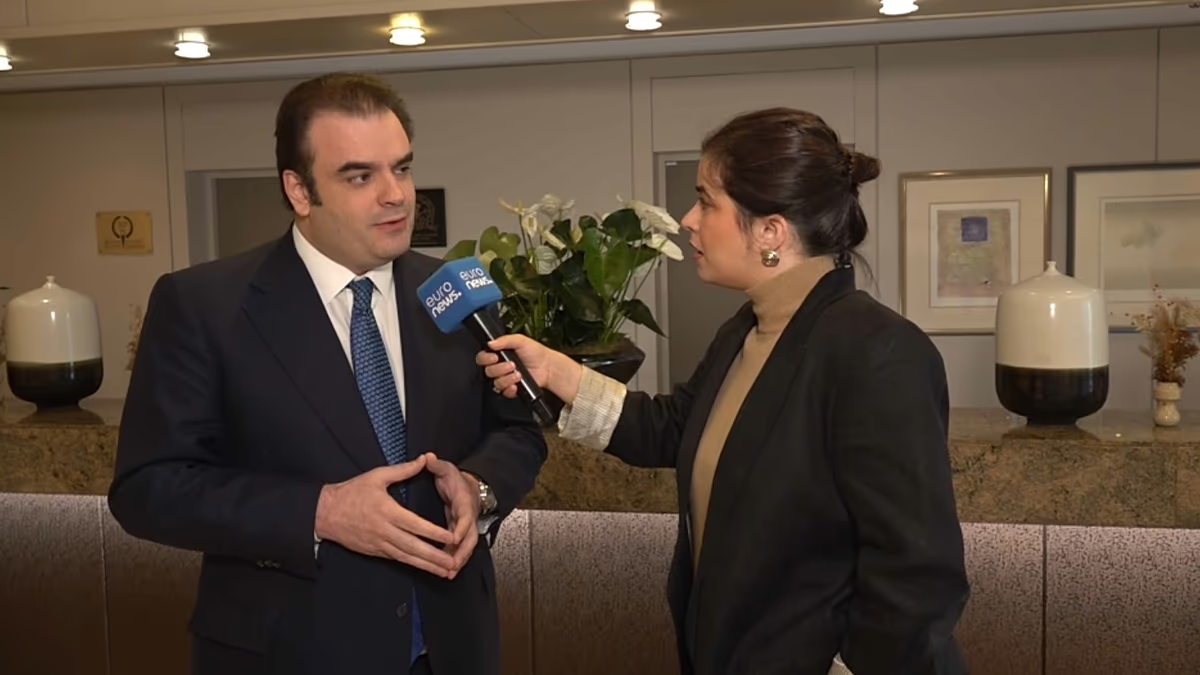
The interview begins not in the sterile confines of a Brussels office, but against the dynamic backdrop of Athens, a city symbolizing both Europe’s profound history and its modern challenges. Euronews’ Maria Tadeo meets with Kyriakos Pierrakakis, Greece’s Minister of Digital Governance and, significantly, the President of the Eurogroup—the influential council of Eurozone finance ministers. This setting is immediately symbolic. Pierrakakis, a younger, tech-oriented minister from a nation once at the epicenter of the Eurozone debt crises, now helming the group tasked with safeguarding the currency’s future, represents a tangible shift in the narrative. The conversation is poised to bridge past austerity with future digital ambition, all under the watchful eyes of the ancient Agora.
Paragraph 2: The Personal Journey and a New Era for the Eurogroup
Tadeo likely probes the personal and political journey, drawing out how Pierrakakis’s background in technology and analysis shapes his leadership style. He would emphasize a deliberate shift in the Eurogroup’s culture under his presidency. The image he projects is one moving away from the crisis-firefighting mode that defined the 2010s—a period where Greece was often on the receiving end of difficult decisions—towards a more strategic, forward-looking forum. The focus, he would stress, is on resilience, convergence, and preparing the Eurozone for the next decades, not just the next quarterly review. This reframing is itself a human story: from a nation undergoing reform to a leader guiding collective stability.
Paragraph 3: Confronting the Immediate Economic Challenges
The dialogue inevitably turns to the pressing economic headwinds facing European citizens: persistent inflation, high energy costs, and slowing growth. Here, Pierrakakis the Minister and Pierrakakis the Eurogroup President merge. He would acknowledge the real pain felt by households across the continent, avoiding technocratic gloss. The discussion would cover the delicate balancing act the Eurogroup must oversee: supporting targeted government spending to protect the vulnerable and invest in green/digital transitions, while ensuring fiscal sustainability does not unravel. He might articulate the consensus view that the old playbook of uniform austerity is outdated, but that discipline anchored in growth-oriented investment is the new mantra—a nuanced, politically charged tightrope walk.
Paragraph 4: The Digital Transformation as a Core Economic Pillar
This is where Pierrakakis’s core expertise shines. The conversation would pivot from general economics to his signature theme: digitalization as a non-negotiable driver of European competitiveness and sovereignty. He would humanize this by linking it to tangible outcomes—faster public services for citizens, reduced bureaucracy for small businesses, and new tools for skills training. He’d likely discuss European projects like digital identity wallets or cross-border data sharing not as abstract IT concepts, but as foundational infrastructure for a single market that finally works seamlessly. The argument is that a truly integrated Digital Single Market is as vital for the euro’s future as any fiscal rule.
Paragraph 5: Greece’s Redemption Arc and European Solidarity
A poignant segment of the interview would address the elephant in the room: Greece’s transformation. Tadeo would invite him to reflect on the nation’s journey from a symbol of crisis to a member now attracting investment and showing robust growth. Pierrakakis would likely speak with measured pride, framing Greece’s story as one of resilience and reform, but also of essential European solidarity. This leads naturally to a core principle of his Eurogroup presidency: deepening the Banking and Capital Markets Unions. He would argue that completing these architectures is the best way to build permanent shock-absorption capacity, ensuring that future crises are met with shared financial tools, not just difficult political negotiations—a lesson hard-learned.
Paragraph 6: Vision for the Future: Strategic Autonomy and the Next Generation
In closing, the interview would ascend to a strategic vision. Pierrakakis would connect the dots between economic stability, digital leadership, and energy transition, framing them all as components of Europe’s strategic autonomy. He might speak about the need for the Eurozone to be a confident, cohesive pillar in a world of geopolitical rivalry, which requires investment in innovation and a steadfast commitment to its shared values and rules. Finally, his tone would become aspirational, linking the Eurogroup’s technical work to the future lived by Europe’s youth—emphasizing that a stable euro, a digital edge, and a green economy are ultimately about securing opportunities and prosperity for the next generation, ensuring the European project remains a compelling answer to the challenges of the 21st century.