




A Maritime Tragedy: The Human Cost of Conflict at Sea
In a stark reminder of how geopolitical tensions can reach far beyond borders and directly impact innocent lives, a recent incident in the waters off Oman has culminated in profound tragedy. India’s shipping minister, Sarbananda Sonowal, confirmed the deaths of three Indian sailors following a US military strike on a commercial tanker. The minister described the event as “deeply unfortunate,” a term that belies the crushing personal grief now enveloping the families and communities of the lost seafarers. These men, who embarked on a journey to perform their professional duties, have become casualties in a complex international standoff, their lives abruptly ended while they worked aboard the Palau-flagged vessel MT Settebello.
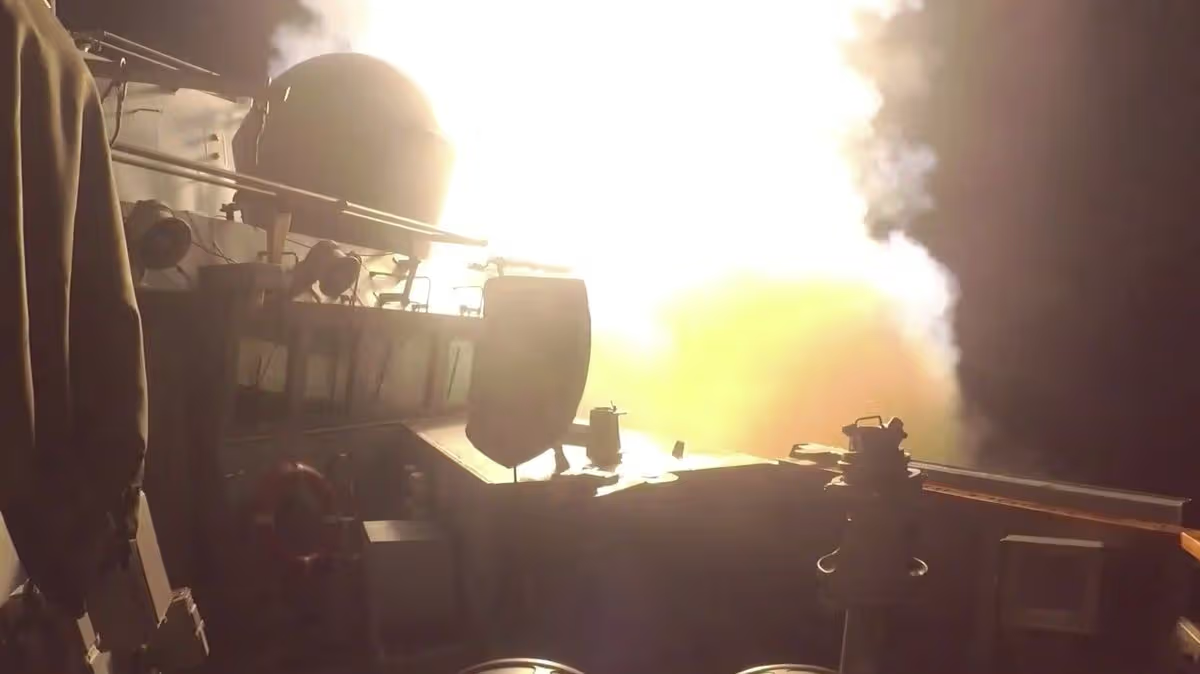
The narrative of the incident, as presented by the involved military forces, adds layers of complexity to the sorrow. The United States Central Command stated that an American aircraft fired into the ship’s engine room after it allegedly attempted to breach a US naval blockade enforcing sanctions on Iranian oil exports. According to their account, the crew was warned prior to the strike. This military rationale, however, collides with the human reality unfolding thousands of miles away in India. The transition of these three men from being “missing” to “confirmed dead” following the recovery and identification of their bodies transforms a strategic operation into a deeply personal catastrophe, highlighting the vulnerable position of merchant mariners caught in global conflicts.
In the wake of this loss, the response from the Indian government has been one of solemn duty and national mourning. Minister Sonowal, extending the government’s solidarity, emphasized that this tragedy represents a “profound loss to our maritime family.” This phrasing acknowledges the unique, close-knit community of seafarers who connect nations through trade and who share the inherent risks of the sea. The Modi government’s pledge to stand firmly with the bereaved is being actioned through directives for immediate repatriation of the rescued surviving crew and, with utmost respect, the swift return of the deceased sailors’ mortal remains to their homeland for final rites according to their cultural and religious traditions.
This incident forces a difficult contemplation on the mechanisms of modern blockades and sanctions enforcement. While nations pursue strategic objectives to control the flow of goods like Iranian oil, the human element—the crews operating the targeted vessels—can sometimes become abstracted. The MT Settebello, flying the flag of Palau, was a floating workplace for sailors from India, a nation not directly party to the underlying conflict. Their presence aboard turns the vessel from a mere sanctions-evading entity into a community of individuals with hopes, responsibilities, and families awaiting their return, a fact that resonates long after the echoes of military engagement fade.
Beyond the immediate geopolitical analysis, the heart of this story remains in the homes now shrouded in grief in India. The three sailors were not merely statistics in a press release; they were individuals with life stories, people who supported loved ones, and professionals who contributed to the vital artery of global maritime trade. Their deaths underscore the often-overlooked perils faced by merchant sailors who, while not soldiers, can find themselves on the front lines of international disputes. The promise of support for the “next of kin” is a crucial, humane step, but it follows an irreversible void created in their lives.
Ultimately, this tragedy aboard the MT Settebello serves as a somber reflection on the intersection of international policy, military action, and human cost. As investigations and diplomatic conversations likely continue, the indelible truth is that three families have lost their loved ones, and a nation’s maritime community is in mourning. It reiterates the urgent need for all state actors to continually weigh the profound human consequences of actions taken in pursuit of strategic goals, ensuring that the protection of innocent life remains paramount, even in the vast and contested theater of the open sea.