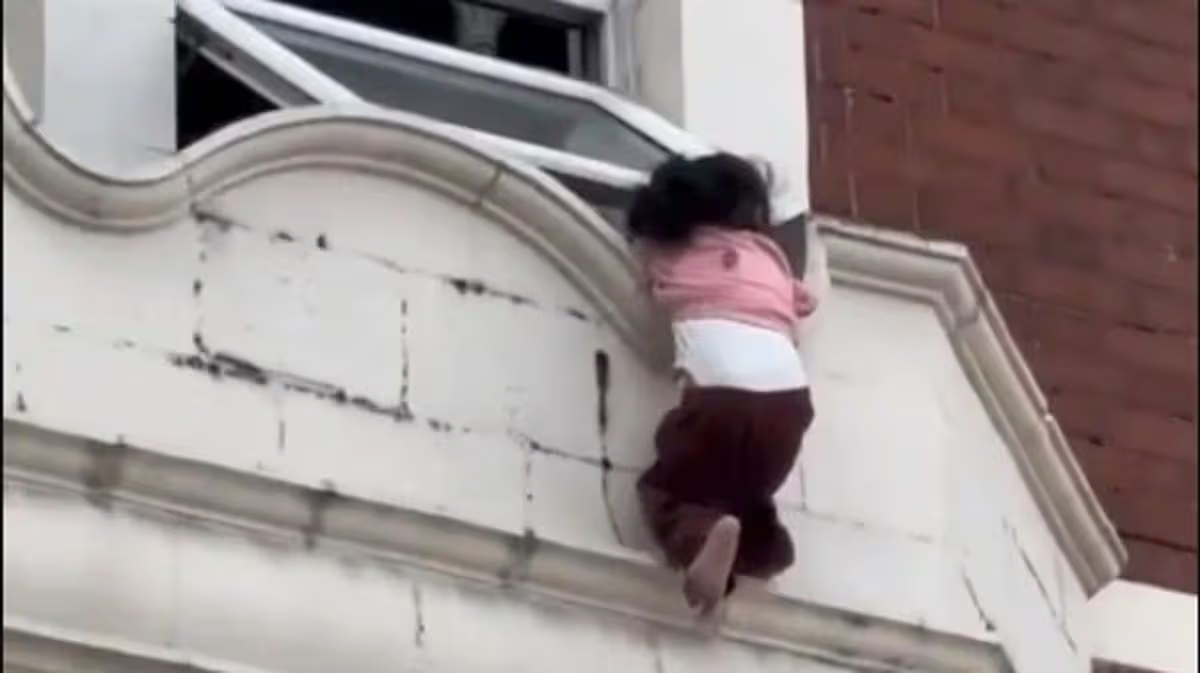


It was a scene of sheer, unadulterated terror that unfolded on a typical Tuesday afternoon along Ilford High Road in East London. Above the familiar bustle of the busy shopping street, a young toddler was seen clinging precariously to a narrow window ledge, several meters above the pavement. For the horrified crowd that quickly gathered below, time seemed to distort, each second stretching into an eternity as the child, dressed in a bright pink top, fought to maintain her tenuous grip on the building’s façade. The sheer drop beneath her led directly to the roof of a pawnbroker’s shop, making the situation even more perilous. This was no staged drama but a real-life emergency, where the instinctual fear of a fall and the collective hope for a miracle collided in the hearts of every witness.
As the tense moments ticked by, the scene evolved from passive horror into a coordinated, if frantic, rescue effort. On the street, people watched helplessly, their hands raised to their mouths or phones held aloft, not out of voyeurism but from a shared, breathless anxiety. From a lower window of the building, a woman emerged, her face etched with concern as she shouted upward, trying to offer reassurance to the little girl above. The arrival of the Metropolitan Police marked a turning point; an officer swiftly ascended to join the scene on the pawnbroker’s roof. He was not alone for long, as a quick-thinking member of the public, a topless man in grey tracksuit bottoms, positioned himself directly beneath the dangling child, his body tensed and ready.
The climax of the ordeal was as sudden as it was heart-stopping. The girl’s small hands, surely aching with the strain, finally lost their purchase. A collective gasp ripped through the crowd as she plummeted from the ledge. In that split second, all hopes rested on the man standing below. In a breathtaking display of instinct and courage, he caught the falling child, the force of the impact stabilized by the police officer at his side. The sheer physicality of the catch—the successful interception of a life in freefall—was a moment of stunning, visceral relief. The immediate danger had passed; the child was safe in their arms.
The emotional release on Ilford High Road was instantaneous and powerful. The palpable tension shattered into cheers, applause, and shouts of support. The rescued toddler was carefully passed through the lower window to the waiting woman, likely a family member or guardian, completing her return to safety. On the roof, the rescuer and the police officer, now united by an experience few will ever know, shared a brief, heartfelt embrace. It was a silent acknowledgment of their shared fear, their coordinated effort, and their profound relief. The crowd’s applause was for them, a public tribute to calm professionalism and spontaneous, civilian bravery.
According to the Metropolitan Police, the entire harrowing incident, from the initial emergency call at 3:23 pm to the moment the girl was confirmed safe, lasted less than ten minutes. In that brief window, a potential tragedy was averted through a combination of swift police response and extraordinary public courage. Authorities confirmed that the child suffered no injuries, a miraculous outcome given the frightening height from which she fell. The official statement, while concise, underscores the efficiency of the response, but it cannot capture the human drama that unfolded—the fear, the helplessness, the decisive action, and the overwhelming joy of a disaster avoided.
This event on an ordinary London afternoon serves as a powerful reminder of the fragility of life and the profound impact of human connection in moments of crisis. It was a story not of a single hero, but of a chain of humanity: from the concerned individual who first alerted authorities, to the distraught woman offering comfort from the window, to the officer performing his duty with swift competence, and ultimately to the unnamed man who, without a second thought, placed himself directly in harm’s way to catch a stranger’s child. In nine minutes, Ilford High Road witnessed the very worst of fears and the very best of human nature, culminating in a collective breath of relief that echoed far beyond the street itself.