



A Pillar of British Industry Falls: The End of Pym & Wildsmith
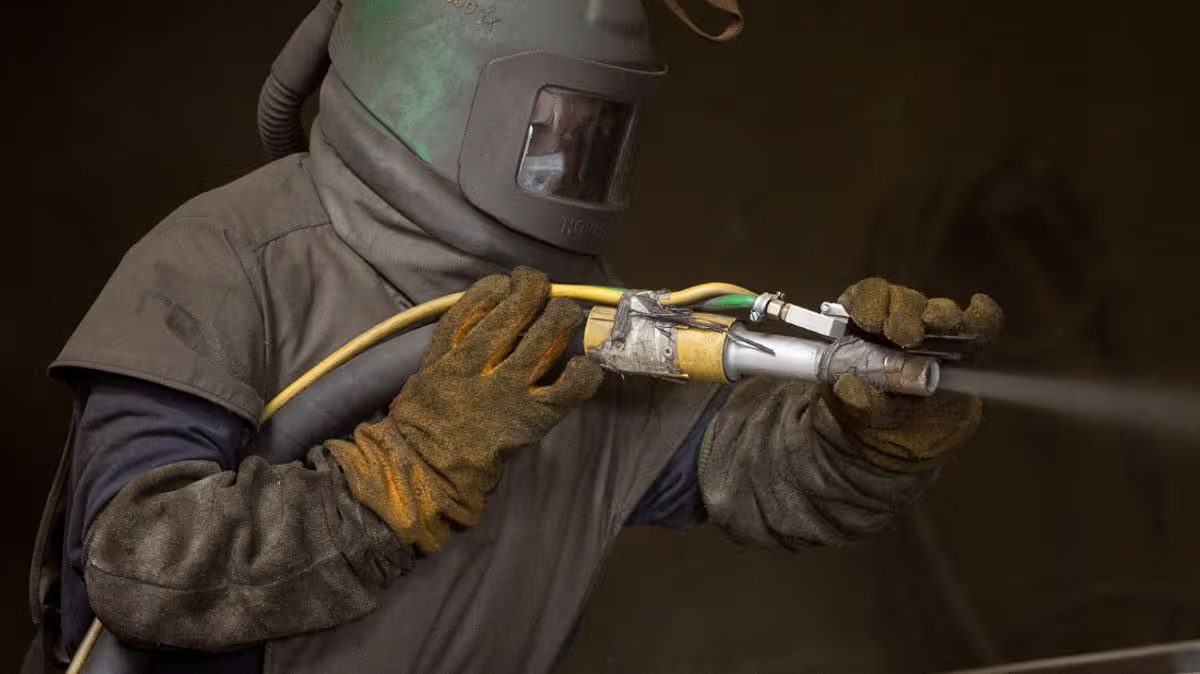
For over four decades, the name Pym & Wildsmith stood as a quiet but vital cornerstone of British manufacturing. Founded in 1979 by Stephen Pym and Tony Wildsmith in Staffordshire, the company grew from its roots into one of the Midlands’ most respected industrial metal finishing firms. Specialising in the critical final touches that protect and perfect metal components—services like e-coating, powder coating, paint spraying, and shot blasting—the company became an unsung hero to a vast swathe of UK industry. Its work, though often unseen by the public, formed a protective skin on products across the nation, from the rugged frames of earth-moving machinery to precision parts for advanced engineering projects. Operating from the Bramshall Industrial Estate near Uttoxeter, its longevity and expertise made it a trusted partner, a business that had not just witnessed but actively supported the evolution of British manufacturing for 47 years.
The company’s story took a significant and hopeful turn in 2022, evolving from a traditional family-run enterprise into a model of employee ownership. This transition to 100% employee ownership was more than a change in paperwork; it represented a profound belief in the workforce and a commitment to securing the company’s future for those who knew it best. The employees themselves became the custodians of a nearly half-century legacy. This move was underscored by a tangible spirit of investment and modernization; over the preceding five years, the firm had embarked on a vigorous programme upgrading its processes, equipment, and technology. This included expanding their facilities with advanced ovens, spray booths, and a technical department, all aimed at fostering new services and driving growth in sales and customer base.
However, this story of resilience and adaptation met a sudden and decisive end. On June 3rd, 2024, the stark reality of modern economic pressures culminated in the company’s collapse into administration. Mark Blackman and James Saunders of KR8 Advisory were appointed as joint administrators, a formal process that marks the cessation of trading for this longstanding entity. The notice, published in the London Gazette, stands as a sombre legal epitaph for a business that had weathered numerous economic cycles. The closure is not merely the shuttering of a factory; it represents the fracturing of a specialized industrial ecosystem, leaving a tangible void in the UK’s supply chain for high-quality metal finishing.
The breadth of Pym & Wildsmith’s clientele highlights just how integral its services were. It supplied a “range of blue-chip customers” across pivotal sectors including automotive, construction, defence, energy, rail, and water infrastructure. Their work was, quite literally, part of the backbone of national projects and everyday technology. This was not a niche operation but a critical support function for industries fundamental to the UK’s economy and security. The company’s strategic location, boasting easy access to major motorway networks, had long facilitated this national reach, allowing it to serve as a central hub for finishing services that enhanced durability, corrosion resistance, and aesthetic quality for countless essential products.
The human impact of this closure is underscored by the genuine esteem in which the company was held. Beyond the cold facts of its client list and services, Pym & Wildsmith built a reputation for exceptional reliability and professionalism. Customer reviews paint a picture of a business that was deeply valued. One testimonial praised the “fantastic customer service,” describing a team that was “responsive, organised, never have to chase for an answer.” Another simply called it a “longstanding and successful company” providing a “very professional and quality service.” These are not the comments of detached clients but of partners who relied on and respected the company’s work, making its sudden absence all the more keenly felt.
Thus, the administration of Pym & Wildsmith signifies more than the failure of a single company. It marks the loss of a substantial repository of institutional knowledge and skilled craftsmanship built over 45 years. From its founding partnership, through its evolution into an employee-owned beacon of industrial practice, to its final investments in a hopeful future, the company’s journey reflects both the enduring strengths and the vulnerable pressures facing the UK’s manufacturing landscape. Its closure leaves behind a silent factory in Staffordshire, a team of skilled employees facing an uncertain future, and a network of industries that must now seek elsewhere for the critical, high-quality finishing that this firm once provided so reliably. The end of its story is a reminder of the fragile threads upon which even the most established industrial pillars sometimes hang.