


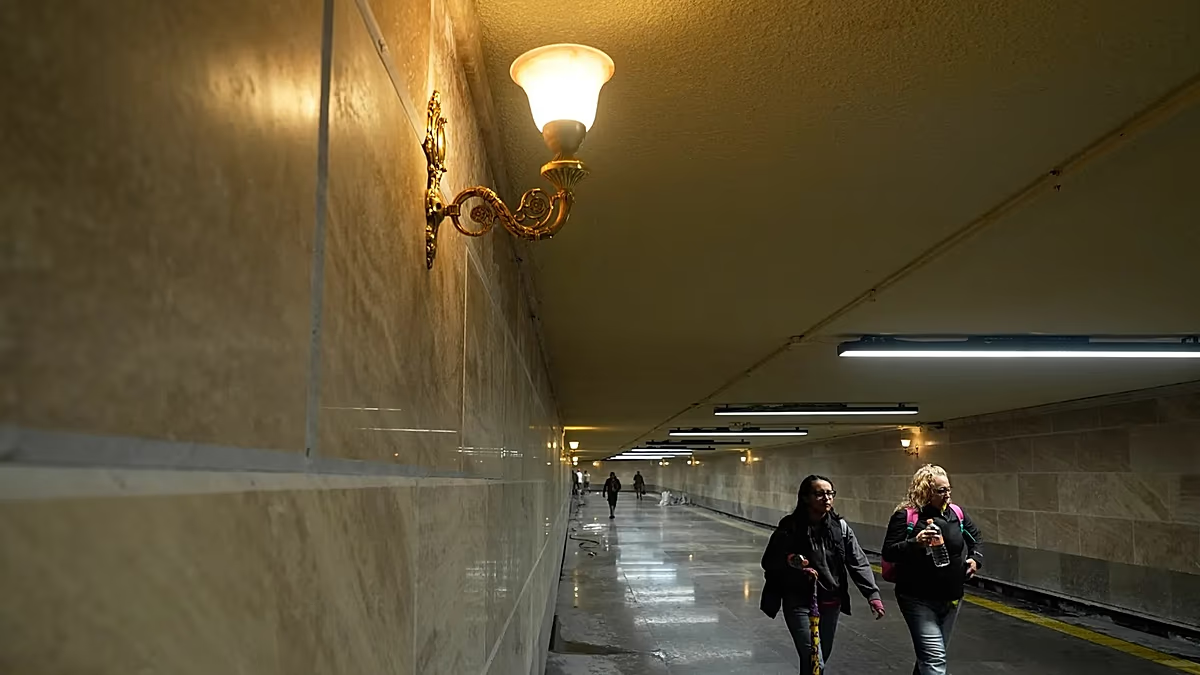
The bustling heart of Mexico City’s subway system has received an unexpected and lavish makeover ahead of the 2026 FIFA World Cup, transforming the daily commute into a moment of surreal spectacle. At the busy Hidalgo station, particularly along Line 2, ornate lamps and grandiose chandeliers now hang where once there were only functional lights. This sudden aesthetic shift, emerging from ongoing renovations, has stopped harried commuters in their tracks. The stark, almost jarring, contrast between the opulent fixtures and the gritty, fast-paced reality of a major urban metro has become a focal point for public conversation. What was once a purely utilitarian space for rushing from point A to point B has been momentarily reimagined, forcing a city known for its vibrant chaos to pause and look up.
This architectural surprise has swiftly spilled over from the platforms into the digital realm, sparking a wave of online memes and social media commentary that captures the city’s divided and often witty reaction. For many, the new décor evokes the lavish sets of period dramas or fairy tales, a comparison hilariously made literal in one popular meme. As student Montserrat Cardenas pointed out, referencing the viral image, the chandelier-lined hallway now feels like a scene straight out of “Beauty and the Beast,” a touch of Disney fantasy amidst the morning scramble. This online mockery is not merely criticism; it is a form of cultural processing, a way for citizens to collectively grapple with the incongruity of their transformed environment through shared humor and satire.
Beneath the laughter, however, lies a more serious and nuanced public debate about priorities and perception. Many commuters, while acknowledging the visual appeal, question the timing and necessity of such an ornate project. There is a palpable sense, as marketing specialist Marisol Venegas expressed, of “social fatigue” with initiatives perceived as superficial spectacles for an international audience. In a city grappling with profound infrastructure needs, from improving service reliability to addressing broader social inequalities, the chandeliers can feel like a misplaced priority—a shiny object obscuring more pressing concerns. The renovation has thus become a lightning rod for discussions about civic investment and whom city projects are truly meant to serve.
Yet, amidst the criticism, there is also an undeniable strand of pride and appreciation. The chandeliers have, almost overnight, turned Hidalgo station from a mundane transit point into one of Mexico City’s unlikely viral attractions. This transformation speaks to a deep-seated human desire for beauty and dignity in public spaces, even the most utilitarian ones. For some, the upgrade is a welcome infusion of elegance and care into the daily grind, a small gesture that elevates the common experience. It acknowledges that the millions who rely on the subway deserve more than bare functionality; they deserve spaces that inspire and delight, if only for a moment during their journey.
The situation at Hidalgo station ultimately reflects the complex identity of Mexico City itself—a place where ancient history, colonial grandeur, cutting-edge modernity, and grassroots resilience constantly collide. The chandeliers, in their exaggerated elegance, are not entirely out of place in a metropolis renowned for its Baroque architecture and maximalist spirit. They represent yet another layer in the city’s rich, chaotic tapestry. The debate they inspire is quintessentially capitalino: pragmatic and skeptical, yet simultaneously creative and deeply engaged with the life and aesthetics of their urban home.
As the 2026 World Cup approaches, the chandeliers of Hidalgo will likely continue to serve a dual purpose. For visitors, they will be a photogenic curiosity, a hint of unexpected grandeur. For the people of Mexico City, they will remain a potent symbol—a conversation piece that encapsulates the tensions between global spectacle and local need, between fleeting beauty and lasting substance. Whether viewed as an embarrassing extravagance or a delightful surprise, these fixtures have already achieved one undeniable thing: they have made people notice, discuss, and re-evaluate a space they thought they knew, proving that even the most ordinary corners of a city can become stages for its most pressing dialogues.