

Paragraph 1: A Sudden Shift in Tone
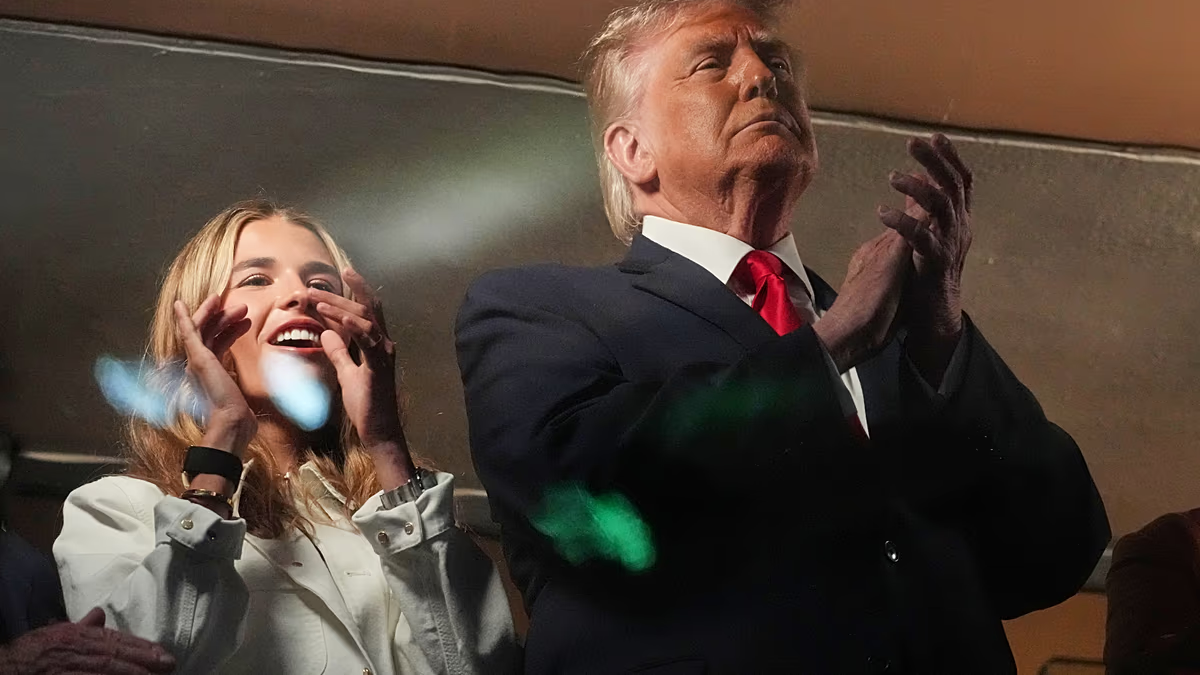
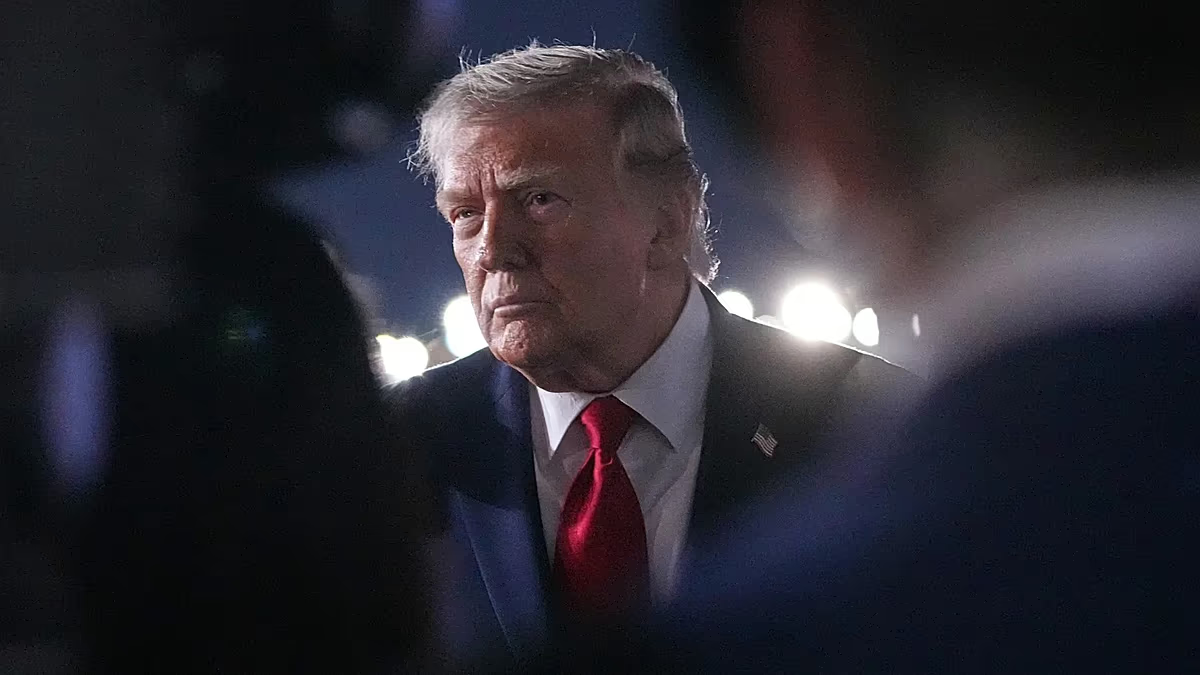
In a dramatic reversal of his recent diplomatic language, former US President Donald Trump adopted a fiercely confrontational stance toward Iran in statements made on Wednesday. Just a day prior, he had suggested to reporters that delicate negotiations to secure a lasting peace in the Middle East were nearing completion, potentially within “two or three days.” This optimistic assessment shattered, however, as he took to his Truth Social platform to declare, “The Bully of the Middle East is DEAD!!!” Accusing Iran of dragging its feet during negotiations, he asserted the country had squandered its chance for a favorable deal and would now “have to pay the price.” This incendiary rhetoric marked a significant and abrupt escalation in his public messaging, casting immediate doubt on the viability of the fragile ceasefire that has held since April.
Paragraph 2: Threats of Escalation and Economic Strangulation
Trump’s threats were not confined to social media bluster. In a separate telephone interview with Fox News, he provided chilling specifics, suggesting that the stagnation of peace talks was pushing him closer to authorizing strikes on critical Iranian infrastructure, including power plants and bridges. “I may keep going,” he stated, framing the potential escalation as a consequence of Iranian intransigence. Accompanying this threat of military force was a celebration of economic pressure. In another social media post, he lavished praise on the ongoing US naval blockade of Iranian shipping, which he branded a “steel wall.” He claimed this strategy had successfully crippled Iranian commerce and even prevented the payment of military salaries, while paradoxically boasting that it still allowed other nations to export “lots of oil.” His post concluded with a provocative “Praise be to Allah!”, a phrase seemingly used to underscore his perception of a total victory.
Paragraph 3: Regional Violence Erupts Anew
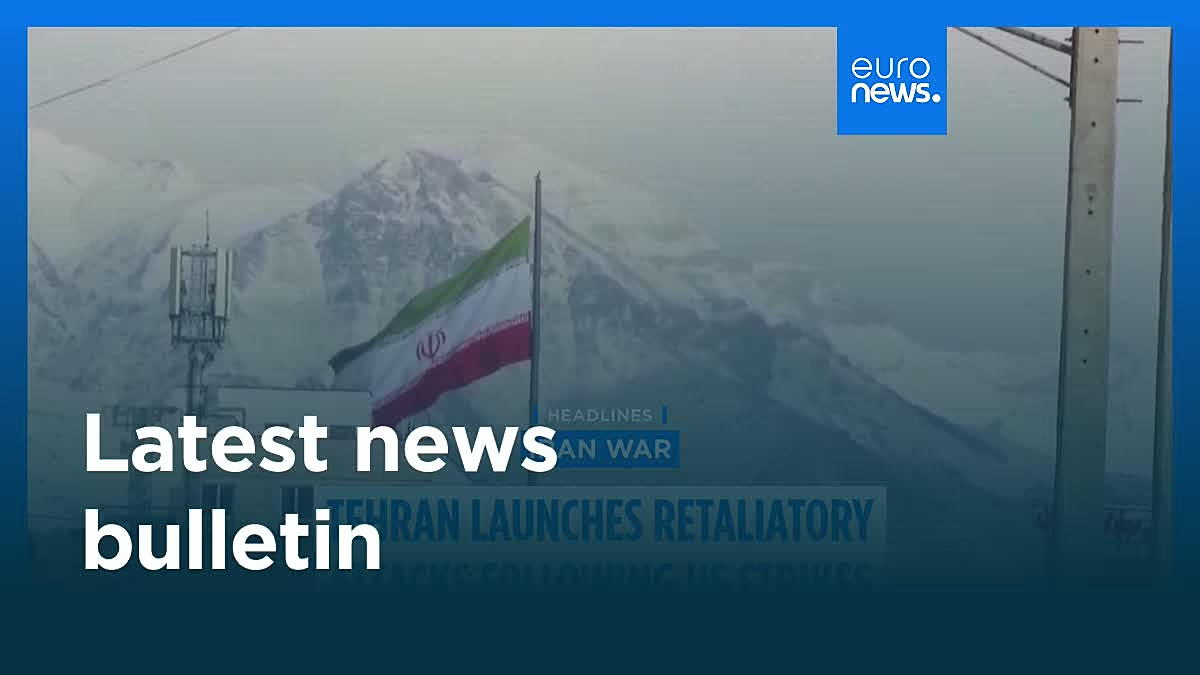
This verbal onslaught from Washington coincided with a dangerous new outbreak of violence across the region, directly threatening to unravel the tenuous ceasefire. The United States initiated airstrikes against targets in Iran early Wednesday, prompting immediate retaliation from Tehran. The Iranian response was broad and bold, with the Islamic Revolutionary Guard Corps (IRGC) claiming responsibility for launching “long-range missiles” at several neighboring nations. According to Iranian state media, the strikes targeted “four major targets” in Jordan, including facilities housing advanced US F-35 fighter jets and a command center. This tit-for-tat exchange, reportedly triggered by the earlier downing of a US helicopter over the strategic Strait of Hormuz, represented a severe and direct escalation, moving the conflict beyond proxy engagements to open state-on-state attacks.
Paragraph 4: Jordan’s Defensive Response
The Kingdom of Jordan found itself directly in the crosshairs of this escalation. Its military confirmed on Wednesday that it had engaged and successfully intercepted five missiles launched from Iranian territory toward the historically significant town of Azraq, located about 100 kilometers from the capital, Amman. The area is strategically sensitive, hosting the major Muwaffaq Salti Air Base, a facility used by the Jordanian Air Force and, in the past, by US and NATO allies for operations against groups like the Islamic State. The Jordanian Armed Forces assured the public that the defensive intercepts resulted only in falling debris, with no casualties or significant material damage reported. This calm and measured response from Amman highlighted its precarious position, caught between regional titans while managing its own security concerns.
Paragraph 5: Gulf Nations Under Fire
The Iranian missile barrage was not limited to Jordan. Across the Persian Gulf, air defense sirens sounded in other US-allied nations. Kuwait’s military reported that its defenses were actively engaging “hostile aerial targets” without initially naming Iran, though the context made the source clear. Similarly, the Kingdom of Bahrain announced its forces had intercepted an unspecified number of missiles. The Bahrain Defence Force explicitly condemned what it called Iran’s “systematic hostile approach,” accusing Tehran of carrying out “unlawful attacks using missiles and drones targeting civilians.” These simultaneous attacks on multiple nations underscored a strategy of broad regional intimidation, aiming to demonstrate Iran’s reach and retaliatory capability against those aligned with American interests.
Paragraph 6: A Precarious Crossroads for Peace
The convergence of Trump’s aggressive rhetoric and the new wave of missile attacks creates a profoundly dangerous moment for Middle Eastern stability. The diplomatic language of “final throes” has been supplanted by threats of targeting civilian infrastructure and boasts of economic warfare. On the ground, the ceasefire appears more fragile than ever, as direct strikes between the US and Iran resume and spill over to involve regional partners. The situation presents a stark crossroads: one path leads back to the negotiating table, requiring de-escalation and a renewal of pragmatic dialogue. The other, fueled by the current cycle of threat and retaliation, points toward a wider, more destructive conflict with devastating humanitarian consequences for the entire region. The coming days will test whether the threads of diplomacy can be rewoven or if they will be severed entirely by this renewed storm of violence and provocative words.