


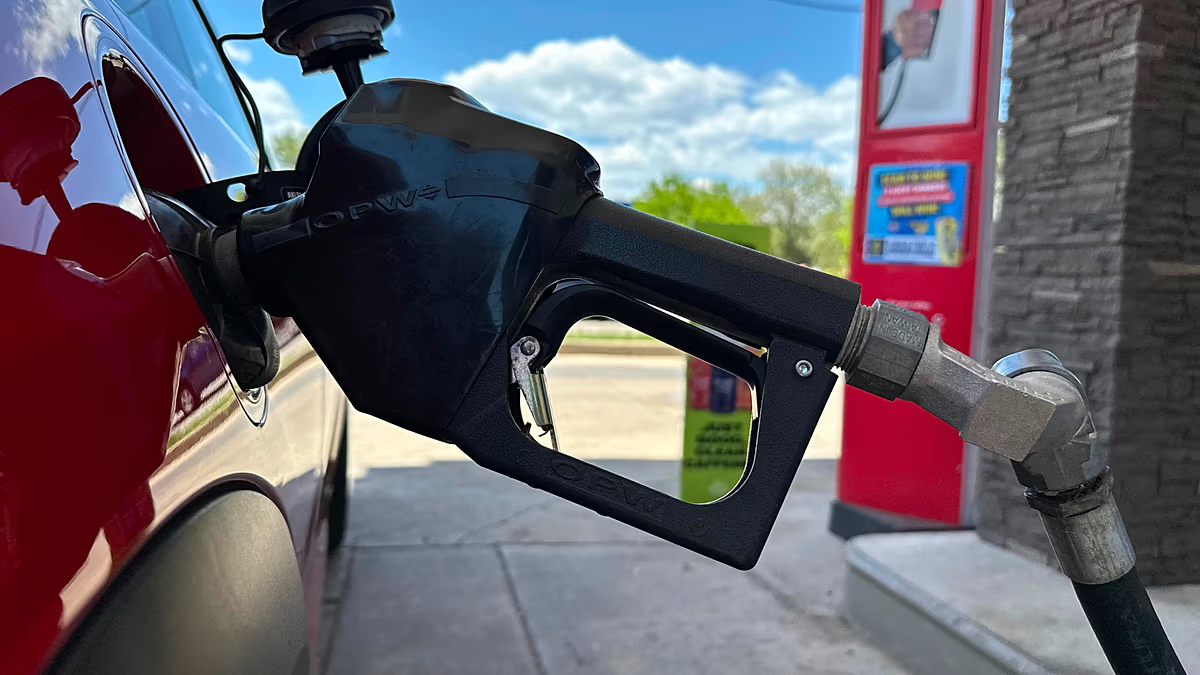
The latest inflation report delivered an unwelcome jolt to the American economy, revealing that consumer prices surged at their fastest annual pace in three years this past May. According to the Labor Department, prices climbed 4.2% compared to a year earlier, accelerating from April’s 3.8% increase and marking a third consecutive monthly rise. The primary driver of this heated headline number was a sharp increase in fuel costs, which placed a direct strain on household budgets and strengthened the case for the Federal Reserve to maintain its restrictive stance on interest rates. This resurgence of inflation, a ghost many thought was being laid to rest, has forcefully returned to the center of both economic and political discourse.
Digging beneath the headline figure, however, reveals a more nuanced picture. While the monthly increase of 0.5% was significant, the core inflation measure—which strips out the volatile food and energy categories—offered a sliver of reassurance. Core prices rose a more moderate 0.2% in May, slowing from April’s pace. This suggests that underlying price pressures may not yet be spreading in a broad, uncontrolled manner across the economy. Furthermore, gasoline prices, after spiking in May, have already begun to retreat at the national pump, offering hope that the worst of the energy-driven surge could cool in the coming months. Yet, for many Americans, relief still feels distant. Numerous everyday goods and services became more expensive last month, with clothing prices rising and airline fares, hammered by rising jet fuel costs, soaring nearly 27% over the past year.
The path to this inflationary moment is woven from both policy and geopolitics. The initial downward trend in inflation earlier in the year was interrupted by the imposition of sweeping tariffs in April 2025, which raised costs on a wide range of imported goods. More recently, global oil markets have been roiled by conflict involving Iran, including the temporary closure of the critical Strait of Hormuz. This disruption sent gasoline prices skyrocketing from an average of $4.04 to $4.49 a gallon in just one month. While prices have since eased to around $4.16, the broader ripple effects are still moving through the economy. Rising diesel costs have forced shipping giants like UPS and FedEx to implement fuel surcharges, a development that threatens to place further upward pressure on food prices in grocery aisles already seeing increases.
This persistent inflation has fundamentally shifted the debate at the Federal Reserve. At the year’s outset, policymakers had signaled expectations for interest rate cuts in 2026. Now, the conversation has pivoted toward the possibility of the next move being a rate increase. Investors are currently betting on a hike as soon as December, a stark reversal from earlier optimism. The reasoning is clear: with the labor market remaining resilient and hiring accelerating in May, the economy continues to expand robustly. This reduces the pressure on the Fed to lower borrowing costs to stimulate growth and instead suggests that current rates may not be high enough to decisively restrain demand and tame prices. As one investment strategist noted, the price rises are increasingly looking “higher for longer,” compelling markets to price in a new tightening cycle.
The situation places Federal Reserve Chair Kevin Warsh in a particularly challenging position. Appointed by President Trump to succeed Jerome Powell, Warsh had previously advocated for lower interest rates. Now, he must navigate these renewed price pressures that severely limit the central bank’s room to ease policy. The White House has largely argued against further rate hikes, but the Fed’s mandate for price stability may demand a different response. This tension adds a layer of political complexity to an already difficult economic balancing act. Furthermore, Chair Warsh’s noted skepticism of explicit “forward guidance” on future policy moves injects additional uncertainty into the outlook, leaving markets to parse each new data point for clues.
In conclusion, the American economy finds itself at a frustrating crossroads. The nation is grappling with an inflation problem amplified by its own policy choices and external shocks, one that will not be easy or quick to unwind. While the core inflation data provides some evidence that the fever may not be pandemic, the headline figure and its impact on consumer sentiment are undeniable. The Federal Reserve, under new leadership, now faces the delicate task of deciding whether the resilient economy can withstand even higher borrowing costs to finally quell the price pressures that have made affordability a central concern for millions. The path forward is uncertain, and the coming months will test whether the current inflationary wave has truly peaked or if the economy must brace for a longer period of elevated costs and higher interest rates.